



USA-Iran Tensions Escalate Despite Peace Accord

Daily Monitor
September 20, 2026
USA-Iran Tensions Escalate Despite Peace Accord
The fragile peace between the USA and Iran has unraveled, plunging the Persian Gulf into renewed conflict.
In a dramatic turn of events, the tenuous peace between the United States and Iran has disintegrated just weeks after the signing of a framework agreement aimed at de-escalating tensions. The Persian Gulf, a critical artery for global trade, has once again become a flashpoint for military confrontations, with both nations engaging in retaliatory strikes that threaten regional stability.
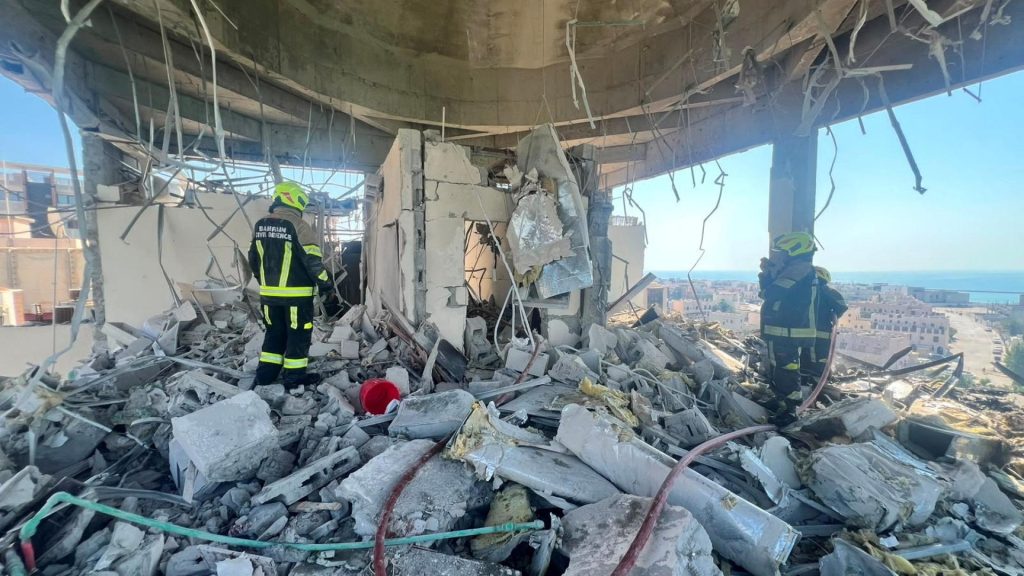
The escalation began with a U.S. airstrike targeting Iranian positions along the southern coast, a response to an attack on a Panama-flagged tanker in the Strait of Hormuz. Iran retaliated swiftly, launching missiles and drones against American military bases in Kuwait and Bahrain. The Iranian Revolutionary Guard claimed responsibility for the strikes, asserting that they had successfully destroyed eight key infrastructure targets, including facilities at the Ali Al-Salem Air Base in Kuwait and the 5th Fleet headquarters in Bahrain.
The situation has drawn sharp international condemnation. Bahrain’s foreign ministry labeled the Iranian attacks as a ‘dangerous escalation,’ while Kuwait reported active measures by its air defense systems to counter incoming threats. Meanwhile, the U.S. Central Command justified its actions as a necessary response to Iran’s aggression against commercial shipping, underscoring the strategic importance of the Strait of Hormuz—a vital chokepoint for global oil supplies.
Amid the intensifying hostilities, diplomatic channels appear to be crumbling. Tehran has accused Washington of violating the framework agreement, warning that continued U.S. military actions could lead to the complete cessation of negotiations. Iranian officials have also threatened further retaliation, with the Revolutionary Guard ominously declaring that American bases in the region ‘will face hell in the coming days.’
Adding to the complexity, the conflict has spilled over into neighboring regions. The Israeli military reported killing Hezbollah fighters and destroying a rocket launcher in southern Lebanon, further inflaming tensions. Iran’s Foreign Minister Abbas Araghtschi reiterated that Israel’s withdrawal from Lebanon and cessation of attacks are integral to the U.S.-Iran agreement, placing additional pressure on Washington to rein in its ally.
As the world watches with bated breath, the fragile peace in the Persian Gulf hangs by a thread. The strategic Strait of Hormuz remains a contentious battleground, with Iran asserting control over shipping routes and demanding coordination with its Revolutionary Guard for passage. The international community is left grappling with the potential fallout of a conflict that could have far-reaching consequences for global stability.
The escalation began with a U.S. airstrike targeting Iranian positions along the southern coast, a response to an attack on a Panama-flagged tanker in the Strait of Hormuz. Iran retaliated swiftly, launching missiles and drones against American military bases in Kuwait and Bahrain. The Iranian Revolutionary Guard claimed responsibility for the strikes, asserting that they had successfully destroyed eight key infrastructure targets, including facilities at the Ali Al-Salem Air Base in Kuwait and the 5th Fleet headquarters in Bahrain.
The situation has drawn sharp international condemnation. Bahrain’s foreign ministry labeled the Iranian attacks as a ‘dangerous escalation,’ while Kuwait reported active measures by its air defense systems to counter incoming threats. Meanwhile, the U.S. Central Command justified its actions as a necessary response to Iran’s aggression against commercial shipping, underscoring the strategic importance of the Strait of Hormuz—a vital chokepoint for global oil supplies.
Amid the intensifying hostilities, diplomatic channels appear to be crumbling. Tehran has accused Washington of violating the framework agreement, warning that continued U.S. military actions could lead to the complete cessation of negotiations. Iranian officials have also threatened further retaliation, with the Revolutionary Guard ominously declaring that American bases in the region ‘will face hell in the coming days.’
Adding to the complexity, the conflict has spilled over into neighboring regions. The Israeli military reported killing Hezbollah fighters and destroying a rocket launcher in southern Lebanon, further inflaming tensions. Iran’s Foreign Minister Abbas Araghtschi reiterated that Israel’s withdrawal from Lebanon and cessation of attacks are integral to the U.S.-Iran agreement, placing additional pressure on Washington to rein in its ally.
As the world watches with bated breath, the fragile peace in the Persian Gulf hangs by a thread. The strategic Strait of Hormuz remains a contentious battleground, with Iran asserting control over shipping routes and demanding coordination with its Revolutionary Guard for passage. The international community is left grappling with the potential fallout of a conflict that could have far-reaching consequences for global stability.
Drafted & Edited by Investigative Desk | AboMatrix