



Unity in Diversity: Migration and National Identity Policies

Unity in Diversity: Migration and National Identity Policies
⏱ 3 min read
Executive Summary
Germany’s response to racism in sports highlights the intersection of migration, identity, and national unity. The German Football Association (DFB) has condemned discriminatory rhetoric, emphasizing the importance of inclusivity. This reflects broader societal challenges and the need for policies fostering integration and combating prejudice.
Strategic Context
Germany has long been a focal point in discussions about migration and integration, given its history as a destination for migrants and refugees. The country’s national identity has evolved significantly, shaped by waves of immigration, particularly after World War II and during the 2015 refugee crisis. These demographic shifts have sparked debates about what it means to be ‘German’ and how to reconcile a diverse population with a shared national identity.
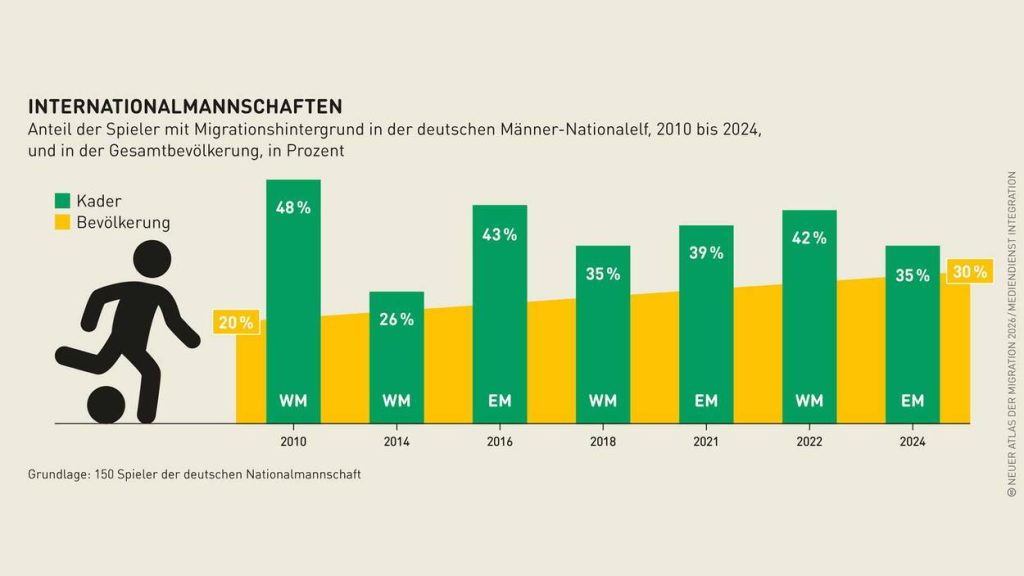
Sports, particularly football, have often mirrored these societal dynamics. The German national football team, historically a symbol of national pride, has included players from diverse ethnic and cultural backgrounds for decades. This diversity has been celebrated during moments of triumph, such as the 1990 and 2014 World Cup victories, but has also been a target for criticism, especially during periods of underperformance. The recent wave of racist comments directed at players with migration backgrounds underscores the ongoing challenges of achieving true inclusivity.
In-Depth Analysis
The German Football Association’s (DFB) recent statement against racism is a significant step in addressing discrimination within sports. By explicitly rejecting racist and discriminatory behavior, the DFB is setting a precedent for other institutions to follow. This move aligns with Germany’s broader commitment to combating hate speech and fostering social cohesion.
However, the issue extends beyond football. The rise of far-right rhetoric in Germany, exemplified by certain political figures and parties, has contributed to a polarized environment. These groups often exploit moments of national disappointment, such as the football team’s recent exit from a major tournament, to push exclusionary narratives. This tactic not only undermines social unity but also risks alienating individuals with migration backgrounds who contribute significantly to German society.
Furthermore, the debate around national identity in sports reflects a deeper societal struggle. While many Germans embrace a multicultural identity, others cling to a more homogenous vision of the nation. This tension is exacerbated by economic disparities and social inequalities, which can fuel resentment and scapegoating. Addressing these underlying issues is crucial for fostering a more inclusive society.
Impact on Migrants
The DFB’s stance against racism sends a powerful message to migrants and refugees in Germany. It affirms their place in society and challenges the notion that cultural or ethnic differences diminish one’s contribution to the nation. This is particularly important for young people with migration backgrounds who look up to national athletes as role models.
However, the persistence of discriminatory attitudes highlights the need for comprehensive integration policies. These should include educational initiatives to promote cultural understanding, as well as economic measures to address disparities that often disproportionately affect migrant communities. By tackling these issues, Germany can create an environment where all residents, regardless of their background, feel valued and included.
Outlook & Conclusion

Prepared & Analyzed by: Migration Policy Unit | AboMatrix