



Trump, Iran, and Clausewitz: Lessons in Power

Daily Monitor
September 17, 2026
Trump, Iran, and Clausewitz: Lessons in Power
The escalating tensions between the U.S. and Iran echo timeless principles of war theory, revealing a battle of wills shaped by strategy, persistence, and perception.
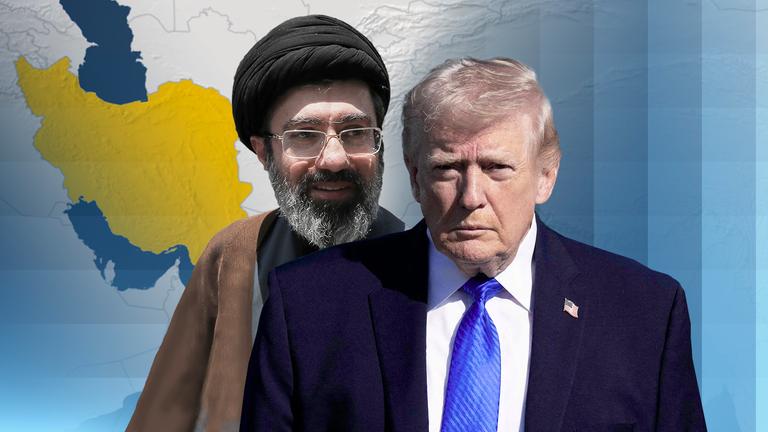
The simmering conflict between the United States and Iran has once again flared into open hostilities, despite ongoing diplomatic overtures. To understand the underlying dynamics of this confrontation, one might turn to the enduring wisdom of Carl von Clausewitz, the 19th-century Prussian military theorist. His seminal work on war as a continuation of politics by other means offers a lens through which to view the current geopolitical chessboard. Clausewitz argued that war is an act of violence aimed at compelling an adversary to submit to one’s will. This submission, he posited, can only be achieved by creating conditions so disadvantageous that resistance becomes unsustainable.
For Iran, the perception that U.S.-imposed disadvantages are temporary fuels its resistance. Conversely, former President Donald Trump’s approach to Iran reflected a different calculus. His administration’s policies oscillated between coercion and concession, culminating in a nuclear agreement that granted Iran significant leeway while leaving critical terms ambiguous. This ambiguity has allowed Tehran to assert control over strategic chokepoints like the Strait of Hormuz, even as negotiations ostensibly continue. Such maneuvers underscore the importance of perception in Clausewitzian theory: the mere appearance of temporary disadvantage can embolden an adversary to bide its time.
Trump’s rhetoric, often delivered via social media, occasionally hinted at a deeper strategic understanding. His threats of regime change in Tehran—an existential risk for Iran’s leadership—align with Clausewitz’s notion of imposing intolerable costs. Yet, as Clausewitz also emphasized, achieving such outcomes requires unwavering persistence and resolve. Herein lies the crux of the issue: the absence of sustained willpower undermines the credibility of threats, rendering them ineffective. Without the ‘great willpower’ that Clausewitz deemed essential, even the most severe threats lose their potency.
The U.S.-Iran standoff thus becomes a case study in the interplay of strategy, perception, and endurance. Clausewitz’s insights remain as relevant today as they were two centuries ago, reminding us that the art of war—and by extension, diplomacy—demands not only tactical brilliance but also the fortitude to see strategies through to their conclusion. As the world watches this high-stakes drama unfold, the lessons of history offer both caution and clarity.
For Iran, the perception that U.S.-imposed disadvantages are temporary fuels its resistance. Conversely, former President Donald Trump’s approach to Iran reflected a different calculus. His administration’s policies oscillated between coercion and concession, culminating in a nuclear agreement that granted Iran significant leeway while leaving critical terms ambiguous. This ambiguity has allowed Tehran to assert control over strategic chokepoints like the Strait of Hormuz, even as negotiations ostensibly continue. Such maneuvers underscore the importance of perception in Clausewitzian theory: the mere appearance of temporary disadvantage can embolden an adversary to bide its time.
Trump’s rhetoric, often delivered via social media, occasionally hinted at a deeper strategic understanding. His threats of regime change in Tehran—an existential risk for Iran’s leadership—align with Clausewitz’s notion of imposing intolerable costs. Yet, as Clausewitz also emphasized, achieving such outcomes requires unwavering persistence and resolve. Herein lies the crux of the issue: the absence of sustained willpower undermines the credibility of threats, rendering them ineffective. Without the ‘great willpower’ that Clausewitz deemed essential, even the most severe threats lose their potency.
The U.S.-Iran standoff thus becomes a case study in the interplay of strategy, perception, and endurance. Clausewitz’s insights remain as relevant today as they were two centuries ago, reminding us that the art of war—and by extension, diplomacy—demands not only tactical brilliance but also the fortitude to see strategies through to their conclusion. As the world watches this high-stakes drama unfold, the lessons of history offer both caution and clarity.
Drafted & Edited by Investigative Desk | AboMatrix