



Tiny Forests: Small Spaces, Big Impact

Daily Monitor
September 20, 2026
Tiny Forests: Small Spaces, Big Impact
Urban mini-forests are redefining cityscapes, offering ecological and social benefits amidst concrete jungles.
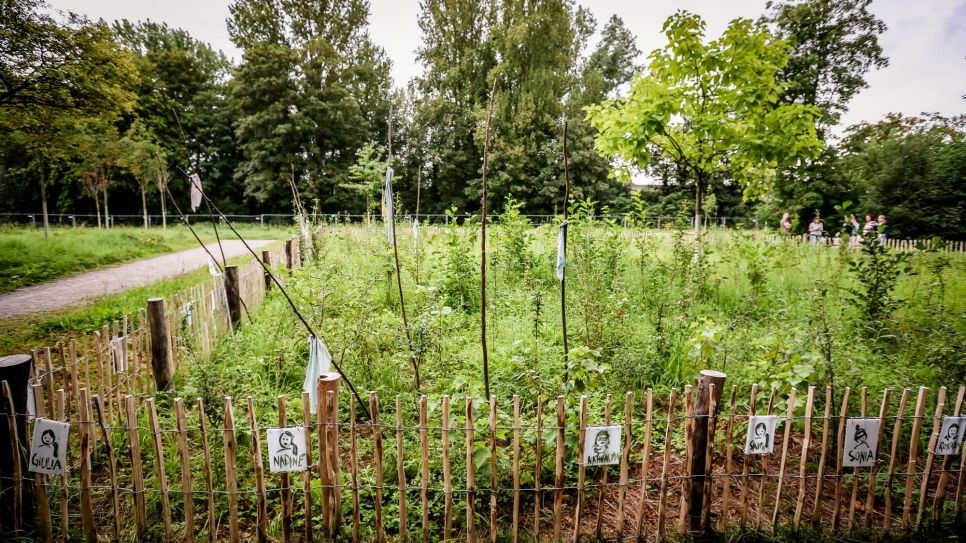
In the heart of Frankfurt’s Sachsenhausen district, a remarkable transformation is underway. What was once a barren, concrete-dominated space at Walter-von-Cronberg-Platz now hosts a thriving ecosystem of over 1,000 plants spread across 700 square meters. This ‘Tiny Forest,’ planted by the local initiative ‘Main-Wäldchen’ with the help of residents and schoolchildren, exemplifies a growing global movement to integrate nature into urban environments.
The concept of Tiny Forests traces back to Japanese botanist Akira Miyawaki, whose innovative approach involves densely planting native tree and shrub species on small plots of land. With three plants per square meter and a protective mulch layer to minimize maintenance, these mini-forests grow rapidly, creating biodiverse habitats. While some Tiny Forests span just a few hundred square meters, others are as large as two tennis courts. Their compact size makes them ideal for cities where space is scarce and competing interests abound.
Beyond their aesthetic appeal, Tiny Forests offer tangible environmental benefits. According to Jan Dieterle, a professor of sustainable urban design at Frankfurt University of Applied Sciences, these green oases can provide localized cooling during hot summers through evaporation and shade. However, their cooling effect is limited to their immediate surroundings. Additionally, Tiny Forests act as natural drainage systems during heavy rainfall, reducing the risk of urban flooding. Studies further highlight their ability to support richer biodiversity compared to traditional parks, creating vital habitats for insects, birds, and other wildlife.
The social impact of Tiny Forests is equally profound. Community involvement in planting these forests fosters a sense of ownership and environmental stewardship, particularly among children. Dieterle emphasizes the educational value, noting how young participants witness the growth of trees they’ve planted, reconnecting them with nature and reinforcing climate-conscious behaviors. Such initiatives often serve as catalysts for broader ecological awareness and action.
Despite their promise, Tiny Forests face challenges. In Frankfurt, the €60,000 cost of establishing these spaces—funded largely through federal grants—has sparked debates about their utility. Moreover, converting urban plots into green spaces often means sacrificing parking or commercial areas, highlighting the perennial struggle over land use in cities. Yet, as climate change intensifies, the need for urban greenery becomes increasingly urgent. While Tiny Forests alone cannot solve the problem, they represent a vital piece of the puzzle, complementing larger trees and expansive green spaces in mitigating urban heat and fostering resilience.
The concept of Tiny Forests traces back to Japanese botanist Akira Miyawaki, whose innovative approach involves densely planting native tree and shrub species on small plots of land. With three plants per square meter and a protective mulch layer to minimize maintenance, these mini-forests grow rapidly, creating biodiverse habitats. While some Tiny Forests span just a few hundred square meters, others are as large as two tennis courts. Their compact size makes them ideal for cities where space is scarce and competing interests abound.
Beyond their aesthetic appeal, Tiny Forests offer tangible environmental benefits. According to Jan Dieterle, a professor of sustainable urban design at Frankfurt University of Applied Sciences, these green oases can provide localized cooling during hot summers through evaporation and shade. However, their cooling effect is limited to their immediate surroundings. Additionally, Tiny Forests act as natural drainage systems during heavy rainfall, reducing the risk of urban flooding. Studies further highlight their ability to support richer biodiversity compared to traditional parks, creating vital habitats for insects, birds, and other wildlife.
The social impact of Tiny Forests is equally profound. Community involvement in planting these forests fosters a sense of ownership and environmental stewardship, particularly among children. Dieterle emphasizes the educational value, noting how young participants witness the growth of trees they’ve planted, reconnecting them with nature and reinforcing climate-conscious behaviors. Such initiatives often serve as catalysts for broader ecological awareness and action.
Despite their promise, Tiny Forests face challenges. In Frankfurt, the €60,000 cost of establishing these spaces—funded largely through federal grants—has sparked debates about their utility. Moreover, converting urban plots into green spaces often means sacrificing parking or commercial areas, highlighting the perennial struggle over land use in cities. Yet, as climate change intensifies, the need for urban greenery becomes increasingly urgent. While Tiny Forests alone cannot solve the problem, they represent a vital piece of the puzzle, complementing larger trees and expansive green spaces in mitigating urban heat and fostering resilience.
Drafted & Edited by Investigative Desk | AboMatrix