



The Decline of Social Housing in Germany: A Crisis Unfolding

The Decline of Social Housing in Germany: A Crisis Unfolding
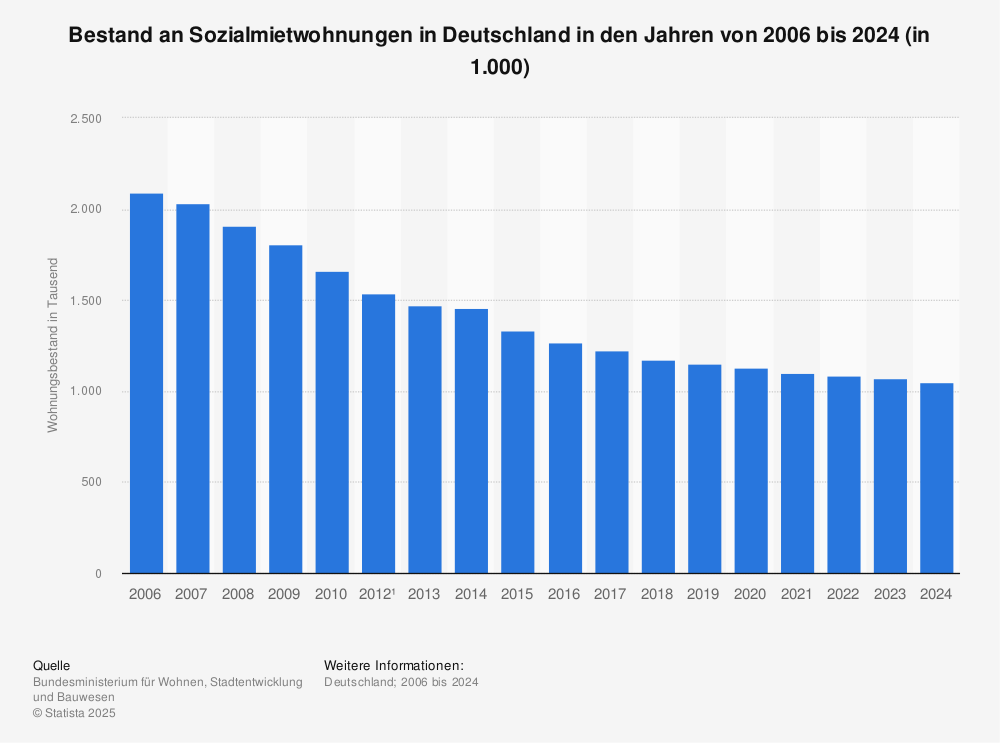
As of 2025, Germany faces a significant decline in social housing, raising urgent questions about the government’s ability to address the affordable housing crisis. With a staggering loss of over 20,000 social housing units from the previous year, the situation demands immediate and effective action from policymakers.
Diminishing Numbers: A Closer Look
In 2025, the number of social housing units in Germany fell to alarming levels, with only 27,283 new units constructed. This figure starkly contrasts with the loss of 57,621 units that exited social binding. The net result is a decrease of approximately 20,000 social housing units nationwide, highlighting a troubling trend that has persisted despite government efforts to mitigate the crisis.
Government Response: Promises vs. Reality
The German government has pledged significant investments, with plans to allocate 23.5 billion euros by 2029 to counteract the decline in social housing. However, critics argue that these measures are insufficient, particularly given the ongoing stagnation in private housing construction. The bureaucratic hurdles in the approval process further exacerbate the situation, leading to skepticism about the government’s ability to meet the urgent demand for affordable housing.
الخلاصة: The decline of social housing in Germany signals a critical juncture for policymakers. Without decisive action and adequate funding, the gap in affordable housing will continue to widen, leaving vulnerable populations at risk. The time for comprehensive strategies and streamlined processes is now, as the future of social housing hangs in the balance.