



Tensions Surge in Persian Gulf Amid Escalation

Daily Monitor
September 18, 2026
Tensions Surge in Persian Gulf Amid Escalation
Renewed attacks in the Persian Gulf spark fears of heightened conflict between the U.S. and Iran.
The fragile peace in the Persian Gulf has been shattered once again, as a series of mutual attacks between the United States and Iran reignite concerns over escalating tensions in one of the world’s most strategically vital regions. The Strait of Hormuz, a critical maritime chokepoint for global trade, remains at the heart of this geopolitical standoff, with recent incidents underscoring the volatility of the situation.
On Saturday, Bahrain reported drone strikes allegedly launched by Iran, targeting multiple sites within its territory. The Bahraini Foreign Ministry condemned the attacks as a blatant violation of sovereignty and a sabotage of ongoing peace efforts. While the intended targets remain unclear, Bahrain hosts the headquarters of the U.S. Navy’s Fifth Fleet, raising speculation about whether American military installations were in the crosshairs. Iran’s Revolutionary Guard, in a statement via the state-run IRNA news agency, claimed responsibility for targeting what it referred to as ‘U.S. terror army locations,’ though specific details were withheld.
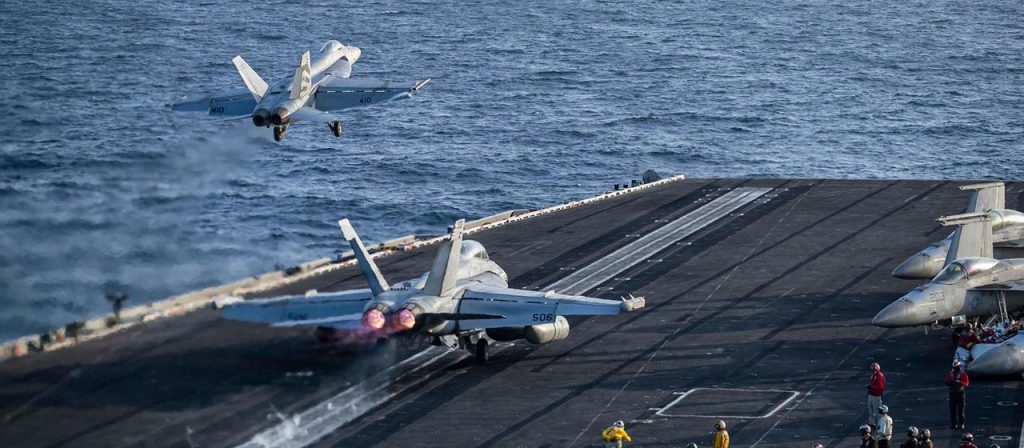
Further exacerbating the crisis, a tanker navigating the Strait of Hormuz was struck by a projectile, damaging its bridge, according to the United Kingdom Maritime Trade Operations (UKMTO). While no casualties were reported, the incident has heightened fears over the safety of commercial shipping in the region. This attack followed U.S. airstrikes targeting Iranian missile and drone storage facilities, as well as radar installations. The strikes, carried out by six fighter jets, were justified by the U.S. as a response to an Iranian assault on a Singapore-flagged cargo ship earlier in the week, which Washington described as a clear breach of the recently agreed-upon ceasefire.
Amid the escalating hostilities, U.S. Vice President JD Vance urged Iran to engage in dialogue, emphasizing that violence would be met with reciprocal force. The renewed aggression comes after a brief period of détente, during which both nations had agreed to lift maritime blockades and halt military actions. However, Iran has since imposed stringent conditions on the passage of vessels through the Strait of Hormuz, demanding prior authorization and warning against the use of routes established by Oman and the United Nations International Maritime Organization.
As the situation unfolds, the international community watches with bated breath, aware that any misstep could have far-reaching consequences for global security and economic stability. The Persian Gulf, a region already fraught with historical grievances and strategic rivalries, teeters on the brink of a deeper crisis.
On Saturday, Bahrain reported drone strikes allegedly launched by Iran, targeting multiple sites within its territory. The Bahraini Foreign Ministry condemned the attacks as a blatant violation of sovereignty and a sabotage of ongoing peace efforts. While the intended targets remain unclear, Bahrain hosts the headquarters of the U.S. Navy’s Fifth Fleet, raising speculation about whether American military installations were in the crosshairs. Iran’s Revolutionary Guard, in a statement via the state-run IRNA news agency, claimed responsibility for targeting what it referred to as ‘U.S. terror army locations,’ though specific details were withheld.
Further exacerbating the crisis, a tanker navigating the Strait of Hormuz was struck by a projectile, damaging its bridge, according to the United Kingdom Maritime Trade Operations (UKMTO). While no casualties were reported, the incident has heightened fears over the safety of commercial shipping in the region. This attack followed U.S. airstrikes targeting Iranian missile and drone storage facilities, as well as radar installations. The strikes, carried out by six fighter jets, were justified by the U.S. as a response to an Iranian assault on a Singapore-flagged cargo ship earlier in the week, which Washington described as a clear breach of the recently agreed-upon ceasefire.
Amid the escalating hostilities, U.S. Vice President JD Vance urged Iran to engage in dialogue, emphasizing that violence would be met with reciprocal force. The renewed aggression comes after a brief period of détente, during which both nations had agreed to lift maritime blockades and halt military actions. However, Iran has since imposed stringent conditions on the passage of vessels through the Strait of Hormuz, demanding prior authorization and warning against the use of routes established by Oman and the United Nations International Maritime Organization.
As the situation unfolds, the international community watches with bated breath, aware that any misstep could have far-reaching consequences for global security and economic stability. The Persian Gulf, a region already fraught with historical grievances and strategic rivalries, teeters on the brink of a deeper crisis.
Drafted & Edited by Investigative Desk | AboMatrix