



SPD Left Wing Pushes Bold Reform Demands

Daily Monitor
September 27, 2026
SPD Left Wing Pushes Bold Reform Demands
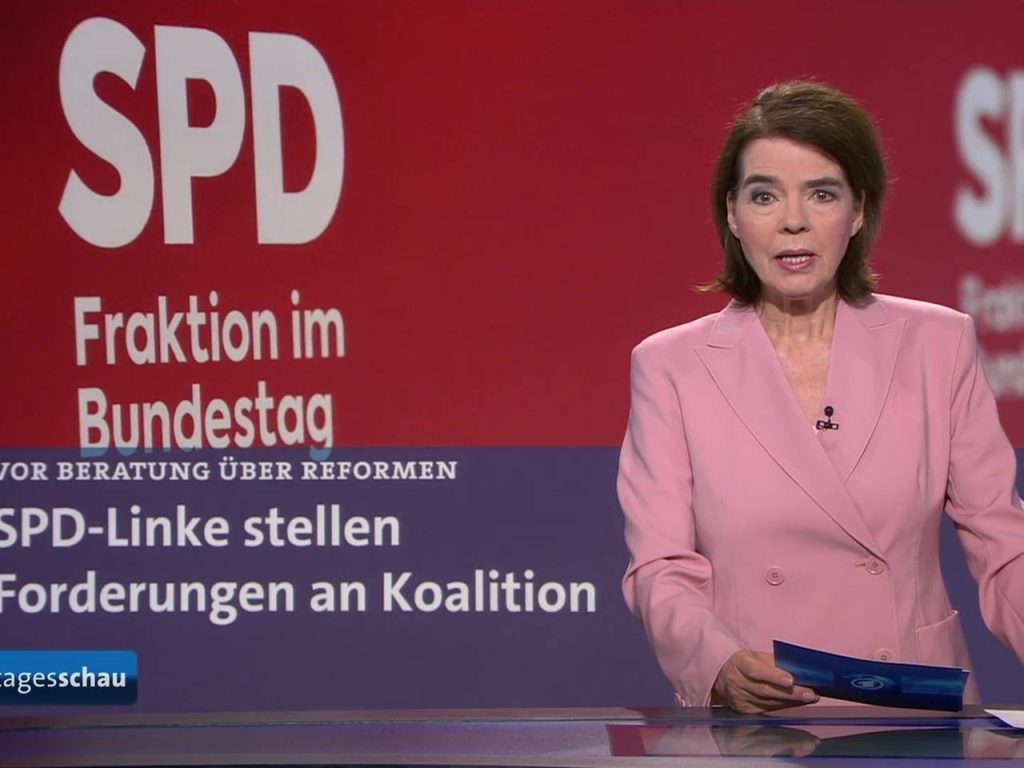
Left-leaning SPD lawmakers challenge coalition talks with demands for fairer reforms and wealth redistribution.
As Germany’s coalition committee prepares for critical negotiations on sweeping reforms, a group of six left-leaning Social Democratic Party (SPD) lawmakers has issued a bold set of demands aimed at shaping the country’s socio-economic future. Among the prominent voices are Jan Dieren, a labor market expert, and Annika Klose, the SPD’s spokesperson for labor and social affairs. Their proposals, outlined in a document obtained by ARD’s Hauptstadtstudio, emphasize the need for reforms that prioritize the well-being of citizens during challenging times, rather than reforms for reform’s sake.
The lawmakers have expressed strong opposition to measures that would increase the burden on the general population, such as longer working hours, restrictions on strike rights, or the introduction of unpaid sick days. They argue that such proposals would exacerbate existing challenges, reducing disposable income and weakening domestic demand. Instead, they advocate for a more equitable approach, including a one-time wealth tax targeting individuals with fortunes exceeding €100 million, as well as a fairer inheritance tax. According to their analysis, Germany’s wealthiest 5,000 individuals collectively hold assets worth over €3.3 trillion, which could be leveraged to sustain social security systems without further straining the middle and working classes.
The group also calls for measures to alleviate financial pressure on low-income households, such as reducing social contributions and consumption taxes. Additionally, they propose implementing price caps on essential goods like fuel, electricity, energy, and food to combat inflation. Citing the success of gas and electricity price caps, the lawmakers argue that such interventions are crucial in mitigating the impact of rising costs on everyday Germans.
Beyond economic measures, the SPD’s left wing is pushing for broader reforms, including a nationwide rent cap and an overhaul of the BAföG student financial aid program. They also advocate for revisiting Germany’s debt brake policy and reducing defense spending to free up resources for social investments. The lawmakers warn that ignoring public sentiment in these areas could erode the SPD’s support base, urging the party leadership to prioritize policies that resonate with the electorate.
As the coalition committee convenes, these demands serve as a litmus test for the SPD’s commitment to progressive values and its ability to navigate the complex dynamics of coalition politics. The outcome of these negotiations will not only shape Germany’s immediate policy landscape but also signal the direction of its long-term socio-economic strategy.
The lawmakers have expressed strong opposition to measures that would increase the burden on the general population, such as longer working hours, restrictions on strike rights, or the introduction of unpaid sick days. They argue that such proposals would exacerbate existing challenges, reducing disposable income and weakening domestic demand. Instead, they advocate for a more equitable approach, including a one-time wealth tax targeting individuals with fortunes exceeding €100 million, as well as a fairer inheritance tax. According to their analysis, Germany’s wealthiest 5,000 individuals collectively hold assets worth over €3.3 trillion, which could be leveraged to sustain social security systems without further straining the middle and working classes.
The group also calls for measures to alleviate financial pressure on low-income households, such as reducing social contributions and consumption taxes. Additionally, they propose implementing price caps on essential goods like fuel, electricity, energy, and food to combat inflation. Citing the success of gas and electricity price caps, the lawmakers argue that such interventions are crucial in mitigating the impact of rising costs on everyday Germans.
Beyond economic measures, the SPD’s left wing is pushing for broader reforms, including a nationwide rent cap and an overhaul of the BAföG student financial aid program. They also advocate for revisiting Germany’s debt brake policy and reducing defense spending to free up resources for social investments. The lawmakers warn that ignoring public sentiment in these areas could erode the SPD’s support base, urging the party leadership to prioritize policies that resonate with the electorate.
As the coalition committee convenes, these demands serve as a litmus test for the SPD’s commitment to progressive values and its ability to navigate the complex dynamics of coalition politics. The outcome of these negotiations will not only shape Germany’s immediate policy landscape but also signal the direction of its long-term socio-economic strategy.
Drafted & Edited by Investigative Desk | AboMatrix