



Six Ukrainian Rail Workers Killed in Russian Strikes

Daily Monitor
September 15, 2026
Six Ukrainian Rail Workers Killed in Russian Strikes
A devastating wave of Russian airstrikes has claimed the lives of six Ukrainian railway workers, underscoring the ongoing toll of the conflict.
In the early hours of Tuesday, the skies over Ukraine were once again pierced by the deafening sounds of missile strikes, as Russia launched a fresh wave of attacks targeting key infrastructure and civilian areas. Among the hardest-hit locations was a railway depot in Kyiv’s Darnytskyi district, where six railway workers tragically lost their lives, and another was critically injured. The Ukrainian railway authority has since called for blood donations to aid the injured worker, highlighting the human cost of these relentless assaults.
The attacks, which also struck the southern port city of Odesa, damaged railway facilities, energy infrastructure, and residential buildings. In the Kyiv suburb of Boryspil, four civilians were killed when a residential building was hit. Ukrainian President Volodymyr Zelenskyy confirmed that an Indian national was among the casualties and urged international allies to bolster Ukraine’s air defense systems. The strikes left thousands of families in Odesa without electricity and even disrupted a border crossing with Romania, further compounding the humanitarian crisis.
Despite the destruction, Ukrainian air defense forces reported significant successes, intercepting 199 aerial threats, including drones, cruise missiles, and even five ballistic missiles. Among the intercepted projectiles were North Korean-made KN-23 missiles, suggesting that Ukraine has regained some capacity to counter such advanced weaponry. This marks a stark contrast to August, when similar attacks overwhelmed Ukraine’s defenses.
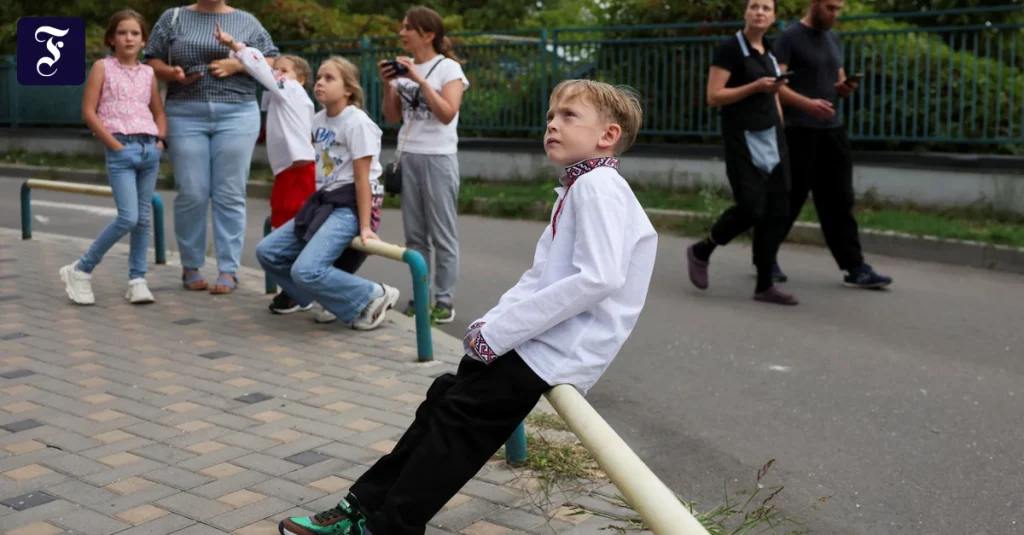
The timing of the strikes was particularly poignant, coinciding with the start of the new school year. Traditionally marked by celebratory “Day of Knowledge” ceremonies, this year’s events were subdued due to the ongoing threat of air raids. Approximately 2.2 million students are expected to attend in-person classes this year, but only in schools equipped with bomb shelters. In frontline areas, in-person education remains suspended, and an estimated 800,000 students will rely on remote learning. The war has also led to a significant decline in Ukraine’s birth rate and an exodus of families seeking safety abroad.
Meanwhile, diplomatic efforts to end the conflict continue. Reports suggest that former CIA Director John Ratcliffe recently conveyed a grim assessment of Russia’s military and economic situation to Kremlin officials, urging an end to the war. However, Russian President Vladimir Putin reportedly dismissed the overture, signaling a continued stalemate in peace negotiations.
The attacks, which also struck the southern port city of Odesa, damaged railway facilities, energy infrastructure, and residential buildings. In the Kyiv suburb of Boryspil, four civilians were killed when a residential building was hit. Ukrainian President Volodymyr Zelenskyy confirmed that an Indian national was among the casualties and urged international allies to bolster Ukraine’s air defense systems. The strikes left thousands of families in Odesa without electricity and even disrupted a border crossing with Romania, further compounding the humanitarian crisis.
Despite the destruction, Ukrainian air defense forces reported significant successes, intercepting 199 aerial threats, including drones, cruise missiles, and even five ballistic missiles. Among the intercepted projectiles were North Korean-made KN-23 missiles, suggesting that Ukraine has regained some capacity to counter such advanced weaponry. This marks a stark contrast to August, when similar attacks overwhelmed Ukraine’s defenses.
The timing of the strikes was particularly poignant, coinciding with the start of the new school year. Traditionally marked by celebratory “Day of Knowledge” ceremonies, this year’s events were subdued due to the ongoing threat of air raids. Approximately 2.2 million students are expected to attend in-person classes this year, but only in schools equipped with bomb shelters. In frontline areas, in-person education remains suspended, and an estimated 800,000 students will rely on remote learning. The war has also led to a significant decline in Ukraine’s birth rate and an exodus of families seeking safety abroad.
Meanwhile, diplomatic efforts to end the conflict continue. Reports suggest that former CIA Director John Ratcliffe recently conveyed a grim assessment of Russia’s military and economic situation to Kremlin officials, urging an end to the war. However, Russian President Vladimir Putin reportedly dismissed the overture, signaling a continued stalemate in peace negotiations.
Drafted & Edited by Investigative Desk | AboMatrix