



Serbia’s Vucic Signals Resignation Amid Protests

Daily Monitor
September 16, 2026
Serbia’s Vucic Signals Resignation Amid Protests
Serbian President Aleksandar Vucic has announced his impending resignation, sparking political speculation and public unrest.
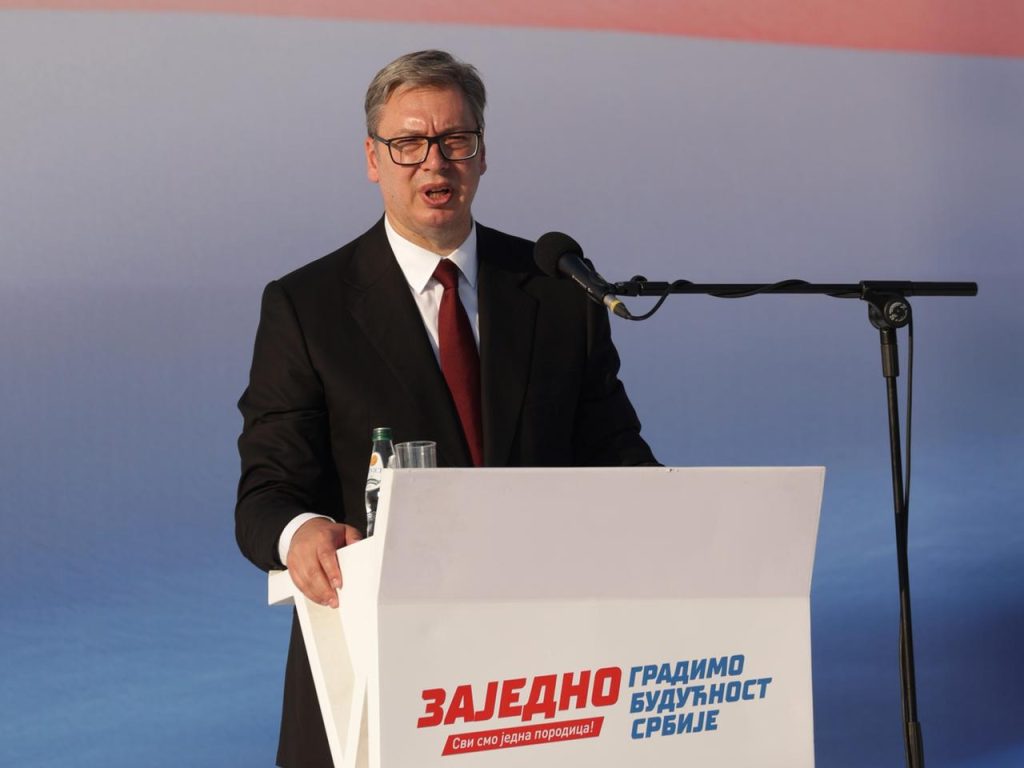
In a dramatic turn of events, Serbian President Aleksandar Vucic has once again declared his intention to resign, a move that has left the nation grappling with uncertainty. Speaking to tens of thousands of supporters in Belgrade on the eve of Vidovdan, a historic Serbian holiday commemorating the 1389 Battle of Kosovo, Vucic revealed plans to step down in the coming weeks. While his announcement was met with chants of ‘Aco Srbine!’ (‘Alex, you Serb!’), the exact timing of his resignation remains unclear.
Vucic’s tenure has been marked by widespread protests against his administration, with critics accusing him of authoritarianism and corruption. For over a year, students and activists have rallied against his government, demanding systemic change. However, Vucic’s departure as president does not necessarily signal a shift in Serbia’s political landscape. His second term is set to expire in the spring, and constitutional limits prevent him from seeking re-election. Yet, speculation is rife that Vucic may transition to the role of prime minister, maintaining his grip on power.
During his address, Vucic hinted at a potential rebranding of his political platform under the name ‘United Serbia,’ reminiscent of Russian President Vladimir Putin’s ‘United Russia’ party. This strategic pivot underscores Vucic’s balancing act between fostering ties with the European Union and maintaining a partnership with Moscow. He also pledged to play a central role in upcoming elections, aiming to secure public trust and implement his promises over the next four years.
Despite Vucic’s assurances, critics remain skeptical. Under his leadership, Serbia has witnessed four instances of early elections, often perceived as tactical maneuvers to consolidate power amidst criticism. Allegations of electoral manipulation have further fueled distrust, with opposition groups and student-led movements gaining traction in local elections. While these groups have yet to achieve significant victories, their growing influence poses a potential challenge to Vucic’s Serbian Progressive Party (SNS).
The prospect of early presidential and parliamentary elections looms large, with Vucic’s opponents calling for transparency and reform. However, any overt manipulation could ignite widespread unrest, as public frustration with the status quo continues to simmer. As Serbia stands at a political crossroads, the nation’s future hinges on whether this moment will usher in genuine change or reinforce the entrenched power dynamics that have defined Vucic’s rule.
Vucic’s tenure has been marked by widespread protests against his administration, with critics accusing him of authoritarianism and corruption. For over a year, students and activists have rallied against his government, demanding systemic change. However, Vucic’s departure as president does not necessarily signal a shift in Serbia’s political landscape. His second term is set to expire in the spring, and constitutional limits prevent him from seeking re-election. Yet, speculation is rife that Vucic may transition to the role of prime minister, maintaining his grip on power.
During his address, Vucic hinted at a potential rebranding of his political platform under the name ‘United Serbia,’ reminiscent of Russian President Vladimir Putin’s ‘United Russia’ party. This strategic pivot underscores Vucic’s balancing act between fostering ties with the European Union and maintaining a partnership with Moscow. He also pledged to play a central role in upcoming elections, aiming to secure public trust and implement his promises over the next four years.
Despite Vucic’s assurances, critics remain skeptical. Under his leadership, Serbia has witnessed four instances of early elections, often perceived as tactical maneuvers to consolidate power amidst criticism. Allegations of electoral manipulation have further fueled distrust, with opposition groups and student-led movements gaining traction in local elections. While these groups have yet to achieve significant victories, their growing influence poses a potential challenge to Vucic’s Serbian Progressive Party (SNS).
The prospect of early presidential and parliamentary elections looms large, with Vucic’s opponents calling for transparency and reform. However, any overt manipulation could ignite widespread unrest, as public frustration with the status quo continues to simmer. As Serbia stands at a political crossroads, the nation’s future hinges on whether this moment will usher in genuine change or reinforce the entrenched power dynamics that have defined Vucic’s rule.
Drafted & Edited by Investigative Desk | AboMatrix