



Serbian President Resigns, But Power Play Looms

Daily Monitor
September 17, 2026
Serbian President Resigns, But Power Play Looms
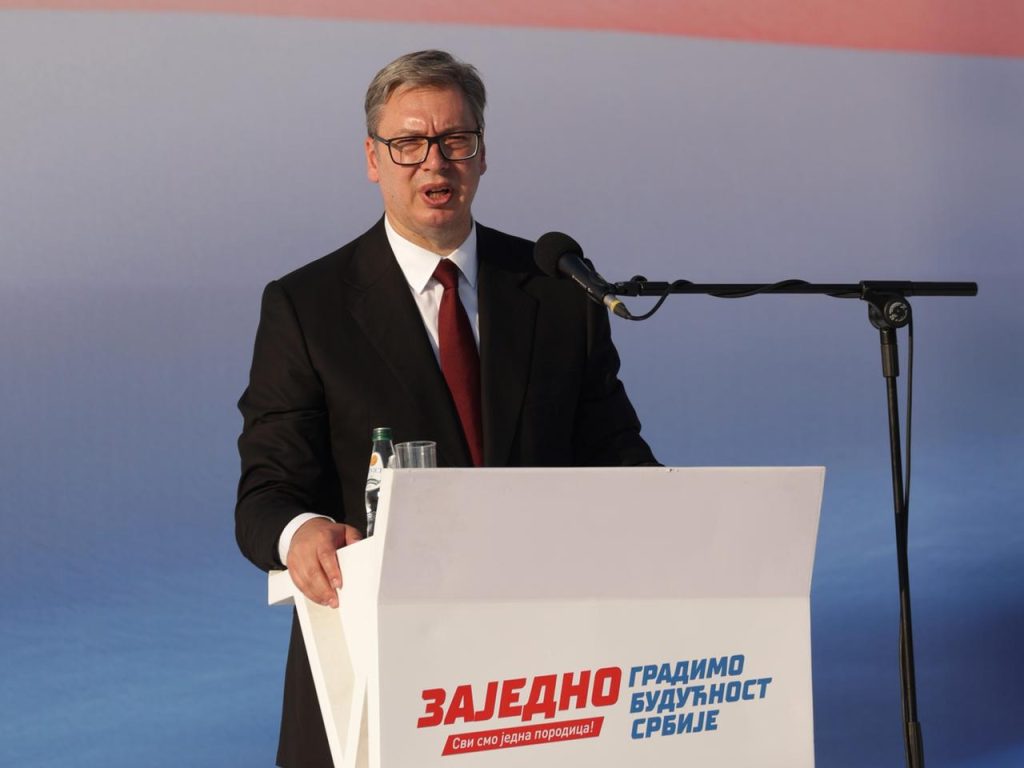
Serbia’s President Aleksandar Vucic announces his resignation, yet his political influence seems far from over.
In a dramatic announcement that has sent ripples through Serbia’s political landscape, President Aleksandar Vucic declared his intention to step down in the coming weeks. Speaking at a mass rally of his supporters in Belgrade, Vucic stated, ‘I will only be president for a few more weeks, then I will resign.’ However, analysts and critics alike suggest this move is far from a retreat from power. Instead, it appears to be a calculated maneuver to maintain his grip on the nation’s political machinery.
Vucic, whose second presidential term is set to end in May 2025, is constitutionally barred from seeking a third term. Yet, his announcement hints at a broader strategy. Offering his assistance to the ruling Serbian Progressive Party (SNS) in upcoming elections, Vucic proposed a new electoral list under the banner ‘United Serbia.’ Political analyst Radivoje Grujic remarked, ‘This is by no means the end of Vucic. He has a plan that clearly does not involve political retirement.’ Speculation is rife that Vucic aims to call early parliamentary elections, positioning himself as the SNS’s lead candidate to potentially return as Prime Minister—a role he held from 2014 to 2017.
The backdrop to this announcement is a Serbia roiled by unrest. Since the tragic collapse of a train station roof in Novi Sad in late 2024, which claimed 16 lives, Vucic’s administration has faced mounting public outrage. The incident, widely attributed to corruption and governmental negligence, ignited a protest movement that has grown into a nationwide force. Initially sparked by university sit-ins, the movement now commands widespread support, with citizens demanding early elections and accountability for the tragedy. Vucic, however, has dismissed the protesters as foreign agents intent on destabilizing his government.
Despite Vucic’s efforts to consolidate his base, the opposition appears to be gaining momentum. Recent polls suggest that a student-led or endorsed electoral list could pose a significant challenge to the SNS. While such a list has yet to materialize, the protest movement’s ability to mobilize large crowds—180,000 people gathered in Belgrade last month—signals a growing appetite for change. Meanwhile, Vucic’s rally on Saturday, attended by supporters transported via buses organized by the SNS, underscores his reliance on orchestrated displays of loyalty.
As Serbia braces for potential early elections, the question remains: will Vucic’s calculated resignation and rebranding strategy secure his continued dominance, or will the winds of change finally shift the nation’s political trajectory? The coming months promise to be pivotal for Serbia’s future.
Vucic, whose second presidential term is set to end in May 2025, is constitutionally barred from seeking a third term. Yet, his announcement hints at a broader strategy. Offering his assistance to the ruling Serbian Progressive Party (SNS) in upcoming elections, Vucic proposed a new electoral list under the banner ‘United Serbia.’ Political analyst Radivoje Grujic remarked, ‘This is by no means the end of Vucic. He has a plan that clearly does not involve political retirement.’ Speculation is rife that Vucic aims to call early parliamentary elections, positioning himself as the SNS’s lead candidate to potentially return as Prime Minister—a role he held from 2014 to 2017.
The backdrop to this announcement is a Serbia roiled by unrest. Since the tragic collapse of a train station roof in Novi Sad in late 2024, which claimed 16 lives, Vucic’s administration has faced mounting public outrage. The incident, widely attributed to corruption and governmental negligence, ignited a protest movement that has grown into a nationwide force. Initially sparked by university sit-ins, the movement now commands widespread support, with citizens demanding early elections and accountability for the tragedy. Vucic, however, has dismissed the protesters as foreign agents intent on destabilizing his government.
Despite Vucic’s efforts to consolidate his base, the opposition appears to be gaining momentum. Recent polls suggest that a student-led or endorsed electoral list could pose a significant challenge to the SNS. While such a list has yet to materialize, the protest movement’s ability to mobilize large crowds—180,000 people gathered in Belgrade last month—signals a growing appetite for change. Meanwhile, Vucic’s rally on Saturday, attended by supporters transported via buses organized by the SNS, underscores his reliance on orchestrated displays of loyalty.
As Serbia braces for potential early elections, the question remains: will Vucic’s calculated resignation and rebranding strategy secure his continued dominance, or will the winds of change finally shift the nation’s political trajectory? The coming months promise to be pivotal for Serbia’s future.
Drafted & Edited by Investigative Desk | AboMatrix