



Security Breach in Beijing: Questions Arise

Daily Monitor
September 24, 2026
Security Breach in Beijing: Questions Arise
A light aircraft crash into Beijing’s tallest skyscraper exposes alarming security vulnerabilities in the heart of China’s capital.
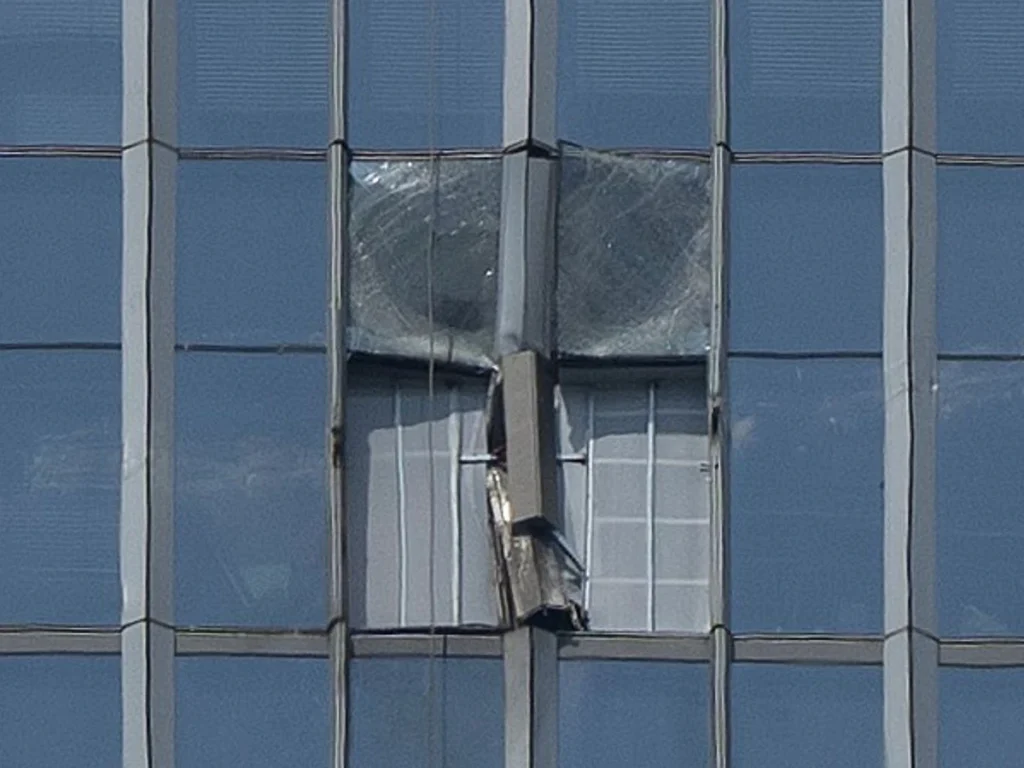
In a dramatic and unsettling incident, a light aircraft collided with the towering Citic Tower in Beijing, raising profound concerns about security lapses in one of the most tightly controlled airspaces in the world. The Citic Tower, standing at an imposing 528 meters, is not only a symbol of modern Beijing but also strategically located near Zhongnanhai, the headquarters of the Communist Party of China. The crash, which occurred on Friday evening, caused minimal structural damage but has sent shockwaves through the Chinese political and military establishment.
The aircraft, a single-engine, two-seater plane, reportedly took off from a small airfield in Pinggu, approximately 50 kilometers from the crash site. Despite the stringent civilian and military airspace controls in Beijing, the plane managed to fly undetected for dozens of kilometers before colliding with the skyscraper. The pilot, the sole occupant of the aircraft, tragically lost his life, and 13 others sustained injuries from falling debris. The incident has sparked widespread speculation about potential failures in airspace monitoring and command chains, with some observers predicting significant repercussions for those responsible.
Adding to the intrigue, Chinese state media have remained conspicuously silent on the matter, while social media platforms have seen swift censorship of related discussions. The only official acknowledgment came from the Chaoyang district authorities, who confirmed the crash but omitted key details, including the identity of the pilot and the exact cause of the incident. Photos circulating online, however, revealed the aircraft’s registration number, linking it to a local flight school. Analysts have pointed out that even if the flight was initially authorized for training purposes, it should never have been allowed to approach the city center.
This incident has reignited debates about the robustness of China’s air defense systems, particularly in light of the Citic Tower’s proximity to sensitive government and party facilities. Deng Yuwen, a prominent analyst based abroad, questioned how such a breach could occur, emphasizing that the security gap revealed by the incident is far more troubling than the crash itself. The presence of a police vehicle equipped with a rotating radar near the crash site on Monday suggests that authorities are scrambling to address the fallout. As Beijing grapples with the implications of this breach, the incident serves as a stark reminder of the vulnerabilities that even the most fortified systems can harbor.
The aircraft, a single-engine, two-seater plane, reportedly took off from a small airfield in Pinggu, approximately 50 kilometers from the crash site. Despite the stringent civilian and military airspace controls in Beijing, the plane managed to fly undetected for dozens of kilometers before colliding with the skyscraper. The pilot, the sole occupant of the aircraft, tragically lost his life, and 13 others sustained injuries from falling debris. The incident has sparked widespread speculation about potential failures in airspace monitoring and command chains, with some observers predicting significant repercussions for those responsible.
Adding to the intrigue, Chinese state media have remained conspicuously silent on the matter, while social media platforms have seen swift censorship of related discussions. The only official acknowledgment came from the Chaoyang district authorities, who confirmed the crash but omitted key details, including the identity of the pilot and the exact cause of the incident. Photos circulating online, however, revealed the aircraft’s registration number, linking it to a local flight school. Analysts have pointed out that even if the flight was initially authorized for training purposes, it should never have been allowed to approach the city center.
This incident has reignited debates about the robustness of China’s air defense systems, particularly in light of the Citic Tower’s proximity to sensitive government and party facilities. Deng Yuwen, a prominent analyst based abroad, questioned how such a breach could occur, emphasizing that the security gap revealed by the incident is far more troubling than the crash itself. The presence of a police vehicle equipped with a rotating radar near the crash site on Monday suggests that authorities are scrambling to address the fallout. As Beijing grapples with the implications of this breach, the incident serves as a stark reminder of the vulnerabilities that even the most fortified systems can harbor.
Drafted & Edited by Investigative Desk | AboMatrix