



Scorching Heatwave Shatters Records Across Europe

Daily Monitor
September 21, 2026
Scorching Heatwave Shatters Records Across Europe
Europe faces unprecedented heat, with record-breaking temperatures causing infrastructure damage and raising urgent safety concerns.
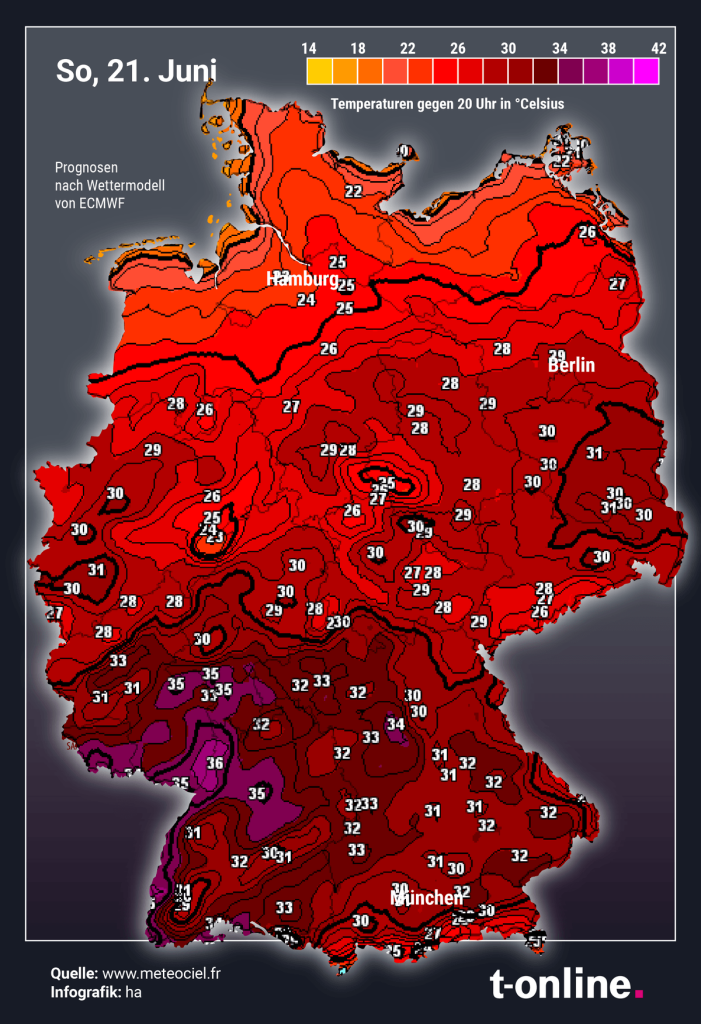
A relentless heatwave has gripped Germany and much of Europe, shattering temperature records and leaving a trail of disruption in its wake. According to the German Weather Service (DWD), a staggering 41.5°C was recorded in Drewitz, Saxony-Anhalt, marking a new national high. This comes just a day after Saarbrücken registered 41.3°C, setting the stage for what experts warn could be a historic heat event. Neighboring countries are also reeling under the oppressive heat. Denmark reported its highest temperature since records began in 1874, with Ødum, near Aarhus, reaching 37°C. Meanwhile, Switzerland saw Basel hit 39°C, and the Czech Republic recorded a blistering 40.8°C in Doksany, north of Prague. Meteorologists predict even higher temperatures in the coming days, intensifying concerns across the continent.
The extreme heat has wreaked havoc on Germany’s infrastructure, particularly its highways. The federal Autobahn GmbH reported over a dozen instances of asphalt damage, with sections of major motorways forced to close. In Saxony-Anhalt, the A2 towards Hannover remains shut near Burg, while full closures persist on the A2 near Ziesar and Irxleben. Similar disruptions have been reported on the A10 near Berlin, the A93 in Bavaria, and the A7 in Hamburg. Drivers are being urged to exercise caution as repair crews work tirelessly to address the damage caused by expanding concrete under the searing heat.
The human toll of the heatwave is equally alarming. In several senior care facilities, including those in Krefeld and Dormagen, emergency services were called to assist residents suffering from the oppressive temperatures. Eugen Brysch, chairman of the German Foundation for Patient Protection, has criticized the government’s lack of action, calling for immediate investments in heat protection for the nation’s 800,000 care home residents. While some facilities have implemented heat protection plans, Brysch condemned these measures as superficial, accusing authorities of prioritizing cost-saving over patient safety.
Emergency services are also under immense strain. In Mönchengladbach, the fire department reported an extraordinary surge in calls, handling 185 incidents in a single day. These included 124 medical emergencies, 39 patient transports, and multiple fire-related incidents. With over 1,000 calls received, the city’s emergency responders are stretched to their limits. As Europe braces for even higher temperatures, the heatwave serves as a stark reminder of the urgent need for climate resilience and infrastructure adaptation.
The extreme heat has wreaked havoc on Germany’s infrastructure, particularly its highways. The federal Autobahn GmbH reported over a dozen instances of asphalt damage, with sections of major motorways forced to close. In Saxony-Anhalt, the A2 towards Hannover remains shut near Burg, while full closures persist on the A2 near Ziesar and Irxleben. Similar disruptions have been reported on the A10 near Berlin, the A93 in Bavaria, and the A7 in Hamburg. Drivers are being urged to exercise caution as repair crews work tirelessly to address the damage caused by expanding concrete under the searing heat.
The human toll of the heatwave is equally alarming. In several senior care facilities, including those in Krefeld and Dormagen, emergency services were called to assist residents suffering from the oppressive temperatures. Eugen Brysch, chairman of the German Foundation for Patient Protection, has criticized the government’s lack of action, calling for immediate investments in heat protection for the nation’s 800,000 care home residents. While some facilities have implemented heat protection plans, Brysch condemned these measures as superficial, accusing authorities of prioritizing cost-saving over patient safety.
Emergency services are also under immense strain. In Mönchengladbach, the fire department reported an extraordinary surge in calls, handling 185 incidents in a single day. These included 124 medical emergencies, 39 patient transports, and multiple fire-related incidents. With over 1,000 calls received, the city’s emergency responders are stretched to their limits. As Europe braces for even higher temperatures, the heatwave serves as a stark reminder of the urgent need for climate resilience and infrastructure adaptation.
Drafted & Edited by Investigative Desk | AboMatrix