



Religious Terrorism and Its Global Threat: The Dynamics of Myth, Sacrifice, and Political Violence

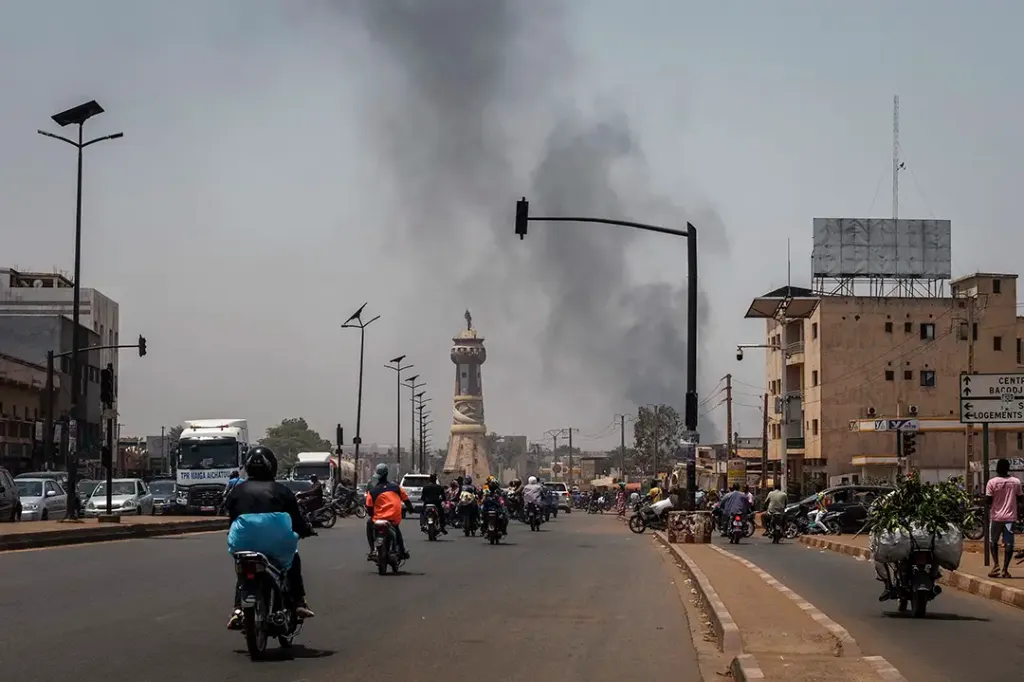
Religious Terrorism and Its Global Threat: The Dynamics of Myth, Sacrifice, and Political Violence
Studies & Analyses | Critical Sociological Essay
Author: Ahmed Al-Rumh (Researcher and Academic Analyst)
An in-depth inquiry examining the mutation of ideological violence, the politicization of the sacred, and the instrumentalization of myth in contemporary global conflict.
In its contemporary iterations, religious terrorism has undergone profound structural transformations. The diversification of its perpetrators across the globe paints an alarming picture of “sacralized violence”—a phenomenon driven by ideological contradictions and the intersection of political and religious power struggles. Here, complex dynamics between the sacred, the symbol, and the myth converge, endowing violent acts with motivational energy and spurious legitimacy. Consequently, faith is diverted from its primary ethical purpose of upholding universal human dignity into an instrument of exclusion, coercive power, and brutalization.
Religious Extremism and the Mythological Symbol
Primordial instincts of survival and dominance have evolved in modernity into existential battles waged by radicalized factions. Extremist organizations have synthesized faith with political strategy, turning adherents into human weapons driven by the concept of “self-sacrifice for the sacred.” This mimics the sacrificial rituals of ancient civilizations, where offerings were presented to appease deities. Self-abnegation was framed as total submission, rooted mythologically in humanity’s earliest archetypal fratricides, establishing cycles of violence sanctioned by dogmatic doctrines.
Throughout history, splinter movements across polytheistic and monotheistic traditions have claimed a monopoly over “absolute truth.” This absolute claim inherently fosters hostility toward the religious or ideological “other.” Individual piety is thus re-engineered into a tool where radicals assume divine prerogative, dispensing earthly retribution rather than leaving ultimate judgment to higher ethical and spiritual realms.
“The symbolism of seeking divine approval has been co-opted by radical ideologues to usurp moral authority, reducing human lives to mere sacrificial offerings upon ideological altars alien to the core tenets of world religions.”
From Devotion to Human Sacrifice: Historical Antecedents
Over centuries, individual spiritual self-discipline mutated into organized political homicide. The systematic use of violence under sacred pretenses dates back to antiquity: Between 66 and 73 CE, during the Jewish resistance against Rome, the “Sicarii” (daggermen) established an early precedent for clandestine terror. Led by Eleazar ben Ya’ir from the fortress of Masada, they executed leaders and temple elites suspected of collaborating with Roman authorities, as documented by sociologist Nachman Ben-Yehuda in his seminal historical studies.
Similarly, Christian history witnessed epochs of violent political-religious persecution, culminating in the European Wars of Religion where targeted assassination was occasionally elevated to the status of a pious obligation.
Within the Islamic world, suicide attacks were never part of early historical expansion. They emerged in the 11th century with the Nizari Ismaili “Assassins” (Hashashin) led by Hassan-i Sabbah from the mountain stronghold of Alamut. Utilizing targeted suicide missions against Seljuk rulers, the sect wove legends of artificial paradises to induce unquestioning martyrdom. During the Crusades (1096–1291), the term entered Western vernacular as “assassin,” formalizing targeted homicide as a recognized weapon of statecraft and sectarian rivalry.
The Modernization of Political Martyrdom
The 20th century witnessed a resurgence and technical refinement of suicide tactics: from Japanese Kamikaze pilots in World War II to the ethno-nationalist Tamil Tigers (LTTE) in Sri Lanka, and subsequently in Middle Eastern geopolitical conflicts. Despite strict theological prohibitions against suicide across major world religions, political movements reframed these tactics through nationalist and ideological dogmas. By cloaking operations in the rhetoric of “martyrdom,” dissent was silenced, enabling the industrialization of suicide bombing as a weapon turned not only against foreign adversaries, but against co-religionists and civilians.
The Sacred and the War of Symbols: Post-9/11 Fractures
The catastrophic attacks of September 11, 2001, catalyzed an unprecedented era of polarized discourse. The thesis of a “Clash of Civilizations” came to dominate relations between Western societies and the Muslim world. Transnational terrorist networks exploited historic grievances—from the Crusades to colonial interventions—to mobilize alienated recruits into an asymmetric war of symbols aimed at psychological terror.
Concurrently, Western foreign policy responses, notably during the 2003 Iraq intervention, adopted theological metaphors such as the “Axis of Evil.” This rhetoric projected a Manichaean dichotomy of absolute good versus absolute evil, compounding cultural alienation and deepening mutual suspicion.
Borderless Violence and Global Counter-Polarization
The globalization of extremist networks has entrenched ideological entrenchment worldwide. As extremist factions weaponized sacred concepts to claim violent supremacy, reactionary nationalist and far-right movements in Western democracies fueled Islamophobia under the banner of defending civilizational heritage.
This dialectic of extremism disproportionately impacted peaceful migrant communities, culminating in violent hate crimes and mass atrocities, such as the Christchurch mosque shootings in New Zealand. The contestation over weaponized sacred symbols now stands as one of the paramount challenges to global peace and social cohesion.
Conclusion & Humanist Imperative
In sum, contemporary religious violence perpetuates a nihilistic worldview by constructing a pseudo-sacred narrative disconnected from authentic ethical spiritual traditions, racial purity myths, or singular cultural identities. Rather, it exists within the dogmatic constructs of ideologues who commodify human lives for temporal power. Deconstructing radical narratives and championing universal human dignity remain an urgent civilizational imperative.