



Rapid Spread of Praying Mantis in Germany Linked to Climate Change

Rapid Spread of Praying Mantis in Germany Linked to Climate Change
The praying mantis, once a rare sight in Germany, has seen a significant increase in population due to rising temperatures, with over 15,000 sightings reported this summer alone.
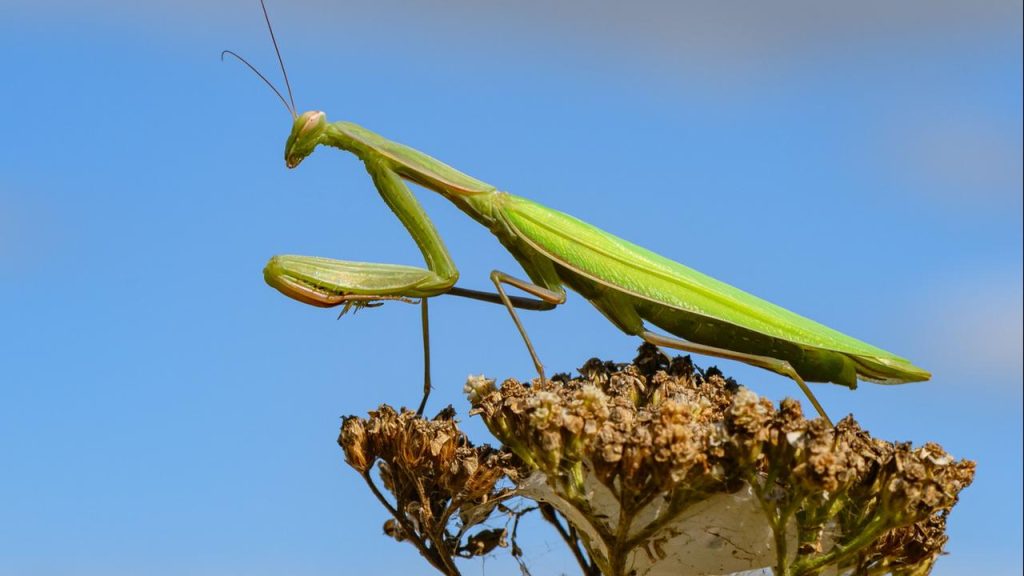
Germany has experienced an unprecedented surge in praying mantis sightings this summer, with more than 15,000 reported since July. Experts attribute this sudden rise to climate change, which has created favorable conditions for the insects’ reproduction and survival. Citizens have played a critical role in tracking this development, using an online portal to report sightings, with nearly all submissions accurately identifying the species.
Traditionally confined to the Kaiserstuhl region near Freiburg in southern Germany, the praying mantis has now expanded its range significantly. Its presence is increasingly noted along the Rhine River, extending up to Cologne, as well as in a separate population emerging between Berlin and Thuringia. Warmer temperatures are enabling the eggs laid by females to thrive, accelerating the spread of these exotic insects across the country.
Despite their fearsome reputation due to their rapid hunting strike—which lasts just milliseconds—and their notorious behavior during mating, where approximately a third of males are consumed post-copulation, praying mantises pose no danger to humans. Experts highlight the pivotal role of climate change in this ecological shift, emphasizing how rising temperatures are reshaping biodiversity patterns in Germany.
Edited and prepared by AboMatrix