



New Asylum Handbook: Bridging Legal Systems for Migrants’ Rights

New Asylum Handbook: Bridging Legal Systems for Migrants’ Rights
⏱ 3 min read
Executive Summary
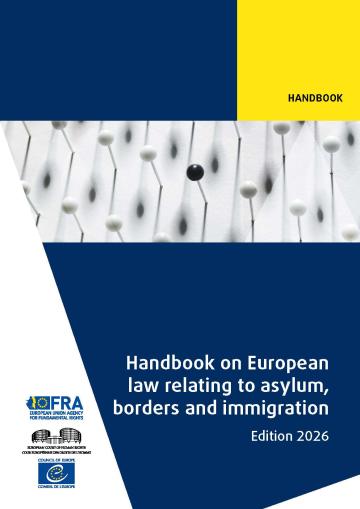
The EU Agency for Fundamental Rights and the European Court of Human Rights have released the 2026 edition of the asylum handbook, offering updated guidance on asylum, borders, and migration. This critical resource integrates EU and Council of Europe standards, reflecting recent legal developments, including the EU Pact on Migration and Asylum, and introduces a new chapter on monitoring rights compliance.
Strategic Context
The European Union (EU) and the Council of Europe have long collaborated to uphold human rights and ensure fair treatment of migrants and refugees. The EU’s legal framework, governed by the Court of Justice of the European Union (CJEU), and the Council of Europe’s standards, enforced by the European Court of Human Rights (ECtHR), form two pillars of protection for individuals seeking asylum. These systems, while distinct, often intersect in their goals to safeguard fundamental rights.
Since 2020, migration policies across Europe have undergone significant changes, driven by the EU Pact on Migration and Asylum. This pact aims to create a more unified and efficient approach to migration, balancing responsibility-sharing among member states with the need for robust border management. The 2026 asylum handbook reflects these developments, offering updated legal guidance to professionals working with migrants and refugees.
In-Depth Analysis
The release of the 2026 asylum handbook underscores the EU’s commitment to harmonizing its legal framework with the Council of Europe’s human rights standards. By integrating case law from both the CJEU and the ECtHR, the handbook provides a comprehensive overview of where these legal systems align and diverge. This is particularly important in addressing complex cases involving asylum seekers and migrants.
A notable addition to this edition is the chapter on monitoring fundamental rights compliance. This reflects growing concerns about rights violations at borders and within detention facilities. By equipping professionals with tools to investigate and address such violations, the handbook aims to strengthen accountability and ensure that migrants’ rights are upheld.
The handbook’s availability in Greek, alongside English, highlights the EU’s recognition of Greece’s pivotal role in managing migration flows. As a frontline state, Greece has faced immense pressure in recent years, making accessible legal resources crucial for both professionals and migrants navigating the asylum process.
Impact on Migrants
For migrants and refugees, the updated handbook represents a step forward in ensuring fair treatment and access to justice. By consolidating legal standards and case law, it provides clarity on their rights and the obligations of states, reducing the risk of arbitrary decisions in asylum cases.
Additionally, the focus on monitoring rights compliance offers hope for greater accountability in addressing abuses. Migrants often face challenges such as unlawful detention or pushbacks at borders. The handbook’s emphasis on investigating rights violations signals a commitment to addressing these issues and protecting vulnerable individuals.
Outlook & Conclusion

Prepared & Analyzed by: Migration Policy Unit | AboMatrix