


Marc Henrichmann Leads Parliamentary Oversight Amid Rising Security Challenges

Marc Henrichmann Leads Parliamentary Oversight Amid Rising Security Challenges
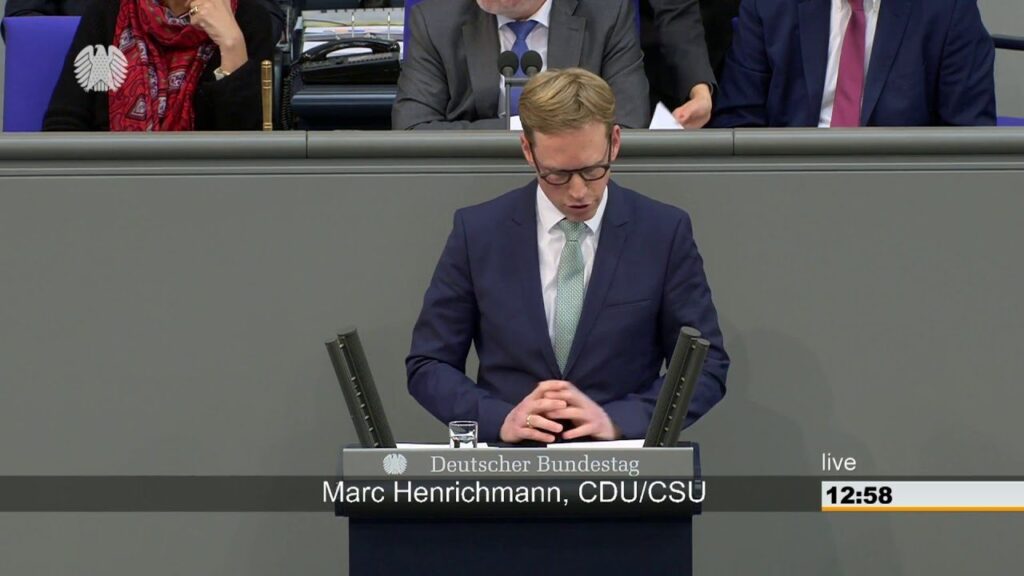
Marc Henrichmann, chair of the Bundestag’s Parliamentary Oversight Panel, is tasked with monitoring Germany’s intelligence agencies during a time of heightened international threats.
Marc Henrichmann, a 50-year-old CDU politician and Bundestag member since 2017, serves as the chair of the Parliamentary Oversight Panel (PKGr), a body responsible for supervising Germany’s intelligence agencies, including the Federal Intelligence Service (BND), the Federal Office for the Protection of the Constitution, and the Military Counterintelligence Service. The panel, currently composed of six Bundestag members, handles highly sensitive security matters, ensuring accountability for agencies that operate largely in secrecy. Henrichmann’s office features a wooden box designed to securely store smartphones, a precaution against potential eavesdropping.
The PKGr has faced increasing challenges in recent years due to a surge in international security threats, including drone attacks from Russia, cyberattacks originating in Iran, and the misuse of artificial intelligence. Henrichmann and his colleagues have advocated for reforms to strengthen Germany’s intelligence services and expand their capabilities. However, Henrichmann emphasizes that any additional powers must be accompanied by enhanced oversight to maintain accountability. The panel has also taken steps to raise public awareness about foreign threats, within the limits of strict confidentiality rules.
Under Henrichmann’s leadership, the PKGr has maintained unity among its members, who represent the CDU/CSU, SPD, and Greens. Notably, representatives from the AfD and Left Party are not part of the panel, as they did not secure the necessary majority in the Bundestag. The panel recently issued a rare public statement following the arrest of former BND President August Hanning on charges of espionage and treason, a case that has the potential to undermine trust in Germany’s security infrastructure. Despite the challenges, Henrichmann remains a steady and cautious figure in navigating the complex landscape of national security oversight.