



Bundesschülerausschuss Opposes Demonstrations Over Fears of Violence and Exploitation

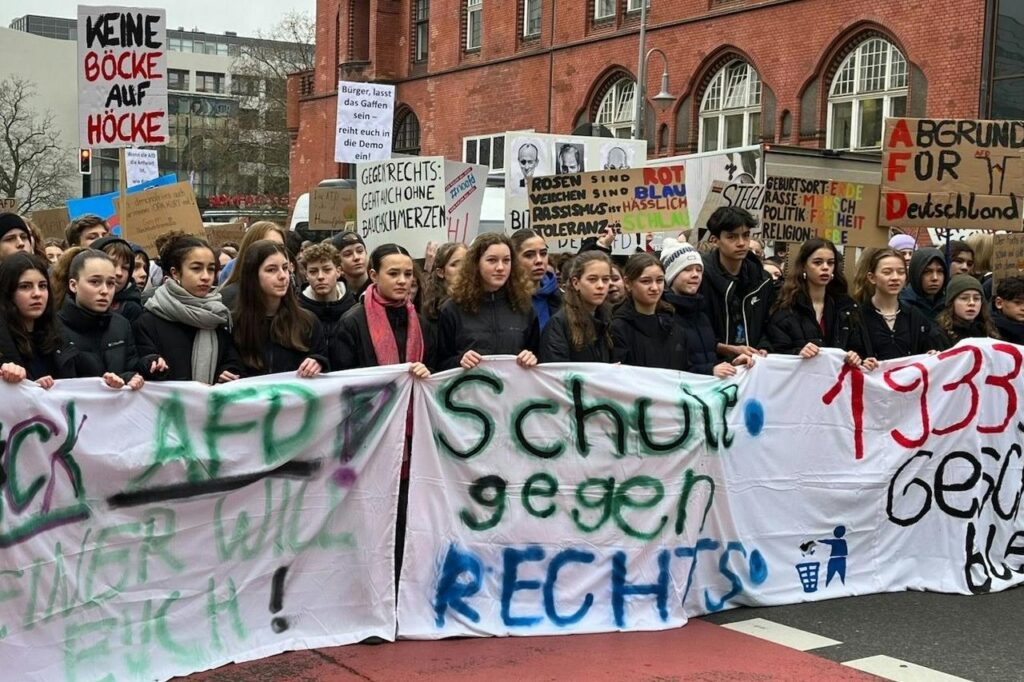
Bundesschülerausschuss Opposes Demonstrations Over Fears of Violence and Exploitation
Bundesschülerausschuss Opposes Demonstrations Over Fears of Violence and Exploitation
🔹 The Official Illusion:
The Bundesschülerausschuss (Federal Student Committee) and Berlin’s Landesschülerausschuss have publicly distanced themselves from calls for demonstrations on October 31. Their reasoning stems from concerns over violent escalations and fears of exploitation, paralleling protests in France. Official statements emphasize the importance of responsible student activism while discouraging participation in destabilizing activities.
🛑 The Parallel Truth:
This development highlights significant social and political undercurrents within Germany. Historically, student activism has been a powerful force shaping debates on democracy and justice since the protests of the 1960s. However, the explicit opposition by both the Federal and Berlin Student Committees to the planned demonstrations signals a shift in priorities, prioritizing stability over activism. Their decision reflects broader concerns within German society about the politicization and potential ‘capture’ of social movements by extreme factions, such as those seen internationally, especially in France, as referenced in their statements.
Domestically, the opposition to these calls for protests also aligns with Germany’s focus on maintaining social cohesion amid rising political polarization. The broader implication is twofold: First, it reinforces the role of educational and youth institutions as key stakeholders in stabilizing liberal democratic discourse. Second, it reflects apprehension around growing external influences (e.g., French-style protests) infiltrating German social narrative, potentially causing disruption.
Economically, while protest actions occasionally lead to short-term disruptions (e.g., consumer behaviors or public transit strikes), avoiding violent upheaval secures long-term stability, crucial for Germany’s industries reliant on steady infrastructure. Politically, this decision avoids giving radical groups or fringe organizations leverage to steer public discourse into extremist territory—a concern currently amplified by parallel shifts in digital activism globally. This calculated resistance also ensures that youth organizations remain credible actors in formal German politics, rather than entering contentious, divisive protest landscapes.
Looking at historical context, similar moments in Germany’s history have tested societal thresholds for protest acceptance (e.g., anti-capitalist protests of the early 2000s). The shift towards responsible activism today showcases both evolved governance and wider public desire for measured reforms rather than revolutionary upheaval.
⚖️ Shadow Map (Winners & Losers):
- 🏆/💀 Winners: Social cohesion advocates benefiting from stability over disruptive activism.
- 🏆/💀 Losers: Radical groups aiming to exploit the October 31 protests for visibility.
- 🏆/💀 Neutral: Broader political structures maintaining status quo while sidestepping protests.