



Historical Trauma and Migration: Hungary’s Policy Nexus

Historical Trauma and Migration: Hungary’s Policy Nexus
⏱ 3 min read
Executive Summary
The commemoration of the Battle of Mohács, a pivotal moment in Hungarian history, underscores the enduring interplay between historical memory and contemporary migration policy. This analysis explores how Hungary’s historical traumas, particularly its defeat in 1526, are invoked to justify stringent anti-migration stances, reflecting deeper geopolitical and cultural anxieties.
Strategic Context
Historical Context: The Battle of Mohács and Its Legacy
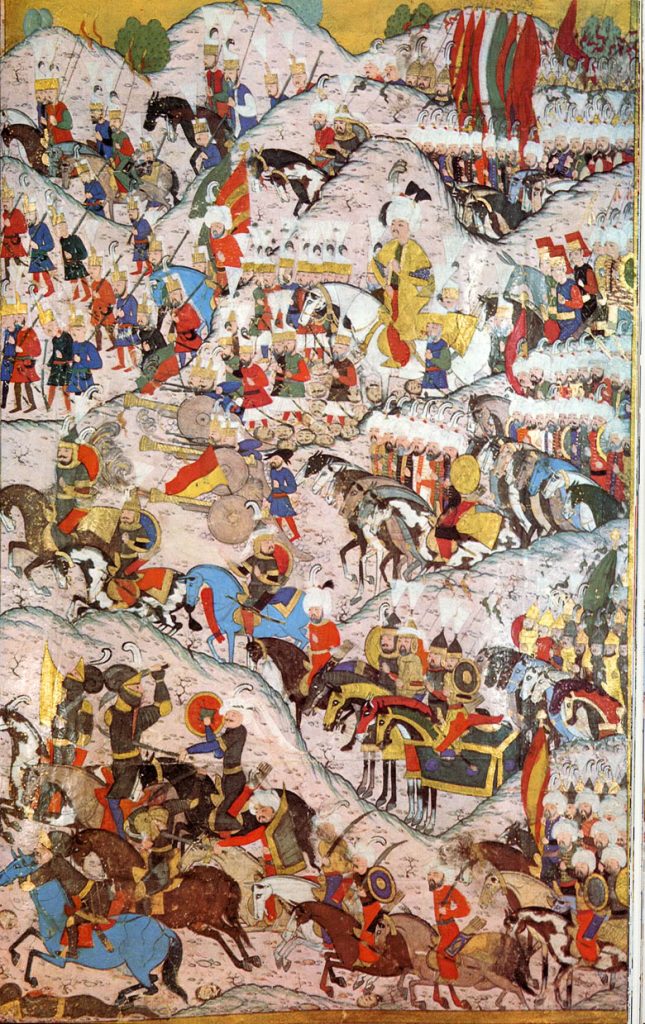
The Battle of Mohács in 1526 marked a catastrophic defeat for medieval Hungary at the hands of the Ottoman Empire. This event not only signaled the collapse of Hungary’s sovereignty but also initiated centuries of foreign domination, dividing the nation into three distinct territories: Habsburg-controlled Royal Hungary, Ottoman Hungary, and the semi-autonomous Principality of Transylvania. The psychological scars of this fragmentation remain deeply embedded in Hungary’s national consciousness.
In the modern era, this historical trauma has been repeatedly invoked to shape national identity and political narratives. The Fidesz government under Viktor Orbán, for instance, has drawn parallels between the Ottoman invasion and contemporary migration from predominantly Muslim countries, framing it as a continuation of historical threats to Hungarian sovereignty and cultural identity.
In-Depth Analysis
Analyzing Hungary’s Historical Narrative in Migration Policy
The invocation of the Battle of Mohács by Hungarian political leaders, including Viktor Orbán, reveals a deliberate strategy to intertwine historical memory with contemporary policy. By framing migration as a modern-day invasion akin to the Ottoman threat, the government seeks to evoke a sense of existential urgency among the populace. This narrative not only consolidates domestic support but also positions Hungary as a defender of ‘European civilization’ against perceived external threats.
However, this historical framing is not without controversy. Critics argue that it oversimplifies complex migration dynamics and fosters xenophobia. The selective use of history to justify exclusionary policies risks alienating Hungary from broader European Union values, particularly those emphasizing solidarity and human rights. Moreover, it perpetuates a binary ‘us versus them’ worldview that undermines nuanced policy discussions.
Additionally, the emphasis on historical victimhood serves to deflect criticism of Hungary’s current political trajectory. By portraying itself as a nation perpetually under siege, the government can justify its authoritarian tendencies and resistance to EU migration quotas. This strategy not only isolates Hungary diplomatically but also exacerbates tensions within the EU over shared responsibilities in addressing migration.
Impact on Migrants
Legal and Social Implications for Migrants
The historical narrative employed by Hungary has tangible consequences for migrants, particularly those from Muslim-majority countries. Policies rooted in this narrative often manifest as stringent border controls, limited asylum opportunities, and a hostile environment for refugees. These measures have led to overcrowded detention centers, inadequate access to basic services, and prolonged legal uncertainties for asylum seekers.
On a societal level, the framing of migration as a continuation of historical invasions fosters an atmosphere of mistrust and exclusion. Migrants often face discrimination and social ostracization, further complicating their integration into Hungarian society. This not only undermines their human dignity but also deprives Hungary of the potential benefits of a diverse and dynamic population.
Outlook & Conclusion
As Hungary commemorates the 500th anniversary of the Battle of Mohács, it is imperative to critically examine how historical narratives shape contemporary policies. While national memory is a powerful tool for identity formation, its politicization risks perpetuating exclusionary practices and undermining collective European efforts to address migration challenges. A balanced approach that honors history without weaponizing it is essential for fostering both national cohesion and international solidarity.

Prepared & Analyzed by: Migration Policy Unit | AboMatrix