



Green Party’s 5%: Blocking Far-Right Rule

Daily Monitor
September 20, 2026
Green Party’s 5%: Blocking Far-Right Rule
A bold campaign by Germany’s Green Party aims to prevent far-right AfD governments in Eastern states.
Germany’s Green Party has launched an ambitious campaign to secure its political future in the eastern states, where it faces the daunting challenge of crossing the critical five-percent threshold required for parliamentary representation. With the slogan, ‘5% Greens in the State Parliament means 0% AfD Government,’ the party is positioning itself as the bulwark against the far-right Alternative for Germany (AfD), which has been gaining traction in the region.
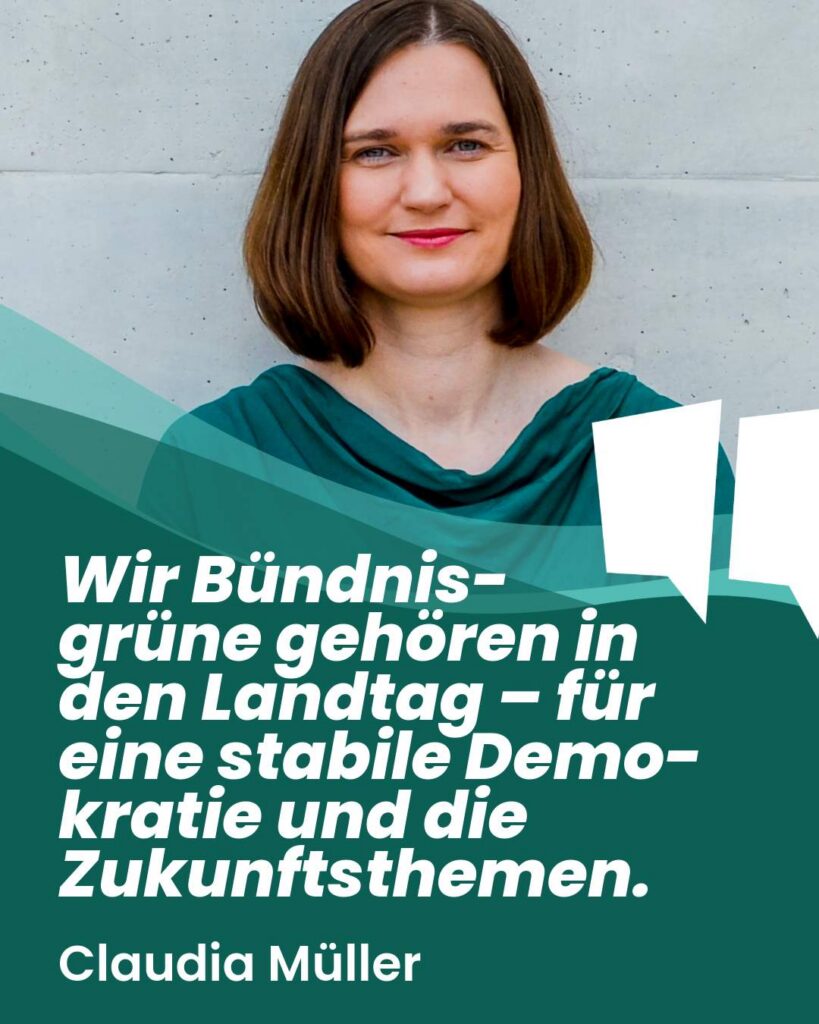
The stakes are high. The Greens argue that their presence in state parliaments is essential to prevent the AfD from forming governments in states like Saxony-Anhalt and Mecklenburg-Western Pomerania. Claudia Müller, the Green Party’s lead candidate in Saxony-Anhalt, emphasized this point during the party’s ‘Ostkongress’ and regional council meeting held at the disused ferry terminal in Sassnitz, Rügen. The terminal itself served as a symbolic backdrop, representing the party’s commitment to environmental sustainability and resistance against Russian aggression, with a stranded oil tanker and nearby LNG terminal highlighting the energy transition challenges.
Despite their strategic messaging, the Greens face an uphill battle. Current polls suggest they are hovering around four percent, just below the threshold. To change this trajectory, the party has launched its most extensive campaign in years, focusing on grassroots engagement and breaking out of its traditional voter base. Party leaders Franziska Brantner and Felix Banaszak are spearheading this effort, traveling across Eastern Germany in a camper van, hosting family-friendly events, and engaging directly with critics, including AfD sympathizers.
The campaign’s innovative approach includes a mix of traditional political discourse and community-focused activities. At the Ostkongress, discussions ranged from topics like ‘frustrated, male, right-wing’ to ‘security and freedom in Eastern Europe.’ Meanwhile, outside the venue, families enjoyed festivities complete with bouncy castles, while citizen groups and initiatives set up informational booths. Notably, the Greens allowed even dissenting voices, such as the wind energy skeptics from ‘Livable Rügen,’ to share space and engage in dialogue.
This strategy reflects the Greens’ attempt to present themselves as approachable and inclusive, countering perceptions of elitism. Whether this approach will translate into electoral success remains uncertain, but the party’s determination to prevent far-right dominance in Eastern Germany is clear. As the summer campaign heats up, the Greens are betting that their message of sustainability, dialogue, and resistance to extremism will resonate with voters.
The stakes are high. The Greens argue that their presence in state parliaments is essential to prevent the AfD from forming governments in states like Saxony-Anhalt and Mecklenburg-Western Pomerania. Claudia Müller, the Green Party’s lead candidate in Saxony-Anhalt, emphasized this point during the party’s ‘Ostkongress’ and regional council meeting held at the disused ferry terminal in Sassnitz, Rügen. The terminal itself served as a symbolic backdrop, representing the party’s commitment to environmental sustainability and resistance against Russian aggression, with a stranded oil tanker and nearby LNG terminal highlighting the energy transition challenges.
Despite their strategic messaging, the Greens face an uphill battle. Current polls suggest they are hovering around four percent, just below the threshold. To change this trajectory, the party has launched its most extensive campaign in years, focusing on grassroots engagement and breaking out of its traditional voter base. Party leaders Franziska Brantner and Felix Banaszak are spearheading this effort, traveling across Eastern Germany in a camper van, hosting family-friendly events, and engaging directly with critics, including AfD sympathizers.
The campaign’s innovative approach includes a mix of traditional political discourse and community-focused activities. At the Ostkongress, discussions ranged from topics like ‘frustrated, male, right-wing’ to ‘security and freedom in Eastern Europe.’ Meanwhile, outside the venue, families enjoyed festivities complete with bouncy castles, while citizen groups and initiatives set up informational booths. Notably, the Greens allowed even dissenting voices, such as the wind energy skeptics from ‘Livable Rügen,’ to share space and engage in dialogue.
This strategy reflects the Greens’ attempt to present themselves as approachable and inclusive, countering perceptions of elitism. Whether this approach will translate into electoral success remains uncertain, but the party’s determination to prevent far-right dominance in Eastern Germany is clear. As the summer campaign heats up, the Greens are betting that their message of sustainability, dialogue, and resistance to extremism will resonate with voters.
Drafted & Edited by Investigative Desk | AboMatrix