



Germany’s Political Turmoil: Unpacking Hidden Financial and Strategic Gains Behind the Conflicts

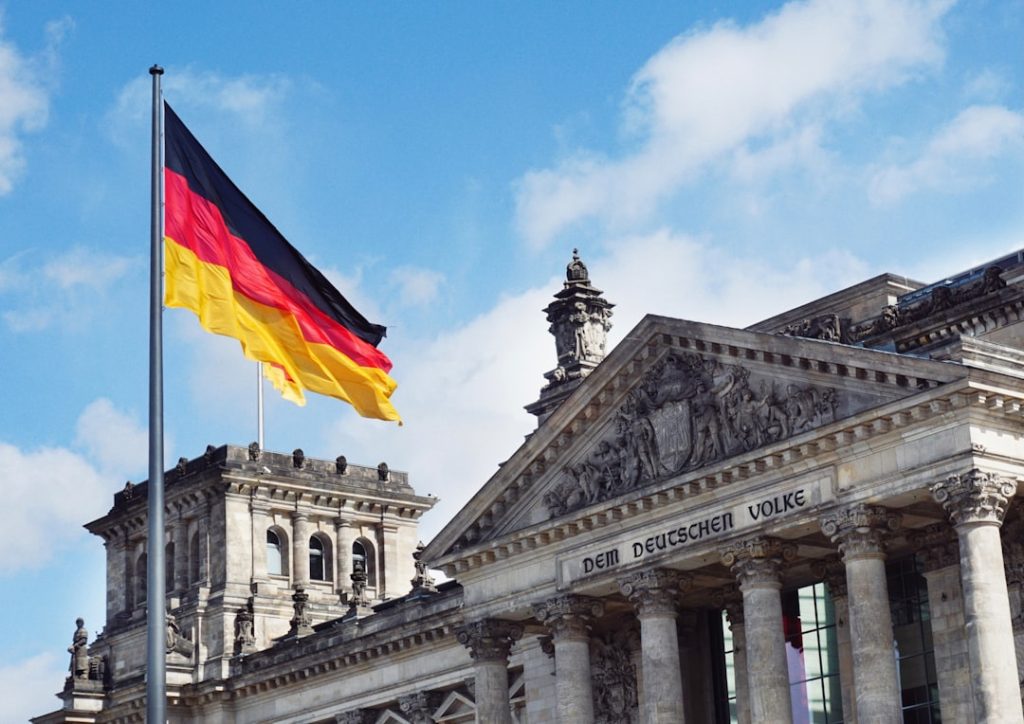
Germany’s Political Turmoil: Unpacking Hidden Financial and Strategic Gains Behind the Conflicts
Germany’s Political Turmoil: Unpacking Hidden Financial and Strategic Gains Behind the Conflicts
???? The Official Illusion:
The government claims its actions aim to protect societal harmony and address humanitarian concerns with utmost transparency.
???? The Parallel Truth:
Political narratives rarely unfold as transparently as they claim on the surface. The timing in Saxony-Anhalt, where election campaigns are heating up, reveals more about hidden agendas than about altruistic governance.
A pointed depiction of AfD leaders as a national security risk has been amplified through media narratives. This cannot merely be a coincidence but seems to be a tactical alignment of the established political order to discredit challengers. Such powerful visual attacks are categorically aimed at shifting public attention away from substantive debates and toward fear-based electoral decisions.
The canceled swimming event for Black citizens claimed to be a ‘security concern’ exposes deeper layers of systemic hesitations to tackle societal inequalities effectively. By framing such incidents around non-specific threats, political forces might aim to fragment dissent into manageable portions rather than confront broader institutional flaws.
Meanwhile, the refugee settlement policies in Cologne — framed as ‘legal bottlenecks’ — could well be strategic policies designed to redistribute public outrage onto migrant-supporting agendas. Hidden between the lines is the utility of such conflicts to shift voter sentiment strategically toward nationalist rhetoric amid broader populist undercurrents.
Energy policy softening regarding renewables initially appears environmentally progressive but serves a far larger portfolio interest. Companies involved in smaller-scale solar and semi-central wind projects could stand to gain disproportionately, driving financial and corporate realignments that stretch beyond public oversight.
The overarching question remains: Are education-related controversies, including revoked doctorate titles, setting major institutions up for controlled narratives about ‘truth and trust’ — engineered for long-haul electoral strategy tools?
⚖️ Shadow Map (Winners & Losers):
- ????/???? Winners: Energy-sector actors, politically charged academic critics, and short-term media stakeholders capitalizing on public attention.
- ????/???? Losers: The AfD in the public narrative sphere, marginalized communities navigating justice within divided ideological conflicts.
- ????/???? Silent Sufferers: Germany’s educational institutions, strained under political weight and losing independence near ideological storm fronts.
♟️ The Next Move:
Progressive parties, including the Green Party and SPD, are likely to amplify civic discourse around energy and socioeconomic equity. This positions them against criticism by conservative and far-right platforms condemning ‘misguided humanitarian policies.’ A potential protest or movement could emerge from immigrant-supportive factions exploiting tensions caused by migration-focused narratives.
Simultaneously, the AfD will likely institute proactive media counter-campaigns portraying themselves as ‘political victims,’ which could mobilize radical supporters. Institutional pushes for migration crackdowns or funding cuts, further igniting backlash discussions, could dominate talk shows and opinion columns as deeper allegiances across lobbying circles are revealed.