



Germany’s Political Landscape Shifts Amid Rising AfD and CDU Tensions

Germany’s Political Landscape Shifts Amid Rising AfD and CDU Tensions
Germany’s Political Landscape Shifts Amid Rising AfD and CDU Tensions
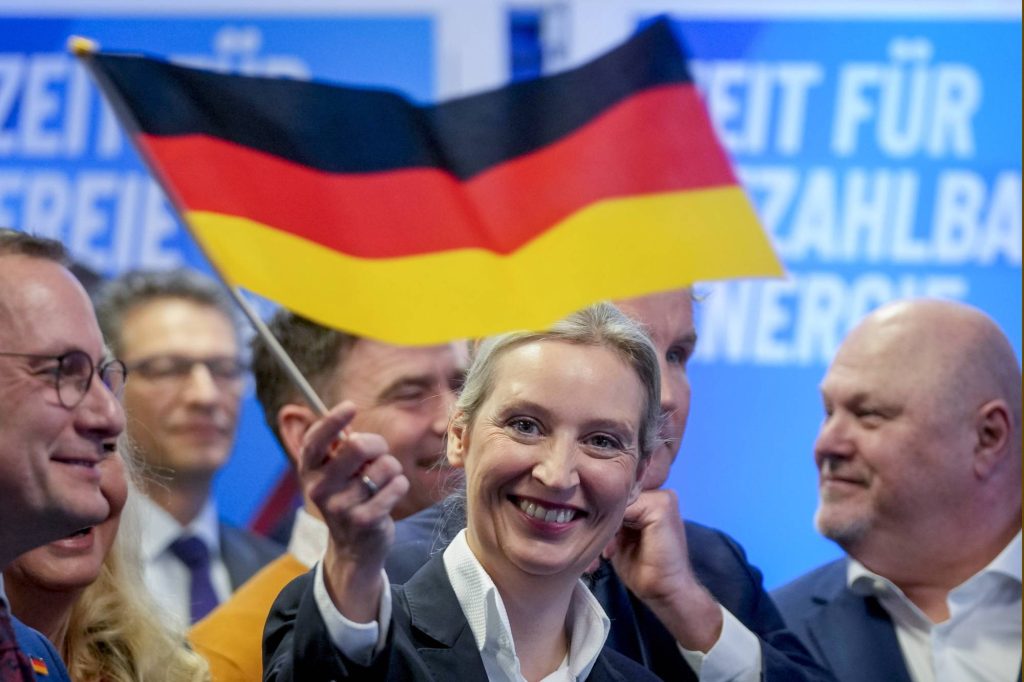
Germany faces significant political upheaval following the AfD’s electoral success in Saxony-Anhalt, which has exposed vulnerabilities within traditional parties such as the CDU and SPD. These developments are forcing a reevaluation of strategies ahead of critical regional elections in Berlin and Mecklenburg-Western Pomerania.
Geopolitical & Strategic Context
Historical Foundations of Political Instability
Germany has long been characterized by a stable political system dominated by traditional parties, notably the CDU and SPD. However, recent years have marked a sharp rise in the prominence of the right-wing AfD.
The AfD has managed to capitalize on public frustrations over immigration and economic reforms, positioning itself as a populist alternative.
The party’s success in Saxony-Anhalt, as well as notable gains in Lower Saxony’s municipal elections, underscores growing disillusionment with mainstream politics and mounting challenges for traditional parties.
Internal Party Dynamics and Fragmentation
Beyond the AfD’s rise, internal divisions within larger parties have exacerbated the instability. The CDU, for instance, faces mounting dissatisfaction among its base, raising questions about Friedrich Merz’s leadership amidst growing calls for strategic recalibration.
Regional political disruptions are likely to further complicate national cohesion, with implications for upcoming electoral contests.
Strategic Implications
- ♦ The AfD’s emergence poses a structural challenge to Germany’s major parties.
- ♦ Traditional parties must adapt swiftly to regain voter confidence amid shifting alliances.
- ♦ Internal CDU divisions weaken its ability to consolidate a unified electoral strategy.
Future Trajectories
Anticipated Political Developments
Germany’s political stability will hinge significantly on the outcomes of regional elections in Berlin and Mecklenburg-Western Pomerania, which could serve as barometers for national sentiment. Strategic shifts within the CDU, including potential leadership changes, may influence its capacity to counterbalance the AfD’s growth.
The coming months will likely see intensified scrutiny of party strategies and their ability to address core voter grievances.

Prepared & Analyzed by: Strategic Studies Desk | AboMatrix