



Germany’s Pension Reform: A New Era Begins

Daily Monitor
September 21, 2026
Germany’s Pension Reform: A New Era Begins
Germany’s long-debated pension reform has sparked widespread approval, promising to address critical challenges in retirement security.
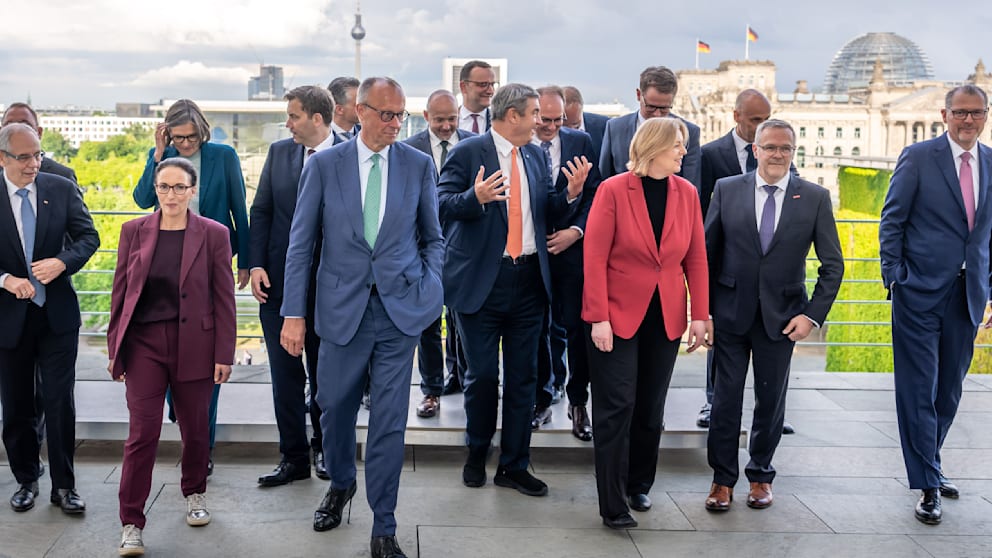
Germany’s pension system, a cornerstone of its social safety net, is undergoing a historic transformation. Last week, the federal government’s pension commission unveiled a reform package that has garnered surprising support across political and expert circles. Chancellor Friedrich Merz and Social Minister Bärbel Bas have pledged full implementation of the proposals, signaling a rare moment of consensus in an often polarized debate.
The reform aims to tackle pressing issues in retirement security, including the sustainability of pension levels and the age of retirement. Notable experts, such as Axel Börsch-Supan from the Max Planck Institute, have expressed cautious optimism, though concerns remain about the proposed safeguards for pension levels. Lars Feld, a former economic advisor, praised the package as a decisive step forward, stating, ‘The reform package addresses the most urgent problems.’
The commission’s success lies in its balanced approach, distributing compromises across ideological lines. Led by seasoned experts Constanze Janda and Frank-Jürgen Weise, the commission included representatives from diverse political backgrounds, such as CDU’s Pascal Reddig and SPD’s Annika Klose. This collaborative effort has resulted in proposals that challenge entrenched norms while striving for fairness.
One of the most significant changes involves raising the retirement age incrementally. Starting in 2041, Germans will retire at 67 years and six months, with further adjustments tied to life expectancy. By 2051, the retirement age will reach 68, and by the 2090s, it could rise to 70. This gradual shift reflects the demographic realities of an aging population and longer lifespans.
Additionally, the reform seeks to phase out early retirement options, including the ‘pension at 63’ scheme introduced in 2014. Critics argue that these measures disproportionately benefit well-off workers in stable jobs, rather than the low-income earners they were intended to support. The commission also plans to restrict early retirement with penalties, raising the minimum age from 63 to 64 for those with 35 contribution years.
While the SPD’s proposal to link pensions directly to contribution years was rejected, the commission emphasized the importance of maintaining the current system of pension points, which ensures proportional benefits. This decision underscores the complexity of balancing equity and sustainability in pension reform.
Germany’s pension reform marks a pivotal moment in addressing the challenges of an aging society. As the nation moves forward, the success of these measures will depend on their implementation and the ability to adapt to future demographic shifts.
The reform aims to tackle pressing issues in retirement security, including the sustainability of pension levels and the age of retirement. Notable experts, such as Axel Börsch-Supan from the Max Planck Institute, have expressed cautious optimism, though concerns remain about the proposed safeguards for pension levels. Lars Feld, a former economic advisor, praised the package as a decisive step forward, stating, ‘The reform package addresses the most urgent problems.’
The commission’s success lies in its balanced approach, distributing compromises across ideological lines. Led by seasoned experts Constanze Janda and Frank-Jürgen Weise, the commission included representatives from diverse political backgrounds, such as CDU’s Pascal Reddig and SPD’s Annika Klose. This collaborative effort has resulted in proposals that challenge entrenched norms while striving for fairness.
One of the most significant changes involves raising the retirement age incrementally. Starting in 2041, Germans will retire at 67 years and six months, with further adjustments tied to life expectancy. By 2051, the retirement age will reach 68, and by the 2090s, it could rise to 70. This gradual shift reflects the demographic realities of an aging population and longer lifespans.
Additionally, the reform seeks to phase out early retirement options, including the ‘pension at 63’ scheme introduced in 2014. Critics argue that these measures disproportionately benefit well-off workers in stable jobs, rather than the low-income earners they were intended to support. The commission also plans to restrict early retirement with penalties, raising the minimum age from 63 to 64 for those with 35 contribution years.
While the SPD’s proposal to link pensions directly to contribution years was rejected, the commission emphasized the importance of maintaining the current system of pension points, which ensures proportional benefits. This decision underscores the complexity of balancing equity and sustainability in pension reform.
Germany’s pension reform marks a pivotal moment in addressing the challenges of an aging society. As the nation moves forward, the success of these measures will depend on their implementation and the ability to adapt to future demographic shifts.
Drafted & Edited by Investigative Desk | AboMatrix