



Germany Faces Political Fragmentation Amid Rising Polarization

Germany Faces Political Fragmentation Amid Rising Polarization
Germany Faces Political Fragmentation Amid Rising Polarization
???? The Official Illusion:
As Germany marks the Day of German Unity, political tensions highlight increasing divisions within the nation. Key debates revolve around the influence of the right-wing AfD, administrative reforms, and disparities between East and West Germany. President Steinmeier cautioned against ‘unbearable political demagoguery,’ while discussions over assigning key parliamentary roles to the AfD spark controversy.
???? The Parallel Truth:
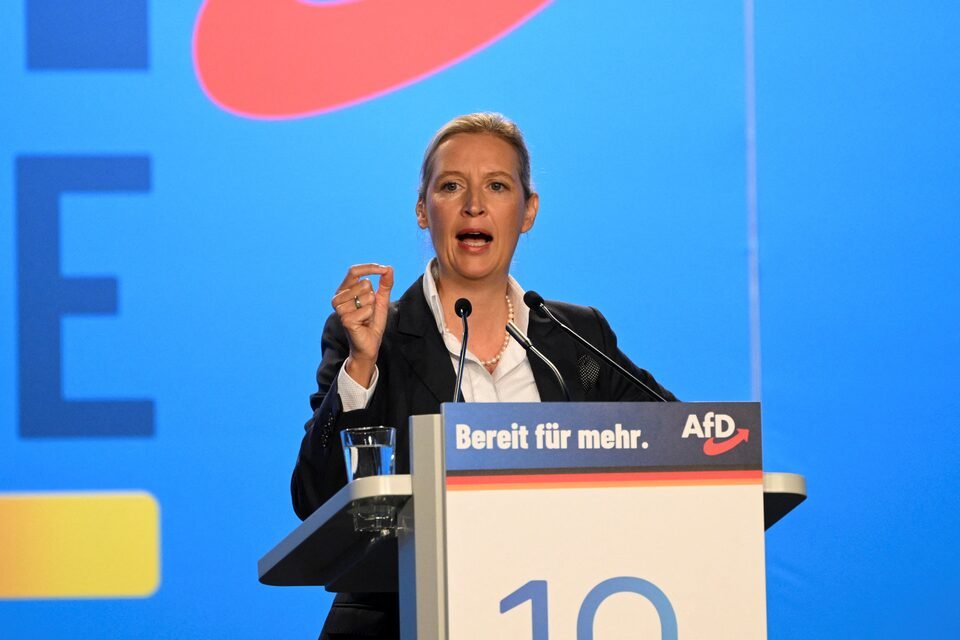
Germany’s political environment is growing increasingly polarized, as evidenced by debates surrounding the role of the right-wing Alternative für Deutschland (AfD) in parliamentary positions. This reflects a deeper ideological shift in the political center, highlighted by the Green Party’s assertion that ‘the center of society leans left.’ If the AfD is granted committee chair positions in the Bundestag, this could signal an unsettling normalization of far-right views in German politics—even as other political leaders vehemently oppose it.
Furthermore, the ongoing tensions between former East and West Germany indicate unresolved regional disparities, exacerbated by the fact that no state representatives from the former East were present at recent German Unity Day celebrations in Bremen. This absence has been criticized by Elisabeth Kaiser, the federal commissioner for Eastern Germany, as emblematic of the continued marginalization of the eastern states.
Economically, the German regions face diverging realities, with wealth concentrated in the west and the north while several cities in North Rhine-Westphalia struggle with budget deficits. Calls for a ‘binding future pact’ between federal and local governments highlight a growing need to address these imbalances.
Concurrently, challenges in defense and security policy present additional sources of tension. Defense Minister Boris Pistorius plans for advanced drone warfare capabilities and a new marine port in Emden, signaling a shift in military strategy amidst renewed concerns over European security threats, including Russia’s hybrid warfare. These policy priorities indicate a government under pressure to address both external and internal crises in equal measure.
⚖️ Shadow Map (Winners & Losers):
- ????/???? Winners: AfD – May gain legitimacy if granted committee chair positions.
- ????/???? Losers: Traditional coalition parties – CDU, SPD, and Greens face growing criticism and fragmentation.
- ????/???? Winners: Urban policymakers – Calls for a ‘future pact’ could bring more resources to struggling cities.