



Germany Breaks Heat Record Again Amid Crisis

Daily Monitor
September 17, 2026
Germany Breaks Heat Record Again Amid Crisis
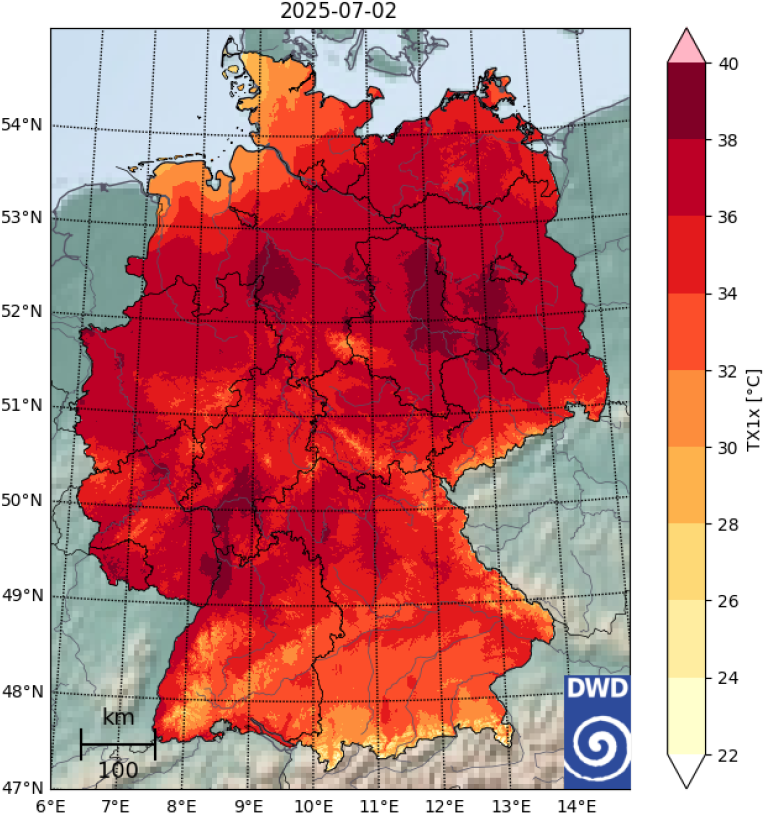
Germany witnesses unprecedented heatwave, breaking records for the second consecutive day, with temperatures soaring to 41.5°C.
Germany has once again found itself at the epicenter of a historic heatwave, as temperatures reached an astonishing 41.5°C at the Möckern-Drewitz weather station in Saxony-Anhalt, according to preliminary data from the German Weather Service (DWD). This marks the second consecutive day of record-breaking heat, surpassing the previous high of 41.3°C recorded in Saarbrücken-Burbach in 2019. Meteorologists caution that these figures are provisional and subject to on-site verification, with final confirmation expected after the weekend.
The relentless heatwave has not only shattered records but also intensified environmental and infrastructural challenges across the nation. In Bavaria, temperatures soared to 40.8°C in Kitzingen, the highest ever recorded in the state. The extreme heat has heightened the risk of wildfires, with a significant blaze reported near Pfreimd in the Schwandorf district. Covering an area of 8,000 square meters, the fire was tackled by 200 personnel, including aerial support from police helicopters. Fortunately, the remote location spared nearby communities from immediate danger.
Emergency services across Germany are under immense strain, with rescue operations reaching critical capacity. In Cologne, the fire department reported being stretched to its limits, deploying additional vehicles to manage the surge in heat-related emergencies. The Bavarian Red Cross has also ramped up its preparedness, particularly on highways where traffic jams exacerbate the risks of heat exposure. Alarmingly, two nursing homes in Krefeld and Dormagen reported temperatures as high as 50°C in some rooms, prompting large-scale medical interventions. Advocacy groups are now urging policymakers to allocate more funding for heat protection in care facilities.
The ecological impact of the heatwave is equally concerning. Rivers such as the Main and Danube have warmed to nearly 30°C, threatening aquatic ecosystems. Meanwhile, the public has flocked to coastal areas like the Baltic Sea for respite, with beaches in Timmendorfer Strand and Scharbeutz described as “overflowing.” However, the heat has also disrupted transportation networks, with highways suffering from heat-induced damage, including cracked road surfaces, further complicating travel plans.
As Germany grapples with this unprecedented heatwave, the situation underscores the urgent need for robust climate adaptation strategies. From safeguarding vulnerable populations to mitigating environmental damage, the nation faces a critical test in balancing immediate responses with long-term resilience.
The relentless heatwave has not only shattered records but also intensified environmental and infrastructural challenges across the nation. In Bavaria, temperatures soared to 40.8°C in Kitzingen, the highest ever recorded in the state. The extreme heat has heightened the risk of wildfires, with a significant blaze reported near Pfreimd in the Schwandorf district. Covering an area of 8,000 square meters, the fire was tackled by 200 personnel, including aerial support from police helicopters. Fortunately, the remote location spared nearby communities from immediate danger.
Emergency services across Germany are under immense strain, with rescue operations reaching critical capacity. In Cologne, the fire department reported being stretched to its limits, deploying additional vehicles to manage the surge in heat-related emergencies. The Bavarian Red Cross has also ramped up its preparedness, particularly on highways where traffic jams exacerbate the risks of heat exposure. Alarmingly, two nursing homes in Krefeld and Dormagen reported temperatures as high as 50°C in some rooms, prompting large-scale medical interventions. Advocacy groups are now urging policymakers to allocate more funding for heat protection in care facilities.
The ecological impact of the heatwave is equally concerning. Rivers such as the Main and Danube have warmed to nearly 30°C, threatening aquatic ecosystems. Meanwhile, the public has flocked to coastal areas like the Baltic Sea for respite, with beaches in Timmendorfer Strand and Scharbeutz described as “overflowing.” However, the heat has also disrupted transportation networks, with highways suffering from heat-induced damage, including cracked road surfaces, further complicating travel plans.
As Germany grapples with this unprecedented heatwave, the situation underscores the urgent need for robust climate adaptation strategies. From safeguarding vulnerable populations to mitigating environmental damage, the nation faces a critical test in balancing immediate responses with long-term resilience.
Drafted & Edited by Investigative Desk | AboMatrix