



Federal Reserve Holds Steady: Implications for the Economy

Federal Reserve Holds Steady: Implications for the Economy
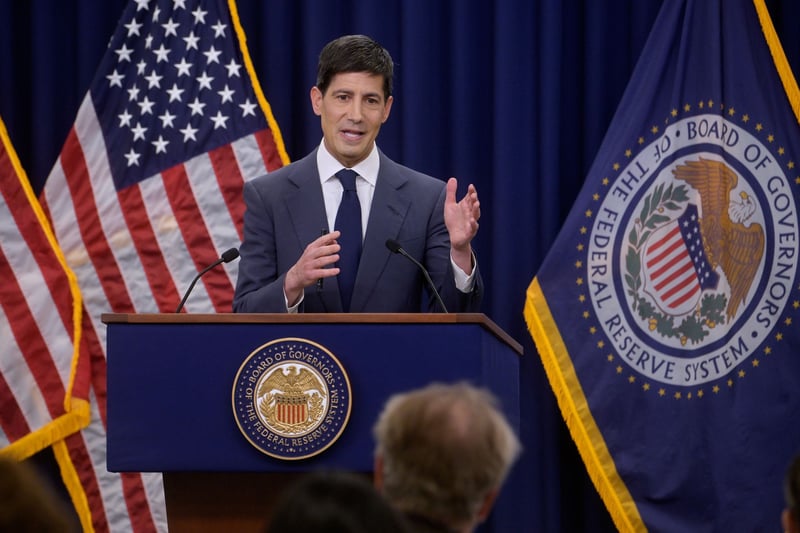
The Federal Reserve’s recent decision to maintain the interest rate at 3.5 to 3.75 percent under new Chair Kevin Warsh raises critical questions about monetary policy direction amidst rising inflation and geopolitical tensions. This stability defies President Trump’s push for lower rates, signaling a cautious approach that may impact economic growth and inflation control.
The Context of the Decision
This marks the first interest rate decision under Kevin Warsh, who has taken the helm of the Federal Reserve. The unanimous choice to keep rates unchanged reflects a consensus among the twelve Federal Reserve members, prioritizing economic stability over political pressure. With inflation currently at 4.2 percent, significantly above the Fed’s target of 2 percent, the decision suggests a focus on combating inflation rather than stimulating growth through rate cuts.
Geopolitical Factors and Inflationary Pressures
The ongoing conflict in Iran and blockades in the Strait of Hormuz have contributed to heightened inflationary pressures, complicating the Fed’s monetary policy landscape. These external factors have made the prospect of rate cuts unlikely in the near future. Instead, a tighter monetary policy appears more plausible as the Fed aims to rein in inflation. The implications of this approach could lead to slower economic growth, particularly as businesses and consumers adjust to the prevailing high-interest environment.
الخلاصة: The Federal Reserve’s decision to maintain interest rates underlines a commitment to addressing inflation amidst external pressures, despite political calls for cuts. As the economic landscape evolves, stakeholders must prepare for the potential ramifications of a tighter monetary policy, which could shape the trajectory of the U.S. economy in the coming months.