



Europe Rebuilt: The Story of a Continent’s Resurrection and Reinvention

Europe Rebuilt: The Story of a Continent’s Resurrection and Reinvention
???? Book Info
In Brief
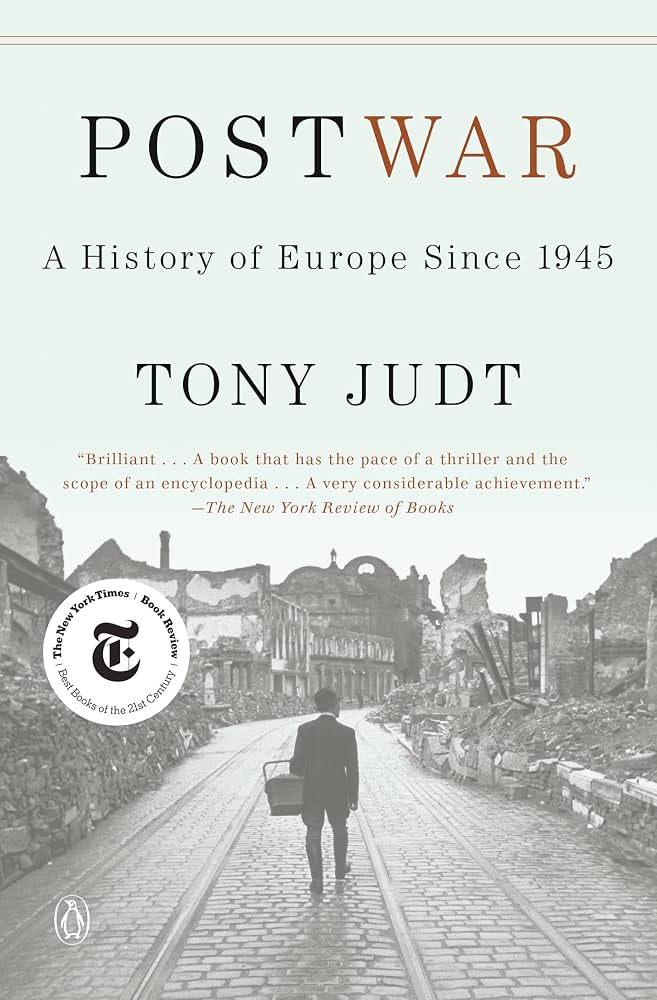
Tony Judt’s ‘Postwar’ is a monumental work that chronicles Europe’s journey from the ashes of World War II to its modern-day complexities. With sweeping scope and meticulous detail, Judt examines the political, social, and cultural transformations that shaped the continent over six decades. This is not just a history book—it is a profound meditation on Europe’s resilience, its struggles with identity, and its ongoing quest for unity in the face of division. At a time when Europe grapples with rising nationalism, economic instability, and geopolitical tensions, ‘Postwar’ serves as an essential guide to understanding the forces that continue to shape the continent today.
Core Ideas
- The reconstruction of Europe post-1945 was not just physical but also ideological, as nations sought to rebuild their economies, societies, and identities in the shadow of war.
- The Cold War divided Europe into two distinct blocs, shaping political systems, alliances, and cultural narratives that persisted for decades.
- The European Union emerged as a bold experiment in supranational governance, reflecting both the promise and challenges of unity in a diverse continent.
Deep Read
The book then delves into the Cold War era, a period marked by the stark division of Europe into East and West. Judt masterfully captures the contrasting realities of life under Western democracy and Eastern communism, highlighting the cultural and political tensions that defined the era. He also explores the role of the United States and the Soviet Union in shaping Europe’s trajectory, showing how external powers influenced the continent’s internal dynamics. The fall of the Berlin Wall in 1989 serves as a pivotal moment in Judt’s narrative, symbolizing not just the end of the Cold War but also the beginning of a new, uncertain chapter for Europe.
In the book’s later sections, Judt turns his attention to the European Union, which he portrays as both a remarkable achievement and a source of ongoing tension. He examines the EU’s successes in fostering economic integration and peace, but he also critiques its bureaucratic inefficiencies and the challenges of accommodating diverse national interests. Judt’s analysis is particularly prescient in light of recent events, such as Brexit and the rise of populist movements, which have exposed the fragility of the European project. His insights into the cultural and historical roots of these challenges offer valuable context for understanding Europe’s current struggles.
???? Why It Matters Now
In an era marked by political polarization, economic uncertainty, and the resurgence of nationalist movements, ‘Postwar’ provides a crucial historical lens through which to view Europe’s current challenges. Policymakers, scholars, and citizens alike can benefit from Judt’s nuanced understanding of the continent’s past, which offers essential lessons for navigating its future. The book underscores the importance of unity, the dangers of division, and the enduring relevance of the European experiment in a rapidly changing world.
Conclusion
Tony Judt’s ‘Postwar’ is more than a history of Europe—it is a testament to the resilience of a continent that has repeatedly risen from the ashes of conflict to redefine itself. As Europe faces new trials in the 21st century, this book serves as both a reminder of what has been achieved and a cautionary tale about what could be lost. It is an indispensable read for anyone seeking to understand the forces that have shaped, and continue to shape, the modern world.

Reviewed by: AboMatrix