



A Study on Access to Microdata in German Research Data Centers

A Study on Access to Microdata in German Research Data Centers
🔬 Classification: Sovereign Study | Reference: German Research Data Center (FDZ)
Documentation Status: Transferred in full from primary source
Core Thesis & Primary Hypotheses
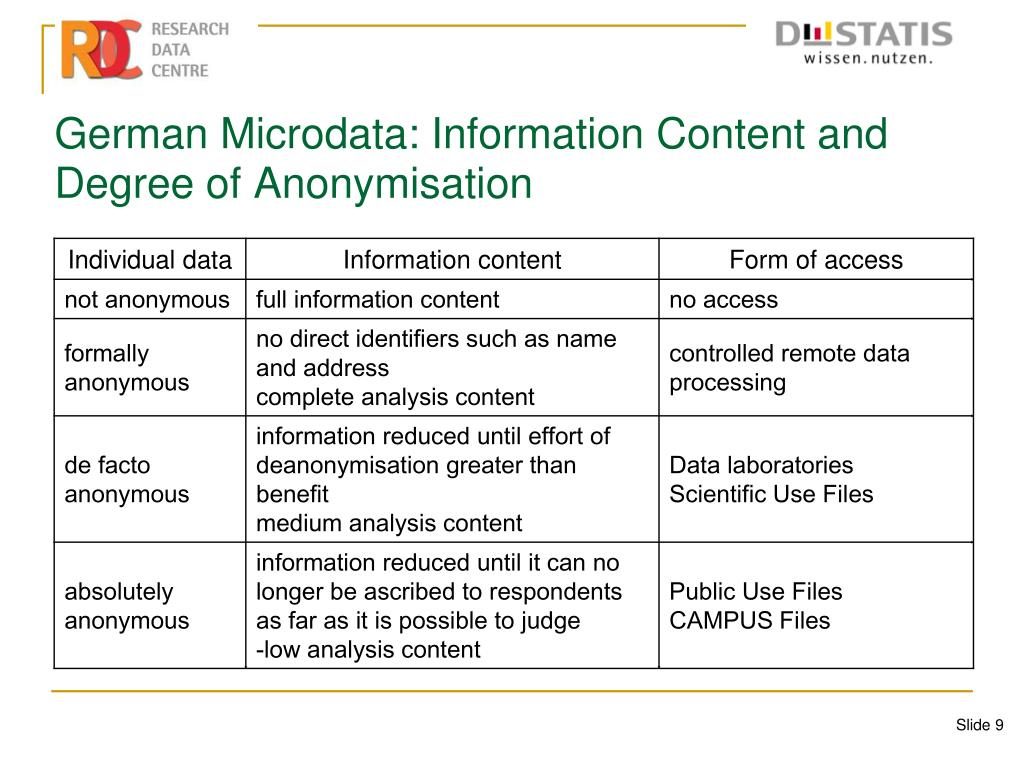
The German Research Data Centers (FDZ) provide a systematic platform for accessing official microdata for scholarly use. There are three main access pathways offered: On-Site access, Remote access, and Off-Site access. Utilizing these data requires adhering to strict legal frameworks, including specific application processes and fees that are based on the volume and type of data requested.
This system aims to enhance transparency, provide precise datasets, and ensure the secure utilization of the supplied data. In addition, online learning modules and advisory services are available to equip researchers with the necessary understanding and skills to make effective use of the dataset offerings.
Surgical Data & Empirical Metrics
- 🔬 Three primary access options are available: On-Site, Remote, and Off-Site.
- 🔬 A formal application process is required to access the data.
- 🔬 Fees vary depending on type of statistics, number of years, and access method.
- 🔬 Advisory services and expansive e-learning resources support researchers.
- 🔬 Official contact channels with detailed information are offered for research inquiries.
Comprehensive Study Text & Deep Analysis
1. **On-Site Access:** Researchers can access the data directly at designated facility locations.
2. **Remote Access:** Data can be securely accessed via a remote systematic setup.
3. **Off-Site Access:** The FDZ facilitates data transfer to non-central locations, conditional upon adherence to strict legal guidelines.
**Fees and Charges:** Accessing the data comes with applicable charges. These fees are calculated based on the number of statistics required, their yearly span, and the type of access mode chosen.
**Legal Mandates:** Accessing FDZ’s data mandates filling out formal applications with exhaustive details, including purpose of research and specific data needs. Applications are then reviewed and approved as per regulations.
**Educational & Informational Support:** FDZ has developed a robust e-learning platform to assist researchers in understanding the nuances of utilizing microdata. These resources include comprehensive modules and detailed technical walkthroughs.
**Data Relevance:** The data spans diverse domains like economy, environmental concerns, and social issues. Researchers can apply highly precise analytics on well-contextualized datasets, enabling meaningful academic outputs.
**Communication Channels:** FDZ has made its contact information widely accessible for researchers to seek clarification or personalized support. They provide dedicated support experts for further assistance.
Strategic Projection & Outlook
🔮 It is projected that the FDZ will continue to invest in innovative data solutions, ensuring simplification of access routes and bolstering data security measures. Expanding e-learning initiatives and database enhancements can empower researchers in creating impactful academic research, especially in fields of growing global importance.
Methodological Critique & Red Flags
⚠️ 1. Fee demands may pose obstacles for smaller or independent researchers.
2. Effectiveness of Remote-Access Systems should be periodically reviewed for functionality.