



Communist Mayor Fights to Retain Graz Leadership

Daily Monitor
September 20, 2026
Communist Mayor Fights to Retain Graz Leadership
In Graz, Austria, Communist Mayor Elke Kahr seeks re-election, championing grassroots governance and community-focused policies.
In the picturesque city of Graz, nestled on the sunny southern slopes of the Alps and surrounded by the lush vineyards of southern Styria, an unconventional political story is unfolding. Elke Kahr, the Communist mayor of Austria’s second-largest city, is vying to retain her position in the upcoming mayoral election this Sunday. Despite the city’s traditionally conservative leanings, Kahr’s leadership has garnered widespread support, with recent polls placing her Communist Party of Austria (KPÖ) at over 30%—a commanding lead over the conservative Austrian People’s Party (ÖVP), which trails at 22%.
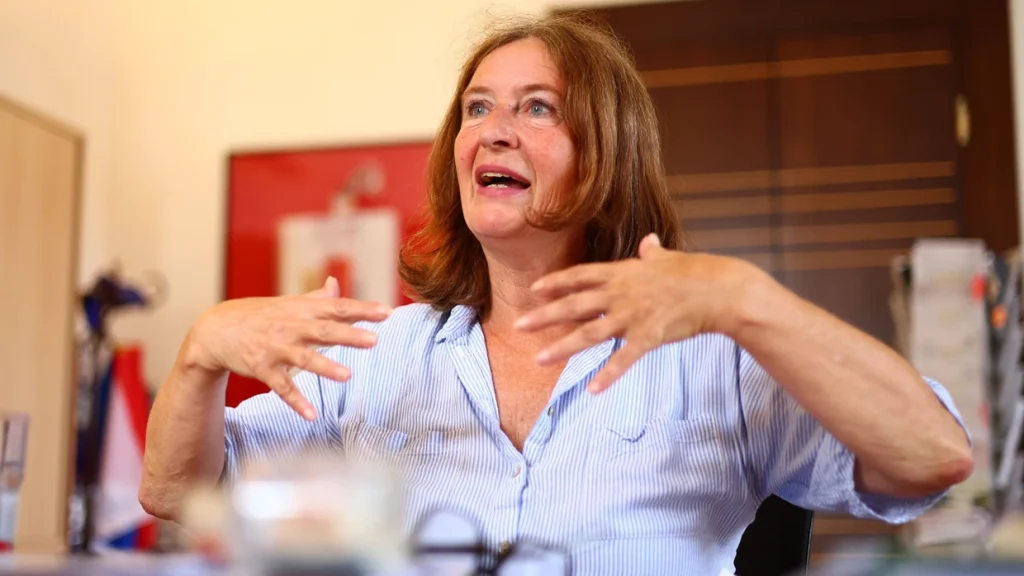
Kahr’s popularity stems from her hands-on, people-first approach to governance. Known for her open-door policy, she has cultivated a reputation as a leader who listens and acts. Whether it’s personally assisting residents with bureaucratic hurdles or addressing community concerns directly, Kahr has made accessibility and empathy the cornerstones of her administration. Her motto, ‘Show resolve, give hope,’ encapsulates her commitment to serving the people of Graz. ‘At the end of the day, it’s all about personal dedication,’ she says from her wood-paneled office, where she continues the legacy of her predecessor, Ernest Kaltenegger, a party stalwart who set the tone for the KPÖ’s grassroots approach.
The KPÖ’s rise in Graz has been decades in the making. The party first entered the city council in 1993 and joined the city government in 1998 under a proportional representation system. Kaltenegger, known for his hands-on approach—once personally fixing broken pipes as housing councillor—laid the groundwork for the party’s current success. Kahr, who succeeded him in 2005, has not only upheld his legacy but also expanded it, focusing on affordable housing, accessible childcare, and practical solutions like a new central kitchen to provide 15,000 meals daily to schools and daycare centers.
However, Kahr’s pragmatic socialism has its critics. Opponents, particularly from the ÖVP, argue that her policies lack long-term solutions, pointing to issues like city finances, parking shortages, and vacant storefronts. Yet, Kahr remains undeterred, emphasizing that her approach is rooted in addressing immediate needs rather than relying on abstract studies or distant promises. ‘Socialism, for me, is about perspective—looking at things from the bottom up and prioritizing the common good,’ she asserts. As Graz heads to the polls, the question remains: Will Kahr’s unique brand of community-focused governance continue to resonate with voters, or will the city revert to its conservative roots?
Kahr’s popularity stems from her hands-on, people-first approach to governance. Known for her open-door policy, she has cultivated a reputation as a leader who listens and acts. Whether it’s personally assisting residents with bureaucratic hurdles or addressing community concerns directly, Kahr has made accessibility and empathy the cornerstones of her administration. Her motto, ‘Show resolve, give hope,’ encapsulates her commitment to serving the people of Graz. ‘At the end of the day, it’s all about personal dedication,’ she says from her wood-paneled office, where she continues the legacy of her predecessor, Ernest Kaltenegger, a party stalwart who set the tone for the KPÖ’s grassroots approach.
The KPÖ’s rise in Graz has been decades in the making. The party first entered the city council in 1993 and joined the city government in 1998 under a proportional representation system. Kaltenegger, known for his hands-on approach—once personally fixing broken pipes as housing councillor—laid the groundwork for the party’s current success. Kahr, who succeeded him in 2005, has not only upheld his legacy but also expanded it, focusing on affordable housing, accessible childcare, and practical solutions like a new central kitchen to provide 15,000 meals daily to schools and daycare centers.
However, Kahr’s pragmatic socialism has its critics. Opponents, particularly from the ÖVP, argue that her policies lack long-term solutions, pointing to issues like city finances, parking shortages, and vacant storefronts. Yet, Kahr remains undeterred, emphasizing that her approach is rooted in addressing immediate needs rather than relying on abstract studies or distant promises. ‘Socialism, for me, is about perspective—looking at things from the bottom up and prioritizing the common good,’ she asserts. As Graz heads to the polls, the question remains: Will Kahr’s unique brand of community-focused governance continue to resonate with voters, or will the city revert to its conservative roots?
Drafted & Edited by Investigative Desk | AboMatrix