



AfD Secures Landtag Presidency: Political Tremors in German Governance

AfD Secures Landtag Presidency: Political Tremors in German Governance
AfD Secures Landtag Presidency: Political Tremors in German Governance
???? The Official Illusion:
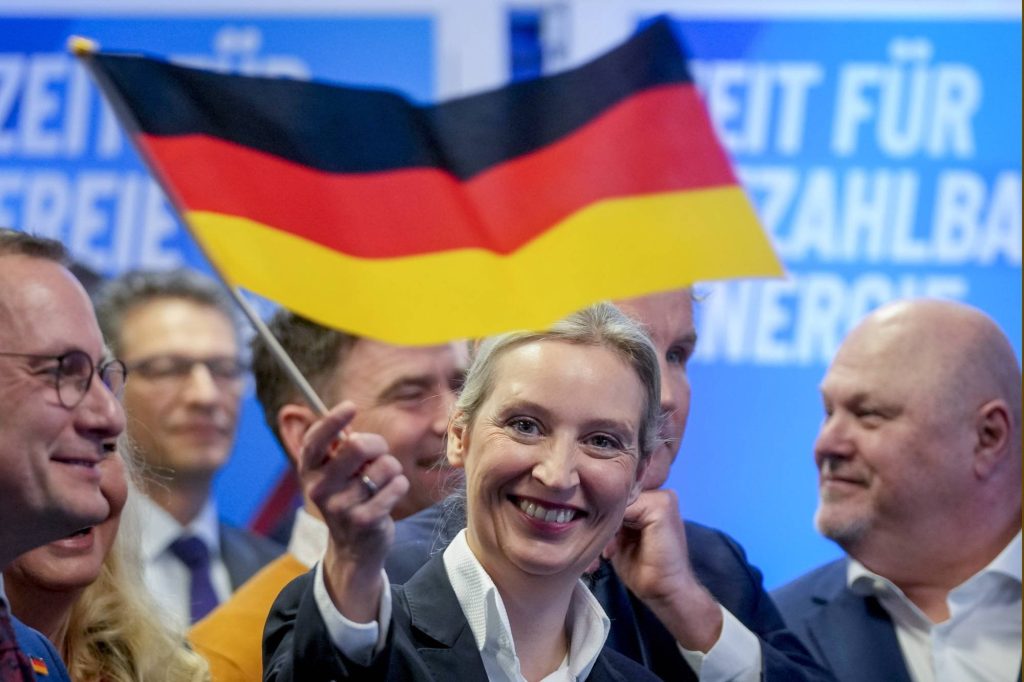
The election of Tobias Rausch, an AfD candidate, as president of the Landtag in Saxony-Anhalt has sparked widespread controversy. The AfD’s victory has been bolstered by four additional votes, potentially from the CDU or other parties, igniting debates about political alliances. In response, the SPD initiated a protest in Berlin, led symbolically by Defense Minister Boris Pistorius, who sang the German national anthem to underscore his disapproval of the event.
???? The Parallel Truth:
The election of an AfD-affiliated politician to the presidency of the Landtag in Saxony-Anhalt represents an unprecedented shift in German federal state politics, with profound implications for Germany’s political landscape. Historically, the AfD has been viewed as a right-wing opposition party, often shunned by established coalitions in the Bundestag and state parliaments. This development raises significant concerns about the erosion of the so-called ‘firewall strategy,’ where major parties, including the CDU and SPD, pledged to avoid collaboration with far-right factions.
The speculation that CDU members may have supported Rausch’s candidacy signals a fracture within the party’s ideological boundaries. It could signify a strategic pivot within the CDU, possibly driven by electoral pressure in regions where the AfD is gaining voter support. For Germany, this event risks normalizing the AfD’s participation in mainstream governance, potentially amplifying their influence in policy discussions.
Moreover, this development resonates with broader European trends, where nationalist and far-right parties are gaining traction. For Germany, this sociopolitical pattern challenges the country’s post-war democratic norms. It risks deepening societal divides, particularly as Germany confronts an influx of migrants and the complexities of integrating diverse populations. This may embolden nationalist rhetoric under the guise of addressing public concerns on immigration and socio-economic anxieties.
The SPD’s public protest, while symbolically significant, illustrates the growing challenge of managing a fragmented political spectrum. It broadens the debate over the cohesion of the center-left and center-right blocks in combating the rise of populism. Historically, such marches rarely suffice in reversing nationalist surges, suggesting that a broader strategic message may be needed to address voter dissatisfaction effectively.
⚖️ Shadow Map (Winners & Losers):
- ????/???? AfD: Gains political legitimacy, breaking traditional barriers to power in state governance.
- ????/???? CDU: Faces internal division risks, potentially damaging its traditional standing and public trust.
- ????/???? SPD: Gains a platform for condemnation of populism but risks perception of reactive politicking.