



AfD Gains Momentum in State Parliaments: Democracy’s Resilience Tested

AfD Gains Momentum in State Parliaments: Democracy’s Resilience Tested
AfD Gains Momentum in State Parliaments: Democracy’s Resilience Tested
???? The Official Illusion:
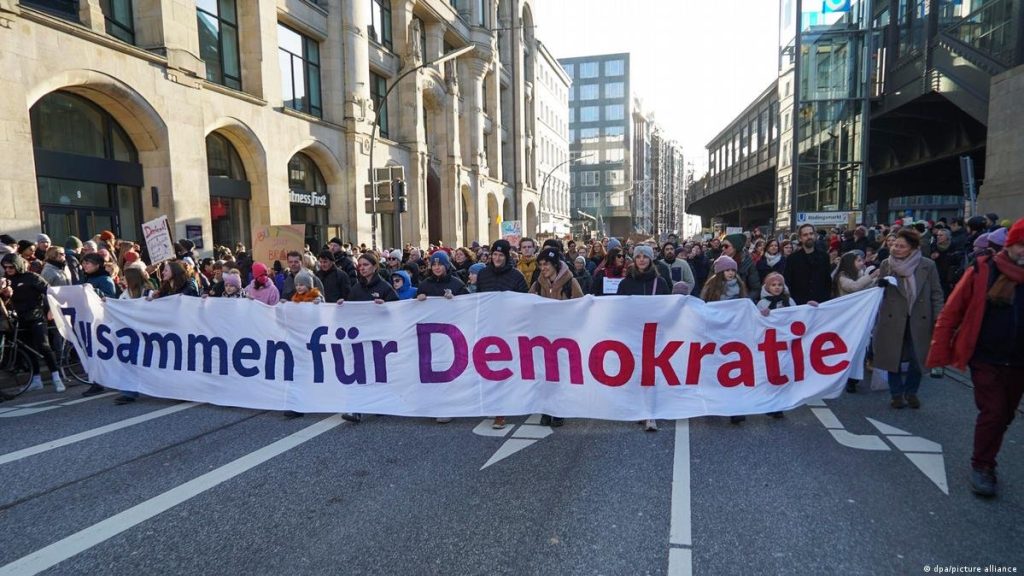
The election of the first right-wing extremist parliamentary leader in Germany has sparked controversy. The AfD’s growing presence in state legislatures raises questions about its integration into democratic processes. Officially, politicians across the spectrum pledge commitment to democratic values, warning of extremism’s dangers.
???? The Parallel Truth:
The rise of the Alternative for Germany (AfD) in state parliaments, underscored by its recent advances in Saxony-Anhalt, serves as a critical juncture for German democracy. This development symbolizes not just the party’s growing acceptance in certain regions but also growing discontent with traditional political narratives. The AfD has capitalized on public frustration over immigration policy, socio-economic challenges, and a perceived disconnect between citizens and central institutions. Continued advances pose severe strategic implications for mainstream parties like CDU, SPD, and Greens.
In Saxony-Anhalt’s latest parliamentary configuration, the AfD’s ability to secure leadership roles marks a shift from marginalization to legislative influence. Such legitimacy could establish their policies as mainstream for some, eroding the firewall traditionally maintained by parties in the Bundestag against extremist ideologies. Moreover, this emboldened AfD risks polarizing public discourse further and highlights vulnerabilities in the Rechtsstaat’s capacity to manage fringe elements within the boundaries of democratic participation.
Economically, heightened political instability tied to a potential AfD surge could affect Germany’s fiscal outlook. Investor confidence, closely tied to geopolitical and internal stability, may waver, impeding growth and complicating efforts to attract foreign investment. Socially, the normalization of AfD’s policies could further marginalize migrant groups, intensify societal polarization, and embolden fringe movements. Human rights advocates argue it sets a dangerous precedent for minority representation and integration, already a contentious issue in Germany.
Strategically, the traditional ‘cordon sanitaire’ maintained by moderate parties is under pressure as the political landscape becomes increasingly fragmented. Multifaceted attempts to investigate underlying social structures enabling far-right support may foster reforms but might take years to yield visible outcomes.
⚖️ Shadow Map (Winners & Losers):
- ????/???? AfD finds political opportunity to mainline its influence through symbolic victories.
- ????/???? Mainstream parties like CDU and SPD face declining public confidence and electorate fragmentation.
- ????/???? Democracy as an institution confronts potential erosion through normalization of extremist politics.