



The Intersection of Migration and Resource Conflicts: Lessons from Figuig for Germany

The Intersection of Migration and Resource Conflicts: Lessons from Figuig for Germany
⏱ 3 min read
Executive Summary
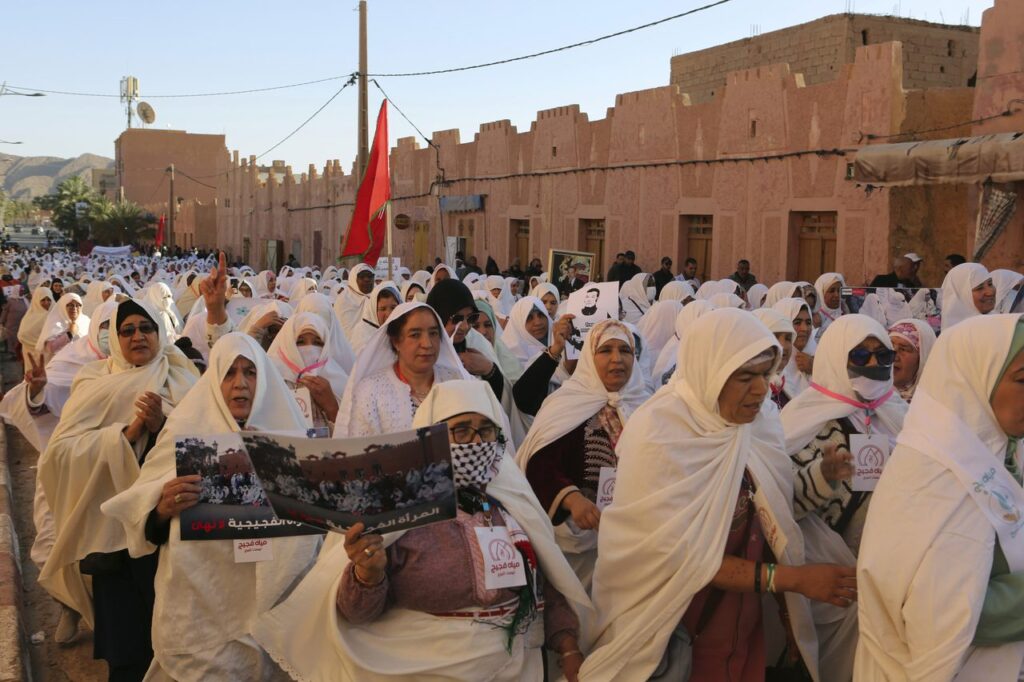
The water conflict in Figuig, Morocco, highlights the socio-political tensions arising from resource management reforms and their implications for local communities. This case study, centered on the Hirak al-Ma’ movement, underscores the resistance of marginalized groups, particularly women, against state-led privatization efforts. For Germany, this incident offers a lens to examine the intersection of migration and resource scarcity, as well as the socio-political dynamics that arise when communities face existential threats to their livelihoods.
Strategic Context
The Hirak al-Ma’ movement in Figuig emerged in response to Morocco’s 2023 enactment of Law 83-21, which established regional companies (SRMs) to manage water, electricity, and wastewater. This law was perceived by the local community as a threat to their traditional water management systems, which have been in place for centuries and are deeply rooted in communal solidarity and cultural heritage. The oasis of Figuig, located in southeastern Morocco near the Algerian border, relies on a delicate balance of groundwater resources and traditional irrigation systems to sustain its agricultural economy and way of life. The introduction of SRMs, with provisions for private sector involvement, was seen as a move toward the commodification of water, sparking protests led predominantly by women who view water as a communal right and a vital resource for survival.
Deep Analysis
In Germany, the Figuig incident resonates with ongoing debates about resource management, migration, and integration. The country has faced its own challenges in balancing environmental sustainability with economic and social policies. The Figuig case serves as a reminder of the potential for resource scarcity to exacerbate migration pressures, as communities displaced by environmental degradation may seek refuge in Europe, including Germany. Politicians across the spectrum have debated the implications of such migration, with conservative parties emphasizing border control and resource allocation, while progressive factions advocate for sustainable development and international cooperation to address root causes like climate change and resource mismanagement. Public opinion in Germany remains divided, with some viewing migration as a strain on resources and others emphasizing the humanitarian obligation to support displaced populations. The Figuig case also highlights the role of women in grassroots movements, a theme that resonates with Germany’s own history of civic activism and could inform policies aimed at empowering migrant women in integration processes.
Impact on Migrants
For migrants in Germany, the Figuig conflict underscores the vulnerabilities faced by communities uprooted by resource scarcity and environmental challenges. Many migrants from regions like North Africa arrive in Germany with similar experiences of displacement, often driven by the loss of livelihoods due to climate change or state policies. Understanding these root causes can help German policymakers design more effective integration programs that address the specific needs and skills of these individuals. Additionally, the Figuig case highlights the importance of preserving cultural heritage and community solidarity, lessons that can be applied to support the social cohesion of migrant communities in Germany. By fostering a deeper understanding of the socio-economic and cultural contexts from which migrants originate, Germany can better address the challenges of integration and build more inclusive policies.
Outlook & Conclusion
The Figuig water conflict offers valuable insights for Germany as it navigates the complexities of migration, resource management, and integration. By addressing the root causes of displacement and fostering inclusive policies that empower marginalized groups, Germany can contribute to global efforts to mitigate the impacts of resource scarcity and climate change. The resilience and activism demonstrated by the women of Figuig serve as a powerful example of community-driven solutions to systemic challenges, offering lessons for both domestic and international policy frameworks.
Primary Source: boell.de