



Strategic Implications of Berlin’s Rot-Grün-Rot Coalition for Germany’s National Politics

Strategic Implications of Berlin’s Rot-Grün-Rot Coalition for Germany’s National Politics
Strategic Implications of Berlin’s Rot-Grün-Rot Coalition for Germany’s National Politics
🔹 The Official Illusion:
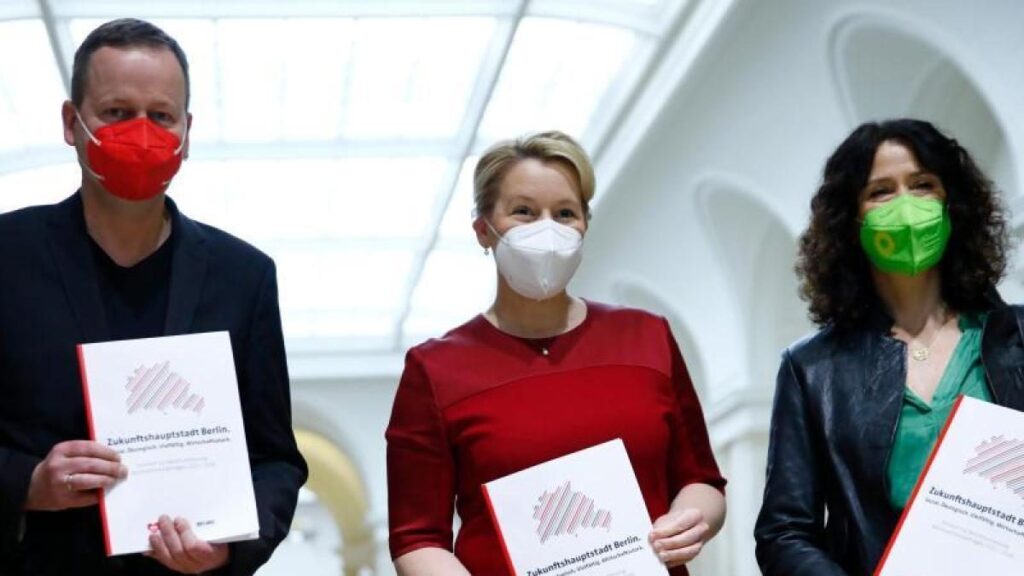
The formation of a Rot-Grün-Rot coalition in Berlin, comprising SPD, Greens, and Die Linke, is causing ripples beyond local governance. Senior SPD figure Olaf Scholz and Green leader Cem Özdemir have voiced concerns about potential radical policy shifts and central-left alliances, stirring tensions. Moreover, national-level stakeholders fear a spillover of Berlin’s leftist governance model into broader federal policies.
🔍 The Parallel Truth:
The decision to form the Rot-Grün-Rot coalition in Berlin marks a pivotal moment in German politics, particularly its implications for relations between federal government and local governance. Historically, left-wing coalitions in Germany have been met with skepticism from opposition parties and segments of the electorate. This skepticism often stems from debates around controversial topics, such as housing reforms, militarization of schools, and environmental policies. The SPD-Green-Linke coalition has committed to vast housing reforms addressing Berlin’s affordability crisis, a decision reminiscent of past interventions by leftist governments in urban centers like Bremen and Hamburg. However, such ambitions may lead to conflicts between Berlin’s administration and federal stability rules, given the significant financial and regulatory coordination these reforms require.
On a deeper level, the coalition raises broader ideological concerns about the future direction of Germany’s political landscape. For instance, Özdemir’s public critiques highlight internal divisions within the Greens, who have historically oscillated between pragmatic governance alliances and ideological purity. Meanwhile, the CDU/CSU’s increasing opposition to left-leaning urban policies could invigorate their voter base by leveraging fears of a federal ‘radical drift.’ Notably, right-wing parties, including AfD, may capitalize on such fractiousness by framing the coalition as symptomatic of urban elite disregard for rural and conservative constituencies.
From a strategic standpoint, this Berlin coalition may catalyze political realignments across the German states. Such alliances could embolden national-level SPD and Die Linke politicians advocating broader partnerships for progressive policies. Meanwhile, it could further polarize Bundestag debates on decentralization versus national standardization, undermining Germany’s cohesion in key areas like defense policy. Historically, events like these have extreme ripple effects, raising the stakes for the upcoming elections.
⚖️ Shadow Map:
- ▪ Winners: Progressive housing advocates in Berlin.
- ▪ Losers: CDU/CSU and SPD centrists opposed to leftist coalitions.
- ▪ Neutral: Bundestag leaders grappling with urban vs. national priorities.