



Ireland’s EU Presidency: Migration, Diplomacy, and Budget Challenges

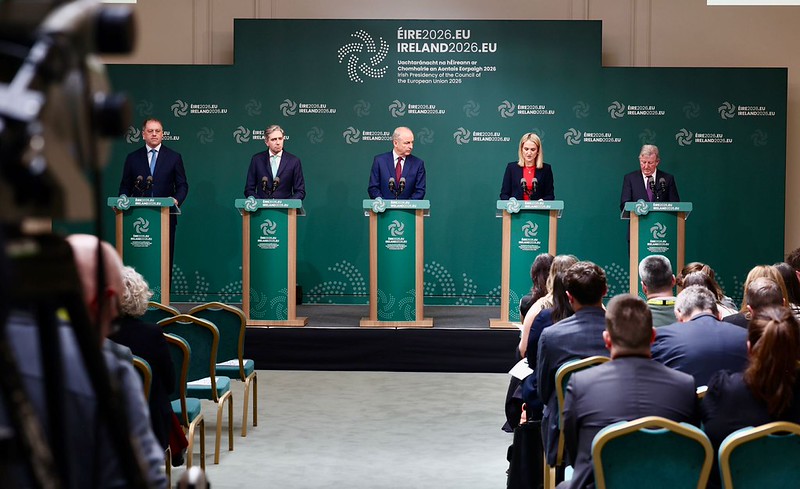
Ireland’s EU Presidency: Migration, Diplomacy, and Budget Challenges
⏱ 3 min read
Executive Summary
Ireland’s six-month EU Council presidency comes at a pivotal time for Europe, with critical challenges in migration policy, budget negotiations, and international diplomacy. As a neutral mediator, Ireland aims to balance its moral commitments with economic pragmatism, shaping policies that could redefine the EU’s approach to migration and human rights.
Strategic Context
For the eighth time since joining the European Union in 1973, Ireland has assumed the symbolic six-month presidency of the EU Council. This role, while largely ceremonial, allows the presiding country to influence the EU’s agenda and foster consensus among its 27 member states. Ireland’s presidency comes at a time of significant geopolitical and economic challenges, including migration crises, trade tensions, and debates over the EU’s long-term budget for 2028-2034.
Historically, Ireland has been a strong advocate for human rights and multilateralism. Its neutrality in military conflicts and its leadership in humanitarian issues, such as the Israeli-Palestinian conflict, have earned it a reputation as an ‘honest broker.’ However, Ireland’s economic reliance on multinational corporations, particularly US tech giants, adds complexity to its role, as it must balance moral leadership with economic dependencies.
In-Depth Analysis
Migration Policy and Human Rights: Ireland’s presidency coincides with critical discussions on migration within the EU. The bloc continues to grapple with the challenge of creating a unified asylum policy amidst differing national priorities. Ireland’s history of advocating for human rights positions it as a potential leader in pushing for humane and equitable migration policies. However, achieving consensus among member states will require significant diplomatic effort.
Budget Negotiations: One of Ireland’s primary tasks is to facilitate agreement on the EU’s next long-term budget. This involves balancing the financial priorities of wealthier member states with the needs of those requiring greater support, including countries on the EU’s external borders that bear the brunt of migration flows. Ireland’s ability to present realistic and inclusive budget proposals will be critical to its success.
Diplomatic Neutrality: Ireland’s neutrality is both a strength and a challenge. Its stance on issues like the Israeli-Palestinian conflict underscores its commitment to human rights but risks straining relations with key economic partners. As the EU debates trade restrictions on goods from Israeli settlements, Ireland’s leadership will be tested in navigating these sensitive issues while maintaining its moral and diplomatic credibility.
Impact on Migrants
Legal and Policy Implications: Ireland’s presidency could influence the EU’s approach to migration, particularly in terms of asylum policies and border management. If Ireland successfully fosters consensus on a more unified and humane migration framework, it could lead to more predictable and fair treatment for migrants and refugees across the EU. This would include clearer pathways for asylum applications and better integration policies.
Human and Social Impact: Ireland’s emphasis on human rights could bring attention to the humanitarian aspects of migration, potentially leading to increased support for migrants in terms of housing, healthcare, and education. However, the success of these initiatives will depend on Ireland’s ability to navigate the diverse interests of EU member states and secure funding for these programs in the upcoming budget negotiations.
Outlook & Conclusion

Prepared & Analyzed by: Migration Policy Unit | AboMatrix