



Hessen Honors Gunter Demnig, Creator of Stolpersteine Memorials

Hessen Honors Gunter Demnig, Creator of Stolpersteine Memorials
Gunter Demnig, the artist behind the Stolpersteine memorial project, has been awarded the inaugural Hessian Constitution Prize for his decades-long dedication to commemorating victims of National Socialist persecution.
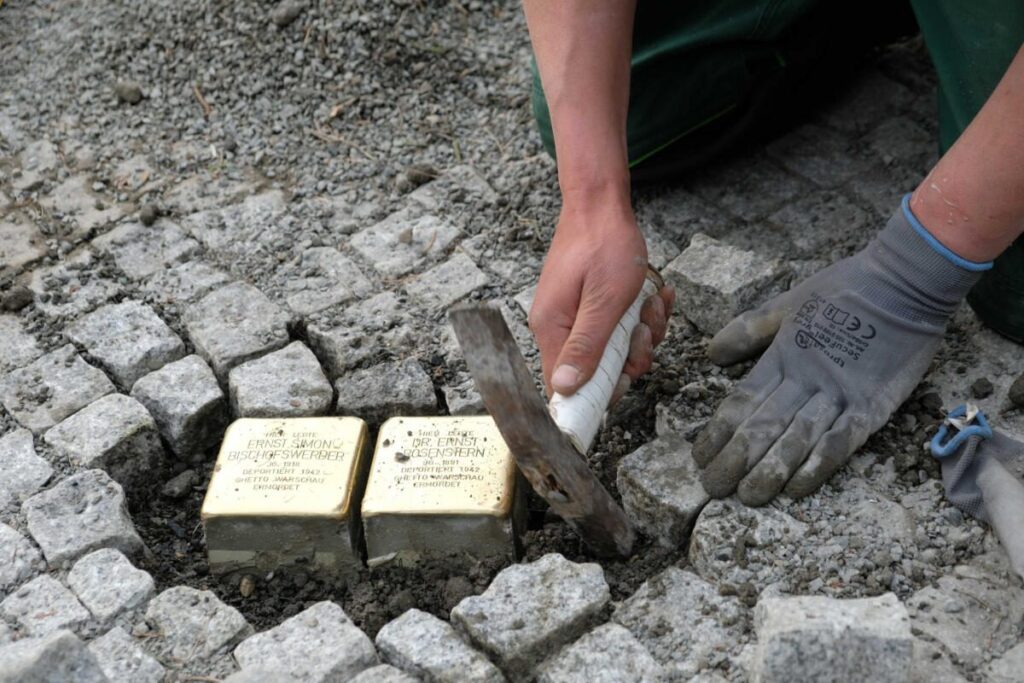
Gunter Demnig, a 79-year-old artist residing in Alsfeld, Hesse, has been recognized with the first-ever Hessian Constitution Prize by the state parliament in Wiesbaden. Demnig is the creator of the Stolpersteine project, a decentralized memorial initiative that commemorates individuals murdered by the National Socialist regime. Since laying the first Stolperstein in Cologne in 1992, Demnig and his team have installed over 125,000 of these brass-plated cobblestones across more than 30 European countries, marking the last freely chosen residences of victims.
The Stolpersteine project began as a response to a 1990 art installation in Cologne’s Südstadt, which highlighted the deportation of Sinti and Roma by the Nazis. Demnig was inspired to create tangible reminders of individual lives lost after encountering historical denial from a local resident. Each Stolperstein, measuring approximately 10 by 10 centimeters, bears the name, birth date, and death date of a victim, encouraging passersby to pause and reflect. The act of bending down to read the inscriptions is often seen as a symbolic gesture of respect.
Despite its widespread adoption, the Stolpersteine initiative has faced resistance over the years. Some city councils, property owners, and political groups have opposed the installation of the stones, citing concerns ranging from property value to ideological disagreements. Notably, Munich has opted for alternative memorials, and Heidenau, Saxony, recently decided to restrict Stolpersteine placements to cemeteries following a joint proposal by CDU and AfD representatives. Demnig has also faced threats and vandalism targeting his work. Nevertheless, he remains committed to engaging younger generations, emphasizing the importance of making history tangible through personal stories. ‘That’s when you know why you do it,’ Demnig remarked about the impact of his project on students.