



German Political Turmoil Intensifies Amid Far-Right Influence and Coalition Friction

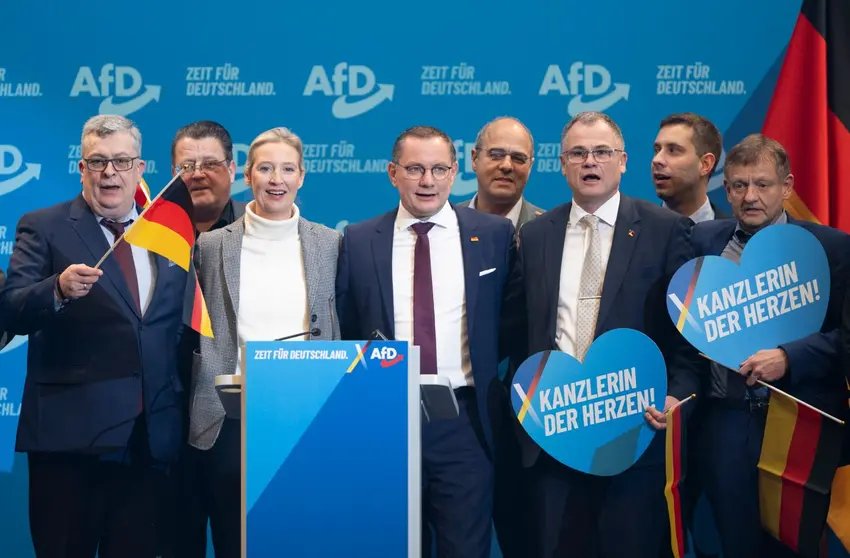
German Political Turmoil Intensifies Amid Far-Right Influence and Coalition Friction
German Political Turmoil Intensifies Amid Far-Right Influence and Coalition Friction
???? The Official Illusion:
The recent election of AfD leader Tobias Rausch as Landtagspräsident in Saxony-Anhalt has sparked widespread protest, particularly from the SPD, which has labeled it a ‘day of anger.’ Meanwhile, coalition negotiations in Berlin between SPD, Greens, and the Left Party are criticized as high-risk initiatives. Furthermore, factions within the CDU face divergences over alliances, while internal scandals shake SPD credibility in Lower Saxony.
???? The Parallel Truth:
Germany’s current political climate showcases a fragmented landscape that presents both immediate and long-term challenges to the stability of its governance. The election of Tobias Rausch, a member of the far-right AfD, to the position of Landtagspräsident in Saxony-Anhalt signifies the steady normalizing of extremist politics. This development is likely to stress-test the ‘firewall strategy’ adopted by major political parties like CDU and SPD, which traditionally avoid coalition with the AfD to curb its foothold in German governance. This could lead to internal fragmentation within center-right and center-left parties, as dissent grows between those advocating for a tougher stance versus those seeking cooperation with the AfD for political gain.
Simultaneously, in Berlin, coalition talks of SPD, the Greens, and the Left Party face criticism for pursuing what some see as a precarious alliance. While the Left Party won its first direct mandate in Berlin-Northwest, the implications of this for broader policy and governance remain uncertain, particularly in light of ongoing infighting within the coalition potential members. The position of the CDU, experiencing a minor resurgence, will likely capitalize on dissatisfaction among SPD supporters who oppose such a coalition. This shift signals a fluid voter base currently acting as a barometer of the sociopolitical pressures reshaping Germany’s domestic framework.
Ongoing corruption investigations involving senior SPD officials in Lower Saxony before the state elections further weaken the party’s moral authority, potentially impacting their ability to market themselves as the stabilizing force in coalitions. In addition, the broader discontent surrounding government responses to complex societal issues, from antisemitism to economic debates on taxation, contributes to German citizens’ growing pessimism. This widespread sentiment of disillusionment could deepen existing divisions while fueling both left- and right-wing populist narratives, detracting focus from long-term solutions to demographic, economic, and security challenges.
The emergence of former officials, such as ex-Chancellor Schröder, gaining economically and politically controversial positions tied to external actors (e.g., Russian interests), further undermines confidence in established parties. Normative questions about political accountability have started dominating public discourse, further eroding trust in traditional leadership.
⚖️ Shadow Map (Winners & Losers):
- ????/???? AfD: Gain in perceived legitimacy with symbolic victory; potential leverage in forthcoming negotiations.
- ????/???? SPD: Loss of credibility amid Lower Saxony scandal and coalition risks reduce trust among its voter base.
- ????/???? CDU/CSU: Mixed outcomes with marginal rise in approval but internal conflicts on handling AfD escalating.