



Gen-Z Protests Escalate in Frankfurt Amid Political Divides in Germany

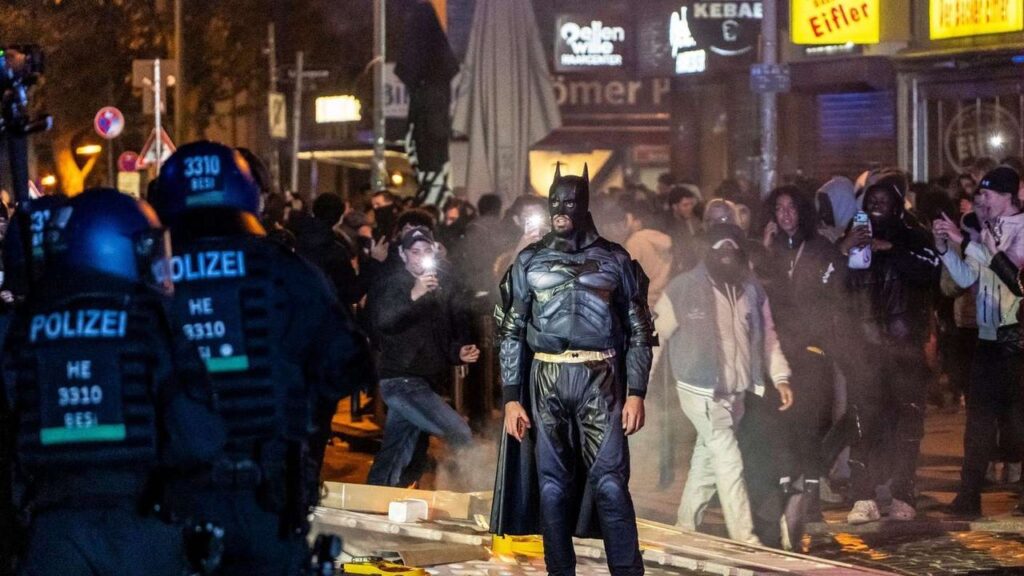
Gen-Z Protests Escalate in Frankfurt Amid Political Divides in Germany
Gen-Z Protests Escalate in Frankfurt Amid Political Divides in Germany
🔹 The Official Illusion:
Recent peaceful protests by tens of thousands of young people across Germany, particularly Generation Z, turned violent in Frankfurt. Interior Minister Dobrindt claimed the riots involved lawlessness and attributed responsibility to ‘leftist groups and migrant communities,’ sparking debates across political lines. Defense Minister Pistorius contradicted Dobrindt’s statement, prompting criticism and heightened political polarization. The unrest has ignited accusations of stereotyping and debates within federal and local governments regarding law enforcement and social integration policies.
🛑 The Parallel Truth:
The escalation of Gen-Z protests in Frankfurt underscores political, social, and economic tensions within contemporary German society. On a political front, responses to the unrest reveal deep ideological rifts within the federal government. Interior Minister Dobrindt’s attribution of the riots to ‘migrant communities’ aligns with a narrative espoused by certain conservative circles but has sparked criticism for potentially inflaming social tensions in a country with a significant migrant population. Conversely, Defense Minister Pistorius’ disapproval of stereotyping represents a progressive counterpoint, aiming to shift the focus towards systemic issues like youth disenfranchisement and socioeconomic marginalization. These contrasting narratives suggest growing friction within major political parties, further polarizing debates around migration and integration policy.
On the social fabric, such riots highlight the underlying frustrations of Generation Z, often viewed as disillusioned by climate policies, economic prospects, and political action—or its perceived inaction—on urgent social issues. The unrest signals a demand for structural reforms and improved representation for younger Germans who feel excluded from policymaking processes. The ethnic and cultural framing used by some political leaders exacerbates alienation within migrant communities, threatening societal cohesion amidst an already volatile social environment.
Economically, the riots place pressure on local budgets and infrastructure, disrupting business activities in metropolitan areas like Frankfurt. The broader implications could deter potential investments, a crucial factor as Germany seeks to maintain its global economic competitiveness during a period of geopolitical and industrial transitions. The handling of such situations becomes pivotal in maintaining Germany’s image as a stable and inclusive economy.
⚖️ Shadow Map (Winners & Losers):
- 🏆/💀 Right-leaning political groups potentially gaining traction by pointing to lawlessness and emphasizing stricter migration controls.
- 🏆/💀 Progressive political factions losing ground amid polarizing narratives and criticism of weak systemic reforms.
- 🏆/💀 Businesses in affected metropolitan areas suffering financial losses and reputational impacts amid unrest.