



Far From Gone: The Evolution of Extremism in the First 100 Days of the Biden Administration
This study examines the evolution of extremist ideologies and organizational strategies in the United States during the first 100 days of the Biden administration. It explores the interplay between political transitions, policy shifts, and the adaptive behaviors of extremist groups, offering a nuanc

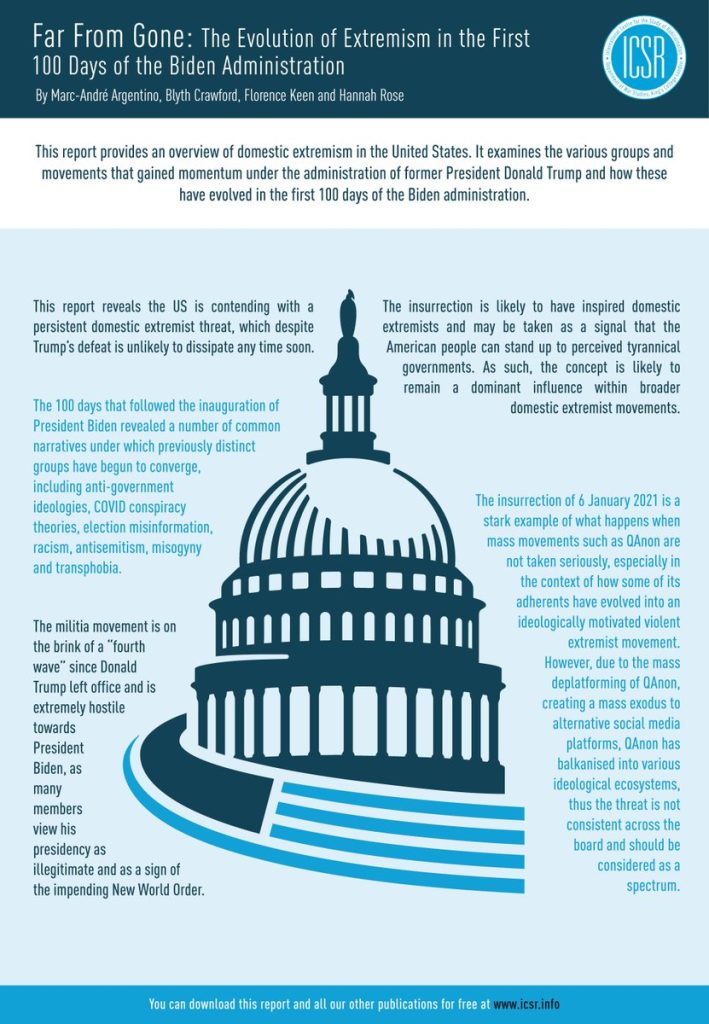
Far From Gone: The Evolution of Extremism in the First 100 Days of the Biden Administration
Policy Analysis – Sociopolitical Extremism
Core Thesis & Primary Hypotheses
This study examines the evolution of extremist ideologies and organizational strategies in the United States during the first 100 days of the Biden administration. It explores the interplay between political transitions, policy shifts, and the adaptive behaviors of extremist groups, offering a nuanced understanding of emerging threat models and their implications for democratic resilience and global security frameworks.
Empirical Data & Key Analytical Metrics
- 🔬 Extremist groups demonstrated increased reliance on decentralized communication platforms, leveraging encrypted technologies to evade monitoring and expand recruitment efforts.
- 🔬 The January 6 Capitol attack served as a galvanizing event, fostering cross-group collaboration among previously fragmented extremist factions within the U.S.
- 🔬 Federal policy shifts, including enhanced domestic terrorism investigations, triggered strategic adaptations among extremist groups, including the adoption of less overt operational tactics.
- 🔬 International linkages between U.S.-based extremists and transnational networks grew, with shared ideological narratives amplifying cross-border radicalization.
Comprehensive Study Text & Deep Analysis
Political Transitions and Extremist Adaptation
The Biden administration’s early policy agenda, particularly its focus on combating domestic terrorism, has significantly influenced the strategic recalibration of extremist groups. These groups have shifted their focus from overt public demonstrations to covert digital mobilization, exploiting encrypted platforms to evade law enforcement scrutiny. This transition underscores the importance of understanding how political leadership changes can inadvertently shape extremist behaviors.
The Capitol attack on January 6, 2021, marked a pivotal moment in the evolution of extremism within the United States. The event catalyzed the formation of new alliances among disparate groups, including white supremacists, anti-government militias, and conspiracy theorists. These alliances have fostered a more unified ideological front, complicating efforts to dismantle extremist networks and mitigate their influence.
Policy Shifts and Threat Model Evolution
The Biden administration’s emphasis on domestic terrorism has prompted extremist groups to adopt less visible operational tactics, such as decentralized communication and recruitment strategies. This shift reflects a broader trend toward operational sophistication, raising concerns about the efficacy of traditional counter-extremism measures. Policymakers must consider these adaptations when designing interventions to address the evolving threat landscape.
Extremist groups have increasingly leveraged transnational networks to amplify their ideological narratives and operational capabilities. Shared grievances, such as opposition to perceived globalist agendas, have facilitated cross-border radicalization and collaboration. This trend underscores the need for international cooperation in addressing the global dimensions of extremism.
Constitutional and Legal Considerations
Efforts to combat extremism must be balanced with constitutional safeguards to ensure the protection of civil liberties. Overly broad measures risk infringing on freedom of speech and association, potentially alienating communities and exacerbating radicalization. Policymakers must navigate these challenges carefully to uphold democratic principles while addressing security concerns.
Implications for European Policy Frameworks
The evolution of extremism in the United States has significant implications for European security and policy frameworks. The transnational nature of extremist ideologies necessitates enhanced collaboration among European states to counter shared threats. Germany, in particular, must prioritize intelligence-sharing and the development of robust counter-extremism strategies to address the interconnected challenges posed by domestic and international radicalization.
Strategic Projection & Policy Outlook
European policymakers, including those in Germany, should prioritize the development of coordinated strategies to address the transnational dimensions of extremism. Enhanced intelligence-sharing, digital monitoring capabilities, and community-based interventions are essential to mitigating the risks posed by radicalized networks. A nuanced understanding of U.S. policy shifts can inform European approaches to counter-extremism while safeguarding democratic values.