



Berlin’s Left-Wing Youth Challenges Parent Party Over Genocide and Apartheid Allegations

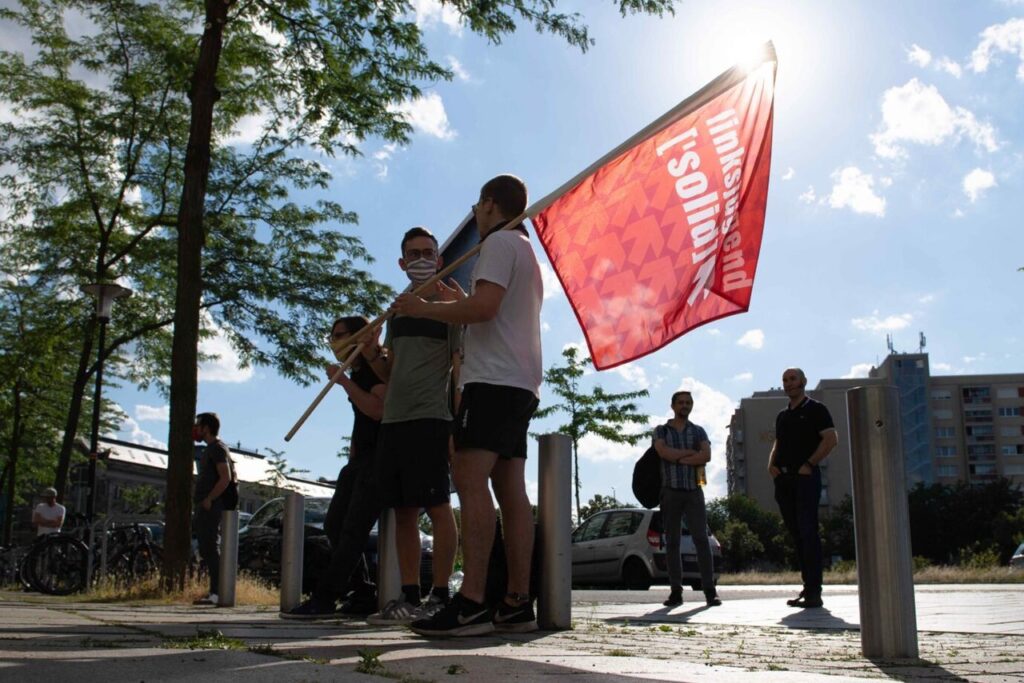
Berlin’s Left-Wing Youth Challenges Parent Party Over Genocide and Apartheid Allegations
Berlin’s Left-Wing Youth Challenges Parent Party Over Genocide and Apartheid Allegations
🔹 The Official Illusion:
The Berlin Left Youth submitted resolutions for the federal congress aggressively criticizing ‘genocidal policies’ and ‘apartheid.’ Their move targets inaction by the parent party, accusing it of succumbing to ‘media defamation.’
🔍 The Parallel Truth:
The Berlin Left Youth’s publicized resolutions accusing their own party of legitimizing genocide and apartheid rhetoric signal an intense ideological rift within Germany’s political left. This move is not just symbolic dissent; it has critical implications for both the structural integrity of the Left Party (Die Linke) and competitive positioning in Berlin’s politically dynamic landscape. Die Linke has struggled in recent years to maintain cohesion, facing pressures from more radical youth factions while simultaneously fighting for broader mainstream acceptance.
This confrontation highlights a generational and strategic divide. Younger activists aligned with the Linksjugend are increasingly gravitating toward robust identity politics, with an emphasis on justice for marginalized groups globally—a stance that appears starkly confrontational when compared to the more pragmatic, coalition-seeking orientation of their parent party. By openly attacking the party for ‘medial coercion,’ this youth faction not only tarnishes the party’s image but also jeopardizes its alliances in both Berlin and broader German federal politics.
For Berlin specifically, divisive rhetoric surrounding genocide and apartheid may provoke alienation among centrist voters, throttling the Greens or SPD as potential coalition partners. This plays directly into the opposition’s hands, particularly the CDU and even the far-right AfD, which thrive on Left Party fragmentation. Economically, these tensions ripple into policy inconsistency, especially with respect to redistributive measures like public housing or equitable corporate taxation—a major concern in Germany’s inflation-sensitive climate. Socially, intensified debates over ‘genocidal’ systems resonate among Germany’s immigrant and activist communities, evidencing deeper dissatisfaction with systemic inequities.
Politically speaking, the Berlin Left Youth forces the Left Party into a strategic corner: either capitulate to far-left demands, potentially hemorrhaging moderate support, or double down on reining in these factions, risking a loss of younger activists vital to its ground presence during polls. The stakes amplify considering Germany’s precarious coalition arithmetic for 2024.
⚖️ Shadow Map:
- ▪ WINNER – CDU gains as Left Party’s fragmentation weakens progressive coalitions.
- ▪ WINNER – Far-right AfD benefits from diverted discourse reinforcing anti-left narratives.
- ▪ LOSER – Die Linke risks losing moderates while alienating Berliner youth activist base.