



AfD Ministerpräsident Vote in Sachsen-Anhalt: German Democracy Faces Strategic Tensions

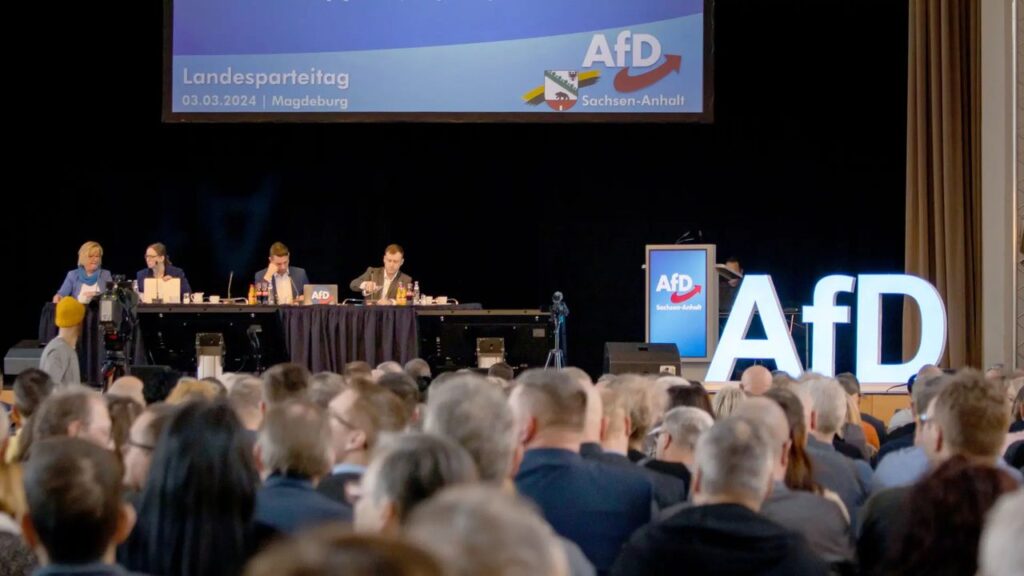
AfD Ministerpräsident Vote in Sachsen-Anhalt: German Democracy Faces Strategic Tensions
AfD Ministerpräsident Vote in Sachsen-Anhalt: German Democracy Faces Strategic Tensions
🔹 Official Context & Stated Position:
The BSW party convention in Saxony-Anhalt revealed disagreements on abstaining from voting for an AfD Minister-President. Delegates showed division, with the leadership leaning towards neutrality, inciting internal dissent. The issue highlights growing ideological divisions in Germany’s political landscape.
🔍 In-Depth Analytical Assessment:
Germany currently grapples with the strategic tensions introduced by the potential election of an AfD candidate as Minister-President in Saxony-Anhalt. While the BSW leadership advocates abstention, grassroots members express concerns about such neutrality indirectly facilitating far-right political normalization. This points to a brewing disconnect between party hierarchies and local sentiment, signaling deeper ideological divisions within German politics.
Examining the broader landscape, an AfD leadership position holds implications beyond Saxony-Anhalt. As the party faces accusations of proximity to anti-democratic platforms and foreign interference (such as ties to Russian intelligence allegedly referenced by AfD Fraktionsvize Keuter), increased representation could embolden their policy influence on national topics ranging from migration to energy security.
From a democratic health perspective, abstention by traditional parties underlines the risks of political fragmentation. The precedent could weaken collaborative governance in Germany, fostering gridlocks or populist-driven conflicts. Economically, such political instability complicates investment climates, especially as Germany faces economic headwinds including energy crises and inflationary pressures. Socially, the scenario may exacerbate polarization by deepening mistrust among voters who perceive abstention as complicity.
Moreover, considering Germany’s robust stance against far-right politics internationally, internal movements accommodating such ideologies could compromise the nation’s diplomatic positioning within the EU and global partnerships. Institutional responses, including legislature-level reforms or targeted coalition actions, will be critical in addressing these challenges.
⚖️ Socio-Political & Institutional Impact:
- ▪ Winners: AfD (visibility and potential leadership normalization).
- ▪ Losers: Pro-democratic parties (shaken ideological stance and credibility).
- ▪ Losers: German citizens seeking resilient democratic governance amid increasing polarization.