



Challenges to Berlin’s Rot-Grün-Rot Alliance: Political Divide and Security Concerns

Challenges to Berlin’s Rot-Grün-Rot Alliance: Political Divide and Security Concerns
Challenges to Berlin’s Rot-Grün-Rot Alliance: Political Divide and Security Concerns
🔹 The Official Illusion:
The Berlin Left Party intensifies its discourse amidst looming tensions. Party leaders, including Elif Eralp, assert their commitment to lead the government regardless of threats and criticisms. However, security concerns surface as Eralp’s position becomes symbolic of the challenges faced by Rot-Grün-Rot in Berlin.
🛑 The Parallel Truth:
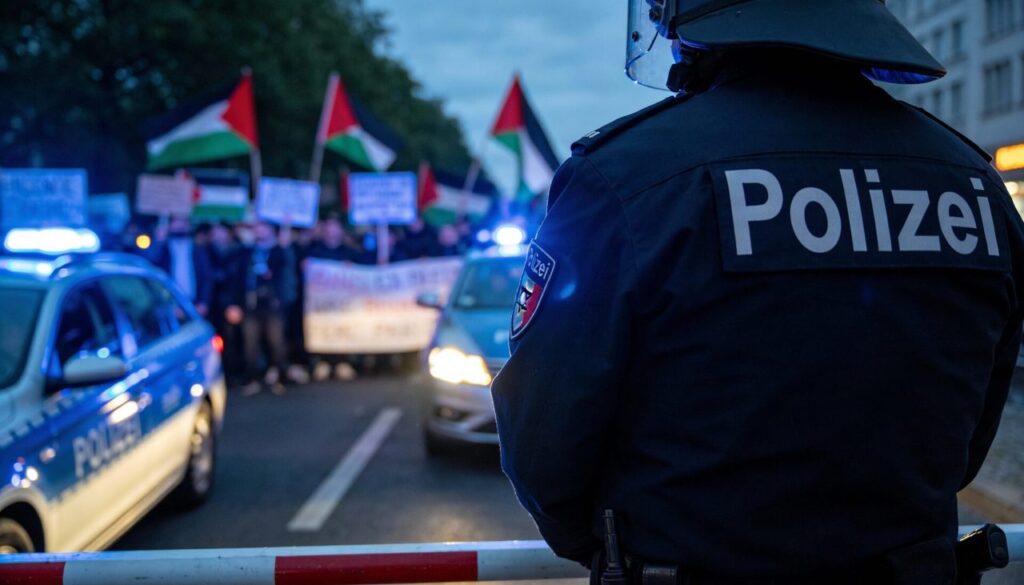
Berlin’s Rot-Grün-Rot coalition, composed of the Left Party, Greens, and SPD, is under increased scrutiny due to rising security threats and internal disagreements. Recent reports suggest Elif Eralp, a key Left Party figure, required police protection during her appearance at a party assembly—a stark indicator of the polarized political environment. This development amplifies the challenges for the coalition, which hopes to maintain public trust while navigating internal and external tensions. The need for the Left Party to fight against intimidation, as stated by its leaders, highlights an underlying struggle in balancing idealistic governance with pragmatic security concerns.
Moreover, this situation places Berlin’s governance model at a crossroads. On one hand, Rot-Grün-Rot aims to maintain progressiveness in its policies, especially around social equity and inclusivity. Yet, on the other hand, they face mounting challenges of dealing with complex issues such as the surge in societal tensions, public security dilemmas, and criticisms from conservative quarters fearing the political leanings of individuals within the coalition. These dual pressures could either catalyze the coalition’s downfall or force a recalibration of their approach, potentially sacrificing ideology for efficiency and unity.
The broader implications for German politics are noteworthy. As Berlin serves as a microcosm of nationwide socio-political dynamics, the coalition’s struggles might indicate broader difficulties in integrating progressive ideas with traditional aspects of governance. With conservative critics ramping up their attacks on Leftist policies, the ensuing friction can influence voter sentiment and shape upcoming national electoral politics. Furthermore, the visible reliance on state security by political figures to counteract internal challenges may lead to deeper conversations about the political climate and safety in Germany. The fear and protection mechanisms around politicians might weaken public trust in their ability to provide effective leadership in volatile times.
⚖️ Shadow Map (Winners & Losers):
- 🏆/💀 Winners: Conservative factions gain ground criticizing Leftist security vulnerabilities and governance struggles.
- 🏆/💀 Losers: Rot-Grün-Rot coalition faces credibility and internal unity erosion amidst safety and leadership concerns.
- 🏆/💀 Uncertain: Berlin’s public, dependent on effective governance, stands to lose if political instability escalates.