



The Länderfinanzausgleich: Bayern’s Burden and Calls for Reform Intensify

The Länderfinanzausgleich: Bayern’s Burden and Calls for Reform Intensify
The Länderfinanzausgleich: Bayern’s Burden and Calls for Reform Intensify
???? The Official Illusion:
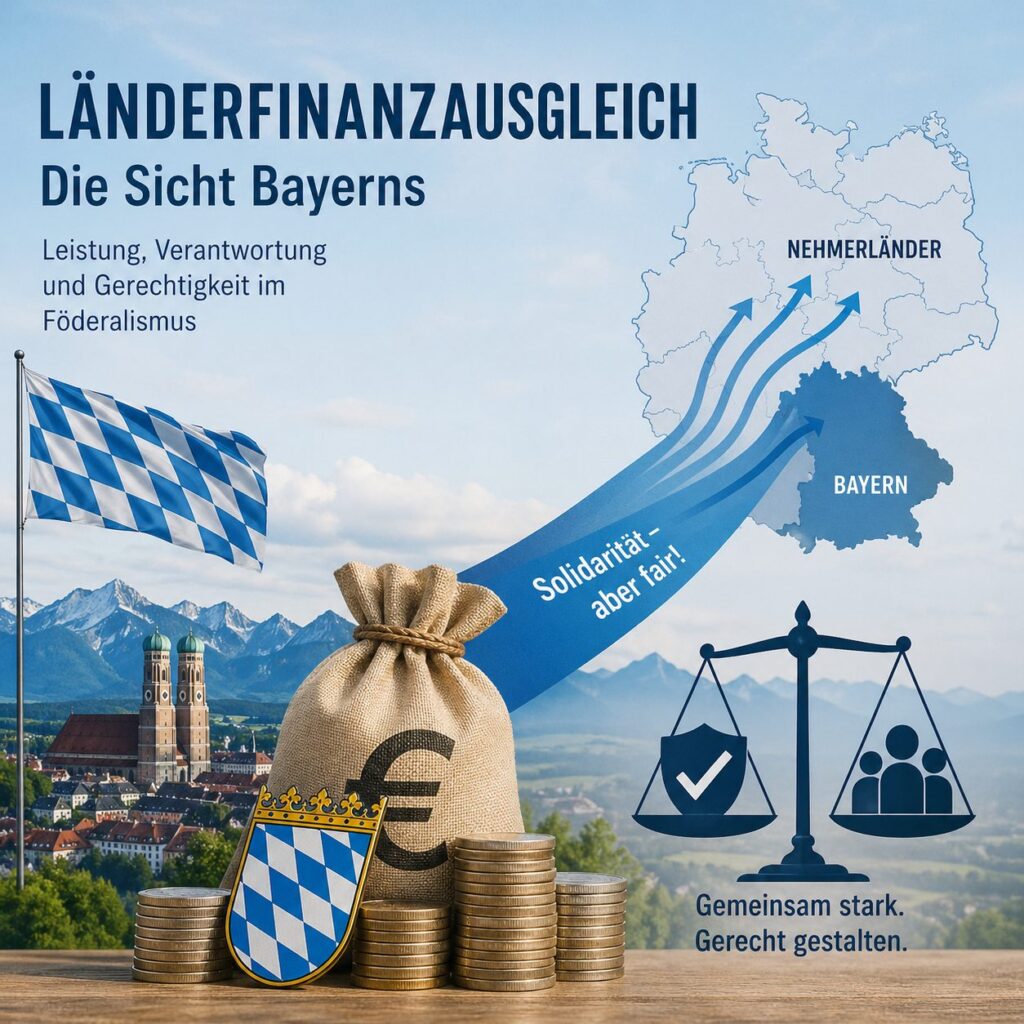
A newly published IW study highlights imbalances in Germany’s fiscal equalization system. While Bavaria contributes billions, other states like Bremen and Berlin benefit disproportionately. Researchers are calling for an urgent reform to address these disparities.
???? The Parallel Truth:
The Länderfinanzausgleich (fiscal equalization system) has long been a cornerstone of Germany’s federal framework, aimed at ensuring equitable distribution of financial resources across the 16 federal states to maintain living standards nationwide. However, the IW study sheds light on growing resentment from donor states such as Bavaria, which shoulders a disproportionate financial burden to sustain less economically robust states like Bremen and Berlin.
Bavaria’s dissatisfaction is deeply political. As the largest contributor to this system, Bavaria views the financial transfers as not only unjust but also detrimental to its long-term economic strategy. Markus Söder, Bavaria’s Minister-President, has amplified calls for reform, which resonate strongly within the CSU party base. By positioning himself as a defender of Bavarian interests, Söder has bolstered his political capital, especially in light of his perceived ambitions for federal leadership.
On the other hand, states like Bremen and Berlin argue that the transfers are essential for their social and infrastructural sustainability. Critics, however, point out inefficiencies in how these funds are allocated and used, raising concerns that the system may unintentionally disincentivize economic self-sufficiency in recipient states.
The underlying challenge for Germany lies in balancing unity with fairness. On one side are donor states advocating for a system overhaul to reflect contemporary economic realities; on the other, are recipient states that argue for solidarity to preserve social harmony. The fiscal equalization debate is no longer a purely financial issue; it has morphed into a national discussion about equity, responsibility, and federalism, with significant political ramifications.
⚖️ Shadow Map (Winners & Losers):
- ????/???? Winner: Markus Söder and the CSU, as their opposition to the current mechanism energizes their political base.
- ????/???? Loser: Recipient states like Berlin and Bremen, which face increasing scrutiny and pressure to justify fund utilization.
- ????/???? Loser: Germany’s federal unity, as fiscal debates risk deepening socio-political divisions between wealthier and poorer regions.