



Fortifying Europe’s Borders: Policy Imperatives and Strategic Tech for Migration Management

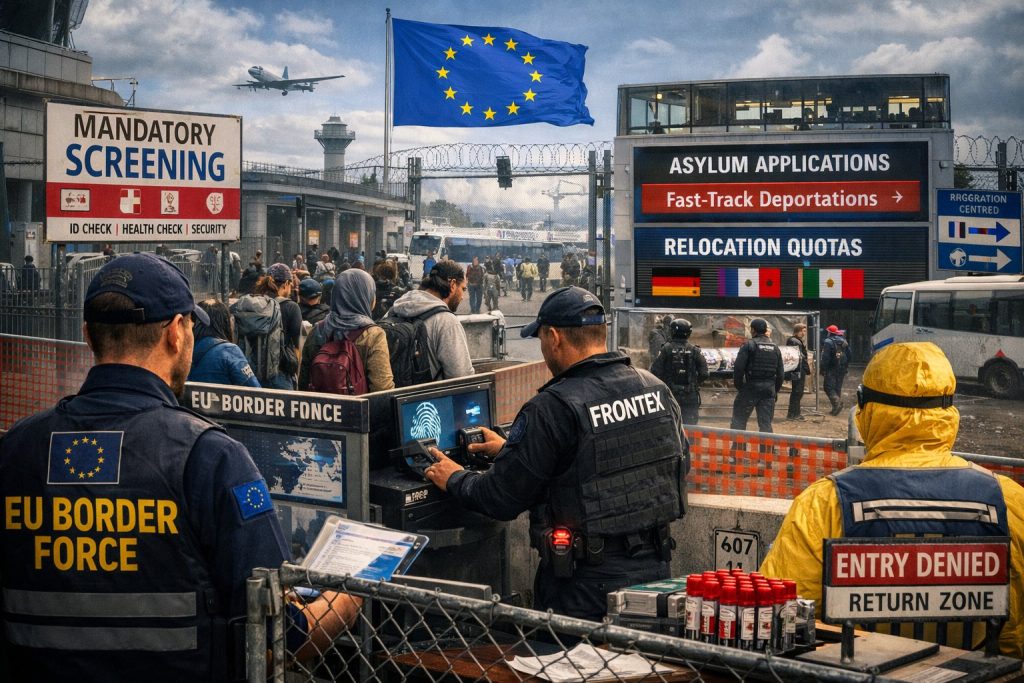
Fortifying Europe’s Borders: Policy Imperatives and Strategic Tech for Migration Management
[???? Shadow Document (Track II) | Kitchen: Source Institution | Directed to: Ministry/Council]
???? Secret Diagnosis
Frontex’s Strategic Risk Analysis Report for 2026/2027 has laid bare the growing challenges facing the EU’s external border management system. With over 178,000 irregular border crossings reported in 2025 alone, the system is strained beyond its capacity and increasingly vulnerable to exploitation. Moreover, gaps in information sharing among EU member states and the absence of coordinated efforts to counter organized crime and human trafficking have exacerbated the situation. The analysis unequivocally points to the urgent need for the adoption of advanced technology and a unified risk management strategy, as well as a reevaluation of the fragmentation in current operational standards.
Failure Analysis
The existing framework’s collapse stems from a confluence of structural inefficiencies, lack of coherent cross-border strategies, and reluctance to implement cutting-edge technological solutions. The absence of synchronized operations between member states has weakened the union’s collective ability to address both spontaneous migration and organized criminal activities effectively. The infrastructure for biometric recognition and real-time data analysis remains underdeveloped, failing to preemptively identify and mitigate threats. Furthermore, the unclear designation of ‘safe countries’ within the EU asylum framework has allowed migrants to exploit loopholes, eroding the efficacy of existing deterrence mechanisms.
Strategic Alternatives
- ⚡ Deploy advanced surveillance systems, including drones, aerial sensors, and biometric data analytics, to improve border monitoring.
- ⚡ Establish an integrated EU-wide information platform for proactive risk identification and real-time interagency cooperation.
- ⚡ Negotiate stricter bilateral agreements focusing on return and reintegration policies with transit and origin countries, adhering to international legal frameworks.
Geopolitical Price
Germany and the EU may have to offer substantial political and economic incentives to key transit nations to secure their cooperation. This could include preferential trade deals or targeted financial aid packages aimed at enhancing these countries’ border management capabilities.
Legal Counter-Strike
Human rights courts will likely scrutinize any restrictive measures, focusing on potential overreach into privacy and failure to uphold transparency in returns and detentions. Challenges could include allegations of disproportionate surveillance or violations of international asylum obligations.
????️ Strategic Reference: [Source] | ????️????️????️ Policy Extraction: AboMatrix Deep-State Unit