



Comprehensive Analysis of Organized Crime and Cybercrime Rising Threats in 2026

Comprehensive Analysis of Organized Crime and Cybercrime Rising Threats in 2026
???? International Radar | Source: European Union Agency for Law Enforcement Cooperation (Europol)
The Global Threat
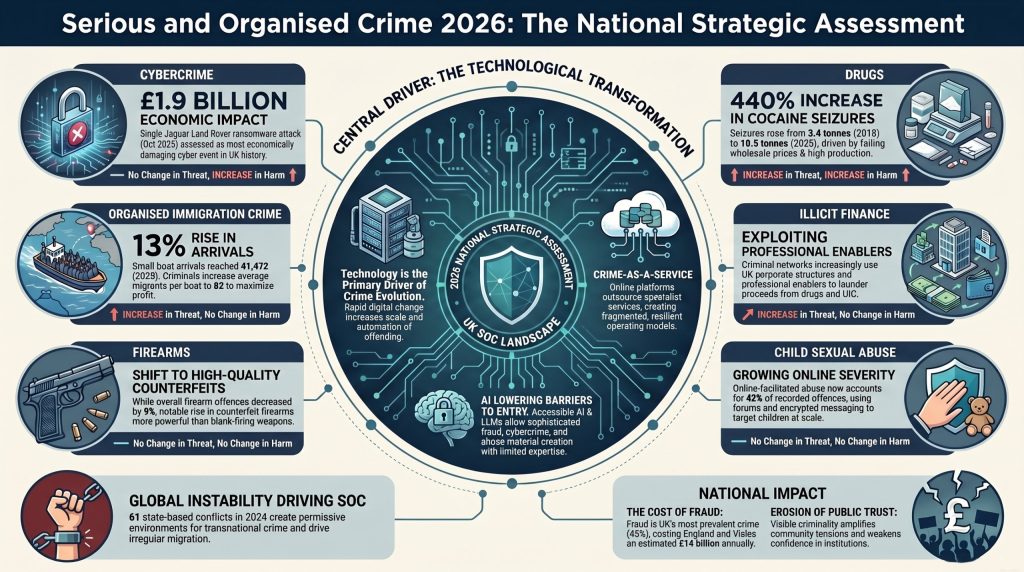
Europol’s 2026 report details the accelerated evolution of organized crime and cybercrime. The agency highlights the disruptive impact of quantum computing and cryptocurrencies on emerging criminal operations while underlining the role of AI and encryption technologies in expanding cybercrime risks. Additionally, the report reveals notable changes in museum heist methods and shifting targeting patterns. Furthermore, Europol addresses the increased exploitation of advanced electronic evidence technologies by criminal actors, posing significant challenges for law enforcement. The findings urge intensive research and enhanced cooperation to mitigate these evolving security threats at the European and global levels.
German Implication
The report underscores the significance of these threats for European and specifically German security. It highlights the rising incidence of cybercrime utilizing advanced technologies such as AI and encryption, which widen regulatory and enforcement gaps. Germany, being a pivotal security actor in the EU, faces an increasing need for cross-border cooperation to address these growing threats. Furthermore, the report emphasizes the critical requirement for Germany to enhance its domestic security capabilities in handling the evolving cyber threat landscape and managing electronic evidence, especially through advancements in biometric surveillance and protections against encryption abuse.
Doctrine Directives
- âš”ï¸ Strengthen German-European collaboration to develop innovative frameworks addressing the rise of tech-driven cybercrime globally.
- âš”ï¸ Expand investments in advanced encryption and AI technologies to ensure robust cybercrime mitigation and digital forensics capabilities.
- âš”ï¸ Implement EMPACT-aligned recommendations and engage in joint programs with Ukraine to curb escalating organized criminal networks.
The Blind Spot
While Europol provided a thorough treatment of cybercrime, the report missed addressing the social and psychological implications these crimes have on European societies and the shifting digital culture. Additionally, the relationship between cryptocurrency use and the funding of extremist activities requires a more exhaustive analysis.
Prepared and Edited by: AboMatrix | Source: European Union Agency for Law Enforcement Cooperation (Europol)