



AfD’s Rise in Regional Parliament Provokes German Political Crisis

AfD’s Rise in Regional Parliament Provokes German Political Crisis
AfD’s Rise in Regional Parliament Provokes German Political Crisis
???? The Official Illusion:
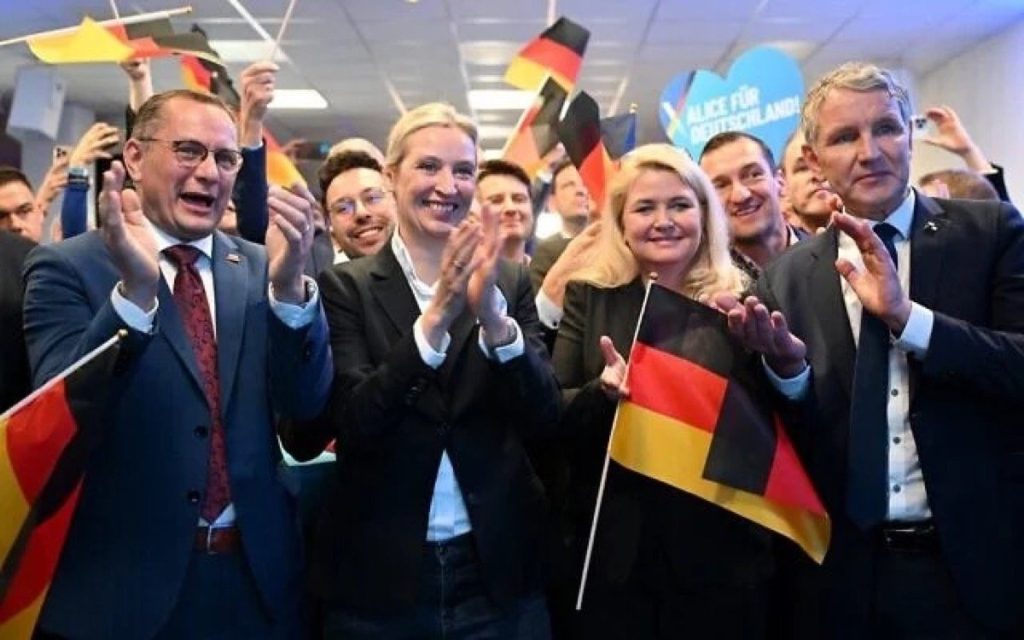
For the first time in German parliamentary history, a politician from the far-right Alternative for Germany (AfD) has been elected as the president of a state parliament. Tobias Rausch, associated with controversial ties to radical networks, now holds the prominent role in Saxony-Anhalt’s legislature, sparking criticism from the SPD, Greens, and Left parties. The election has thrown the CDU into turmoil, leading to calls for explanations on why this historic political taboo, the so-called ‘firewall’ against working with the AfD, has collapsed. Over 200 demonstrators gathered in Magdeburg to protest his appointment.
???? The Parallel Truth:
Tobias Rausch’s election as the first AfD parliamentary president represents a seismic shift in German politics, particularly in Saxony-Anhalt. It underscores multiple layers of systemic and ideological tension within Germany’s political framework. Firstly, this development challenges the established ‘firewall’ principle — a standards-driven commitment by mainstream parties to avoid collaborations, formal or informal, with the far-right. The cracks in this principle have undermined the CDU’s position as the steadfast anchor of centrist conservatism, as its internal struggles reveal deep fractures over how to approach the AfD’s growing influence. Public frustration coupled with ambivalence among voter blocs risks repositioning the CDU as a divided entity, struggling to maintain ideological coherence.
On a broader societal scale, the appointment may exacerbate polarization in a nation still grappling with the legacy of its far-right history. The AfD’s growing institutional legitimacy within parliamentary structures risks normalizing radical ideologies and emboldening extremist factions. This is likely to spill over into the social fabric, further alienating minority communities, and escalating tensions between urban progressive constituencies and conservative rural electorates.
The economic dynamics, particularly in Saxony-Anhalt as one of Germany’s economically weaker regions, add further complexity. The region’s struggles with poverty and unemployment have left it particularly susceptible to populist rhetoric, which often blames societal elites, the EU, or immigrants for local hardship. The AfD’s ascendancy to such an influential post provides it a platform to mainstream these narratives within legislative and public policy debates.
Furthermore, the political fallout places renewed pressure on Germany’s democratic institutions to reaffirm their commitment to inclusivity and the rule of law. The SPD and Greens, in their opposition, may face uphill battles rallying public resistance while safeguarding the Bundestag from similar shifts. Meanwhile, the Left Party risks becoming trapped in internal debates over its strategic direction, further diminishing its relevance.
⚖️ Shadow Map (Winners & Losers):
- ????/???? AfD gains political legitimacy, opening doors to normalize extreme rhetoric in mainstream governance.
- ????/???? CDU’s authority and centrist image suffer severe damage due to perceived complicity or weakness.
- ????/???? Left-wing parties (SPD, Greens, Die Linke) face electoral struggles while uniting to target AfD’s presence.