



Election of AfD Parliamentary President Sparks Controversy in Germany

Election of AfD Parliamentary President Sparks Controversy in Germany
Election of AfD Parliamentary President Sparks Controversy in Germany
???? The Official Illusion:
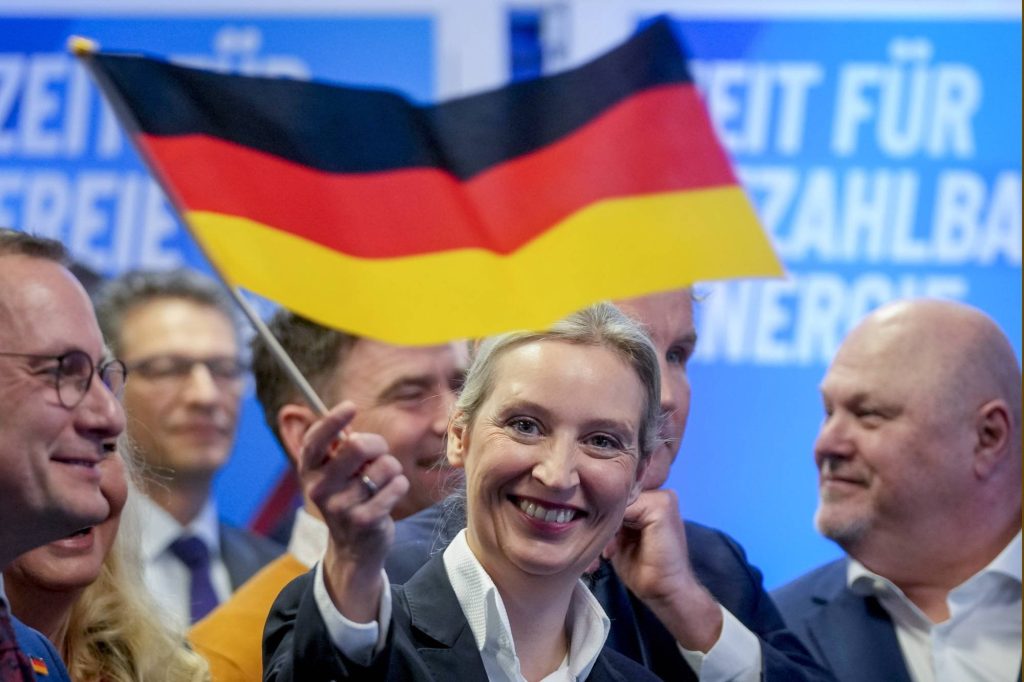
Tobias Rausch, a member of the Alternativ für Deutschland (AfD), was elected as the first AfD Landtag President in Saxony-Anhalt. The election, supported by an unexpected number of votes, has stirred significant political debate, with critics labeling it a ‘watershed moment’ and supporters describing it as ‘parliamentary normalization.’ The move also revealed potential alignments between the AfD and CDU members. This is seen as reflecting broader societal shifts, with controversial changes in the party landscape.
???? The Parallel Truth:
The election of Tobias Rausch to the presidency of the Landtag in Saxony-Anhalt represents a seismic shift in Germany’s political landscape, particularly concerning the normalization of fringe parties within mainstream German politics. This development is significant for several reasons.
Firstly, it highlights the deepening fractures within the traditional party alignments, particularly the Christian Democratic Union (CDU), as suspicions emerged that certain members of the CDU may have cast votes in favor of Rausch. This could signify an ideological maneuvering or a pragmatic collaboration to ensure political gains at regional governance levels, a move likely to alienate centrist and liberal voters. Meanwhile, for the SPD, Greens, and Left parties, this election undermines their efforts to position themselves as a united opposition against what they perceive as a rise in extreme-right ideologies.
Secondly, this event carries broader implications for German democracy. While proponents within the AfD argue that Rausch’s election normalizes their role in German political institutions, critics view it as a troubling signal of societal shifts toward normalization of far-right ideologies. This shift raises concerns regarding how the foundations of German post-war democracy, enshrined to prevent extremism, are being challenged by changing voter sentiments.
Moreover, this election takes place in a socioeconomic context marked by public frustrations over issues such as migration, education, and inflation—all of which are leveraged rhetorically by the AfD to expand its appeal. In Saxony-Anhalt and other former East German states, the AfD has consistently capitalized on a sense of socio-economic alienation and perceived neglect from Berlin, pushing an agenda that resonates with a growing number of disgruntled voters.
The event also forces Germany to confront its self-image, as the growing influence of the AfD in legislative chambers may complicate Germany’s ability to project itself internationally as a bulwark against extremism in Europe. This calls into question Germany’s political stability and could create friction with EU partners.
Ultimately, the election of the first AfD Landtag President will have ripple effects not only in Saxony-Anhalt but across the broader German political system, potentially reshaping alliances and sharpening divisions within the Bundestag and state-level governance structures.
⚖️ Shadow Map (Winners & Losers):
- ????/???? – AfD emerges as the immediate political winner, gaining normalized legitimacy in mainstream politics.
- ????/???? – CDU faces internal strife and reputational damage if collaborations with AfD are confirmed.
- ????/???? – SPD, Greens, and Left parties lose ground as fragmentation weakens their opposition strategy.