



Lausitz Transforms: Artificial Lakes Replace Coal Mines

Daily Monitor
September 27, 2026
Lausitz Transforms: Artificial Lakes Replace Coal Mines
Germany’s Lausitz region unveils Europe’s largest artificial lake district, marking a historic shift from coal mining to tourism.
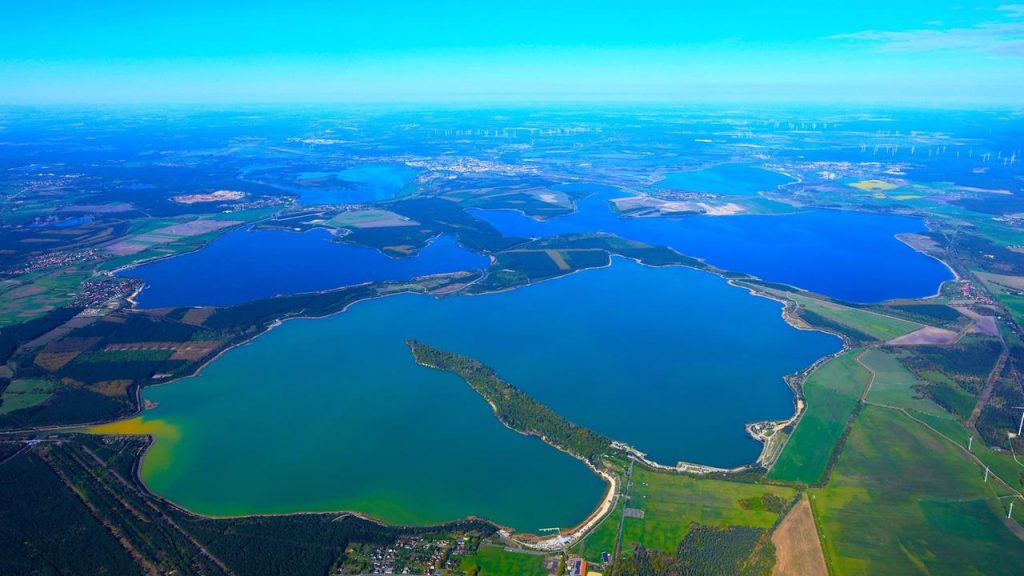
In a remarkable transformation, the Lausitz region in eastern Germany has unveiled what is touted as Europe’s largest artificial lake district. Once a hub of lignite coal mining during the era of the German Democratic Republic (GDR), the area has undergone a profound metamorphosis, turning abandoned mining sites into a sprawling network of interconnected lakes. The Sedlitzer See, the newest and largest of the five lakes, opened in April with a water surface spanning 1,400 hectares, now welcoming visitors for swimming and boating.
This ambitious project, spearheaded by the Lausitzer and Mitteldeutsche Bergbau-Verwaltungsgesellschaft (LMBV), involved extensive environmental rehabilitation. Former open-pit mines were cleared, shorelines were constructed, and the land was compacted and flooded to create a stable ecosystem suitable for recreation and water sports. The lakes now boast a pH-neutral environment, although certain areas remain restricted due to ongoing restoration or conservation efforts. Since the 1990s, approximately €941 million has been invested in this transformation, resulting in 5,100 hectares of water surface.
The Lausitz region, once a vital energy supplier for the GDR and a source of employment for thousands of miners, is now positioning itself as a tourism hotspot. The interconnected waterways of the Großräschener, Sedlitzer, Partwitzer, Geierswalder, and Senftenberger lakes span a total of 50 kilometers, offering opportunities for boat tours, swimming, and other leisure activities. Multiple beaches have been designated for public use, and the area is equipped with marinas, cycling paths, and camping sites. However, some facilities, such as harbors, restaurants, and supermarkets, are still under development, leaving room for further growth.
Tourism officials are optimistic about the region’s potential, aiming to double annual overnight stays to 1.5 million in the coming years. Kathrin Winkler of the Lausitzer Seenland Tourism Association highlights the need for larger holiday home complexes and hotels with extensive wellness facilities to attract visitors year-round, especially during the winter months. While the summer season has seen promising activity, the region’s full potential remains untapped.
The transformation of Lausitz is not only a testament to Germany’s commitment to sustainable development but also a poignant reminder of its industrial past. Brandenburg’s Minister-President Dietmar Woidke reflected on the region’s journey from the “lunar landscapes” of coal mining to a burgeoning tourism destination. As the lakes continue to evolve, they symbolize hope for economic revitalization and environmental renewal in a region once defined by its coal legacy.
This ambitious project, spearheaded by the Lausitzer and Mitteldeutsche Bergbau-Verwaltungsgesellschaft (LMBV), involved extensive environmental rehabilitation. Former open-pit mines were cleared, shorelines were constructed, and the land was compacted and flooded to create a stable ecosystem suitable for recreation and water sports. The lakes now boast a pH-neutral environment, although certain areas remain restricted due to ongoing restoration or conservation efforts. Since the 1990s, approximately €941 million has been invested in this transformation, resulting in 5,100 hectares of water surface.
The Lausitz region, once a vital energy supplier for the GDR and a source of employment for thousands of miners, is now positioning itself as a tourism hotspot. The interconnected waterways of the Großräschener, Sedlitzer, Partwitzer, Geierswalder, and Senftenberger lakes span a total of 50 kilometers, offering opportunities for boat tours, swimming, and other leisure activities. Multiple beaches have been designated for public use, and the area is equipped with marinas, cycling paths, and camping sites. However, some facilities, such as harbors, restaurants, and supermarkets, are still under development, leaving room for further growth.
Tourism officials are optimistic about the region’s potential, aiming to double annual overnight stays to 1.5 million in the coming years. Kathrin Winkler of the Lausitzer Seenland Tourism Association highlights the need for larger holiday home complexes and hotels with extensive wellness facilities to attract visitors year-round, especially during the winter months. While the summer season has seen promising activity, the region’s full potential remains untapped.
The transformation of Lausitz is not only a testament to Germany’s commitment to sustainable development but also a poignant reminder of its industrial past. Brandenburg’s Minister-President Dietmar Woidke reflected on the region’s journey from the “lunar landscapes” of coal mining to a burgeoning tourism destination. As the lakes continue to evolve, they symbolize hope for economic revitalization and environmental renewal in a region once defined by its coal legacy.
Drafted & Edited by Investigative Desk | AboMatrix