



Europe’s Unified Drone Defense: Policy Implications for Security

Europe’s Unified Drone Defense: Policy Implications for Security
⏱ 3 min read
Executive Summary
Europe faces escalating drone threats, both civilian and military, requiring a unified, continent-wide defense strategy. New policies aim to strengthen the EU’s eastern flank while addressing critical infrastructure vulnerabilities, balancing national initiatives with EU-wide coordination and funding mechanisms.
Strategic Context
Geopolitical Background: The Rise of Drone Threats
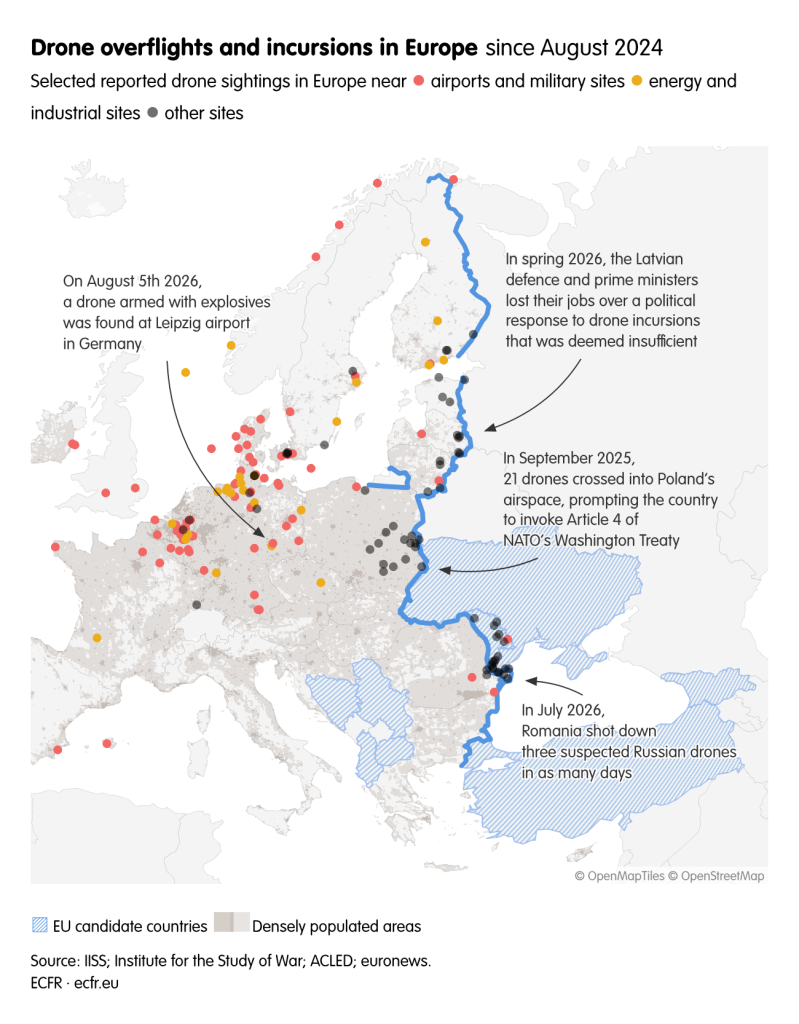
In recent years, Europe has witnessed a surge in drone-related incidents, ranging from small drones disrupting airports and critical infrastructure to military drones crossing into EU and NATO territories. These threats are part of a broader hybrid warfare strategy, with Russia and Belarus acting antagonistically, while Ukraine, a partner nation, faces its own challenges due to Russian aggression.
The eastern flank, spanning nine countries and a 4,000km border, has become a focal point for military drone incursions. The September 2025 incident in Poland, where 20 Russian drones violated airspace, underscored the urgency of coordinated defense measures. NATO’s Operation Eastern Sentry and the EU’s European Drone Defence Initiative are key responses, but fragmented efforts risk inefficiency.
In-Depth Analysis
Policy Motivations: Addressing a Dual Threat
The EU’s approach to drone defense stems from the need to tackle two interconnected threats: civilian drones targeting critical infrastructure and military drones violating territorial sovereignty. Small drones, often flown from within Europe, disrupt airports, nuclear facilities, and energy terminals, posing safety and security risks. Military drones, primarily from Russia and Belarus, challenge NATO’s territorial integrity and provoke geopolitical tensions.
National initiatives along the eastern flank, such as Romania’s recent responses, highlight the promise of localized efforts. However, these are insufficient without broader EU coordination. The bloc’s role in funding, incentivizing, and standardizing defense mechanisms is crucial to avoid duplication and ensure a unified strategy.
Western European countries initially hesitated to fund eastern flank defenses, viewing the threat as geographically isolated. However, the interconnected nature of civilian and military drone risks has shifted perspectives, emphasizing the need for continent-wide collaboration. Lessons from the eastern flank can inform broader policies, creating a cohesive response to both threats.
Impact on Migrants
Legal and Social Implications for Migrants
The new drone defense policies indirectly impact migrants and refugees by enhancing security measures at borders and critical infrastructure. Increased surveillance and stricter regulations may lead to heightened scrutiny of cross-border movements, potentially complicating asylum processes. Migrants traveling near sensitive areas could face delays or additional checks.
On the positive side, improved security reduces risks associated with hybrid warfare, ensuring safer environments for migrants and refugees. By stabilizing border regions and critical infrastructure, the EU creates a more secure setting for integration efforts and humanitarian support, fostering trust among displaced populations.
Outlook & Conclusion
Future Outlook
Europe’s unified drone defense strategy represents a pivotal step toward addressing modern security challenges. By balancing national initiatives with EU-wide coordination, the bloc can protect its borders and critical infrastructure while fostering resilience against hybrid threats. Continued collaboration and innovation will be key to ensuring long-term security and stability.

Prepared & Analyzed by: Migration Policy Unit | AboMatrix