



Schism in the Shadows: A Defiant Ordination

Daily Monitor
September 23, 2026
Schism in the Shadows: A Defiant Ordination
A controversial ordination in Bavaria reignites tensions between the Vatican and the ultraconservative Society of St. Pius X.
In the serene Schlosspark of Zaitzkofen, Bavaria, a dramatic ecclesiastical defiance unfolded under the blazing summer sun. Alfonso de Galarreta, a 69-year-old Spanish bishop of the ultraconservative Society of St. Pius X (SSPX), presided over the ordination of four priests, defying explicit prohibitions from both the Vatican and the local diocese. The event, steeped in traditionalist Catholic rituals, has reignited a decades-long schism between the SSPX and the Holy See, with the specter of excommunication looming over Galarreta ahead of his planned consecration of four bishops in Switzerland.
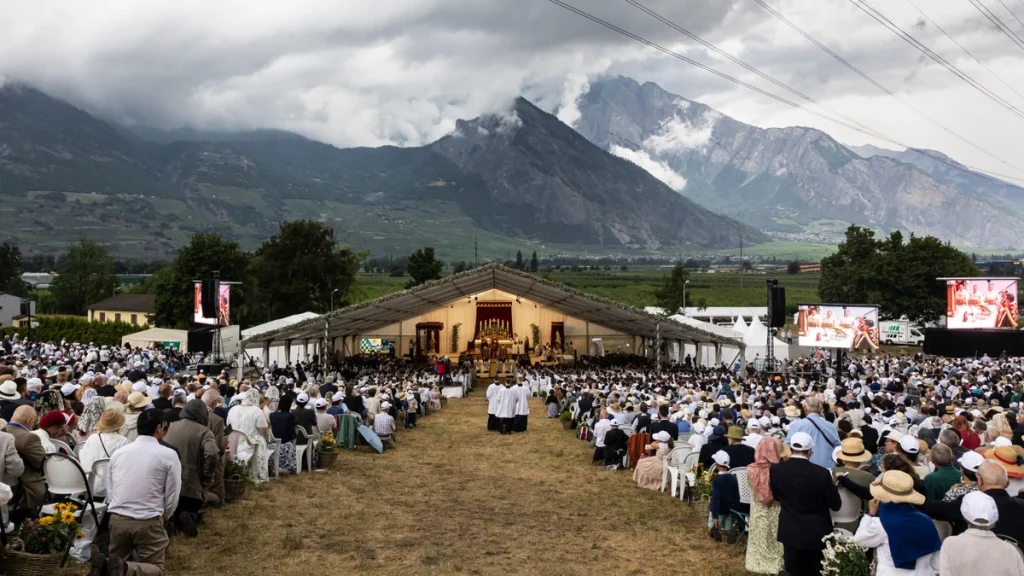
The ordination ceremony, held at the Heart of Jesus Seminary, was a spectacle of devotion and tradition. A solemn procession, accompanied by choral hymns and organ music, wound its way through the park, culminating at an altar adorned with floral arrangements. Faithful attendees, dressed in modest Sunday attire—women in floral dresses, men in lederhosen and white shirts—knelt reverently as Galarreta, resplendent in his mitre and embroidered vestments, conducted the four-and-a-half-hour Latin Mass. The Eucharist was administered exclusively via mouth communion, underscoring the SSPX’s staunch adherence to pre-Vatican II liturgical practices.
Founded in 1970 by French Archbishop Marcel Lefebvre, the SSPX emerged as a reactionary force against the perceived liberalizing reforms of the Second Vatican Council. The society’s opposition to modern liturgical practices, ecumenism, and religious freedom has placed it at odds with the Vatican for decades. While Pope Benedict XVI sought reconciliation by lifting the excommunication of four SSPX bishops in 2009, the society’s continued defiance—most recently exemplified by the unauthorized ordinations in Zaitzkofen—has strained relations further.
The Vatican’s stance on SSPX ordinations is complex. While priestly ordinations are deemed illicit but valid, the consecration of bishops without papal approval is considered a grave offense warranting automatic excommunication. With Galarreta’s planned consecration of four bishops in Écône, Switzerland, on July 1, tensions are set to escalate. The move directly challenges Pope Leo XIV’s explicit prohibition, raising questions about the future of the SSPX and its relationship with the Catholic Church.
As the faithful dispersed from the Schlosspark, the echoes of Latin hymns lingered in the air—a poignant reminder of the enduring divide within the Catholic Church. Whether this latest act of defiance will lead to reconciliation or further alienation remains to be seen, but one thing is certain: the SSPX’s unwavering commitment to its traditionalist vision continues to shape its contentious journey.
The ordination ceremony, held at the Heart of Jesus Seminary, was a spectacle of devotion and tradition. A solemn procession, accompanied by choral hymns and organ music, wound its way through the park, culminating at an altar adorned with floral arrangements. Faithful attendees, dressed in modest Sunday attire—women in floral dresses, men in lederhosen and white shirts—knelt reverently as Galarreta, resplendent in his mitre and embroidered vestments, conducted the four-and-a-half-hour Latin Mass. The Eucharist was administered exclusively via mouth communion, underscoring the SSPX’s staunch adherence to pre-Vatican II liturgical practices.
Founded in 1970 by French Archbishop Marcel Lefebvre, the SSPX emerged as a reactionary force against the perceived liberalizing reforms of the Second Vatican Council. The society’s opposition to modern liturgical practices, ecumenism, and religious freedom has placed it at odds with the Vatican for decades. While Pope Benedict XVI sought reconciliation by lifting the excommunication of four SSPX bishops in 2009, the society’s continued defiance—most recently exemplified by the unauthorized ordinations in Zaitzkofen—has strained relations further.
The Vatican’s stance on SSPX ordinations is complex. While priestly ordinations are deemed illicit but valid, the consecration of bishops without papal approval is considered a grave offense warranting automatic excommunication. With Galarreta’s planned consecration of four bishops in Écône, Switzerland, on July 1, tensions are set to escalate. The move directly challenges Pope Leo XIV’s explicit prohibition, raising questions about the future of the SSPX and its relationship with the Catholic Church.
As the faithful dispersed from the Schlosspark, the echoes of Latin hymns lingered in the air—a poignant reminder of the enduring divide within the Catholic Church. Whether this latest act of defiance will lead to reconciliation or further alienation remains to be seen, but one thing is certain: the SSPX’s unwavering commitment to its traditionalist vision continues to shape its contentious journey.
Drafted & Edited by Investigative Desk | AboMatrix