



Germany’s Political Crisis: A Turning Point for Democracy?

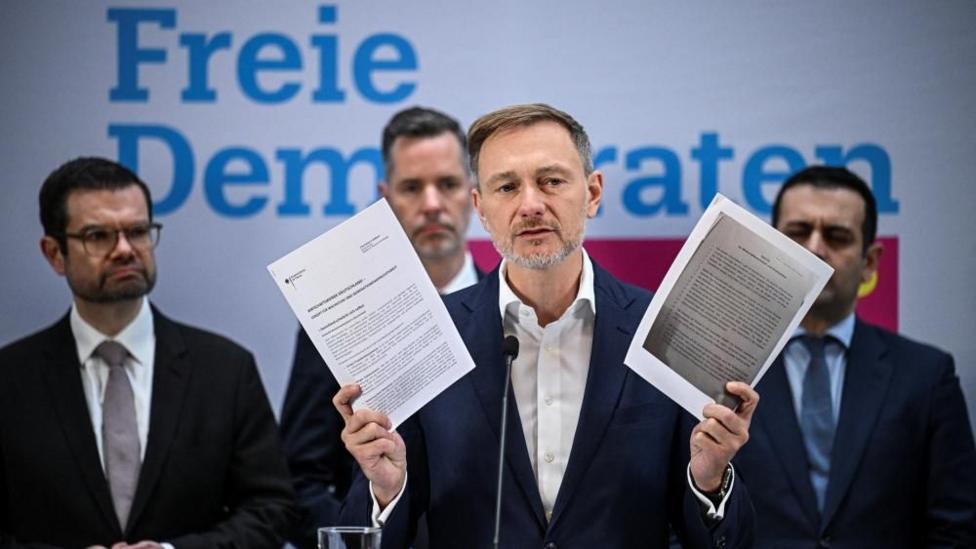
Germany’s Political Crisis: A Turning Point for Democracy?
Germany’s Political Crisis: A Turning Point for Democracy?
Germany’s political landscape is undergoing a seismic shift. Recent election results in Berlin and Mecklenburg-Vorpommern reveal declining support for traditional centrist parties like the CDU and SPD, while alternative parties such as Die Linke gain traction. These developments raise critical questions about the future of democracy in Germany.
Geopolitical & Strategic Context
The Historical Role of Centrist Parties
Since World War II, centrist parties like the CDU and SPD have been the backbone of Germany’s political system, ensuring stability and driving national progress. However, social and economic changes in recent decades have eroded their traditional voter base.
Studies indicate that younger voters increasingly favor alternative parties, reflecting a shift in political priorities and values.
Recent Election Outcomes
In the state elections of Berlin and Mecklenburg-Vorpommern, the CDU suffered significant losses, while Die Linke made notable gains. These results highlight widespread discontent with traditional politics and a growing appetite for new approaches to governance.
National Implications
The decline of centrist parties places immense pressure on the federal government, especially with the rising popularity of the AfD, which poses a radical challenge to conventional policies. This situation risks exacerbating political polarization and complicating future coalition-building efforts.
Strategic Implications
- ♦ The crisis of centrist parties threatens the stability of Germany’s political system.
- ♦ Alternative parties are gaining traction, particularly among younger voters.
- ♦ Increased polarization could make future coalition-building more challenging.
- ♦ Germany’s role as a stable democratic actor in Europe may be undermined.
Future Trajectories
Future Outlook
Traditional parties must rethink their political messaging to address the evolving needs of voters. Failure to do so could result in continued decline. Political polarization is likely to intensify, complicating coalition-building and governance.
On the European stage, Germany’s internal instability could weaken its ability to lead within the EU. The coming months will be crucial in determining whether centrist parties can recover or whether alternative forces will continue to reshape the political landscape.

Prepared & Analyzed by: Strategic Studies Desk | AboMatrix