



Germany’s Leadership Crisis: Implications of Recent Regional Elections

Germany’s Leadership Crisis: Implications of Recent Regional Elections
Germany’s Leadership Crisis: Implications of Recent Regional Elections
Germany’s political landscape is witnessing notable internal disruptions following recent regional elections. The resignation of Mecklenburg-Vorpommern’s CDU leader, Merz’s controversial remarks on the healthcare system, and the FDP’s electoral setbacks signal a new phase of internal tensions and political recalibration.
Geopolitical & Strategic Context
Historical and Political Context
Germany’s political sphere is undergoing a sensitive transition, with major parties grappling with the aftermath of recent regional elections. The CDU, long regarded as the backbone of political stability in Germany, faces significant internal challenges. The resignation of the party leader in Mecklenburg-Vorpommern, coupled with Merz’s remarks on the dual healthcare system, has sparked widespread debate within and outside the party.
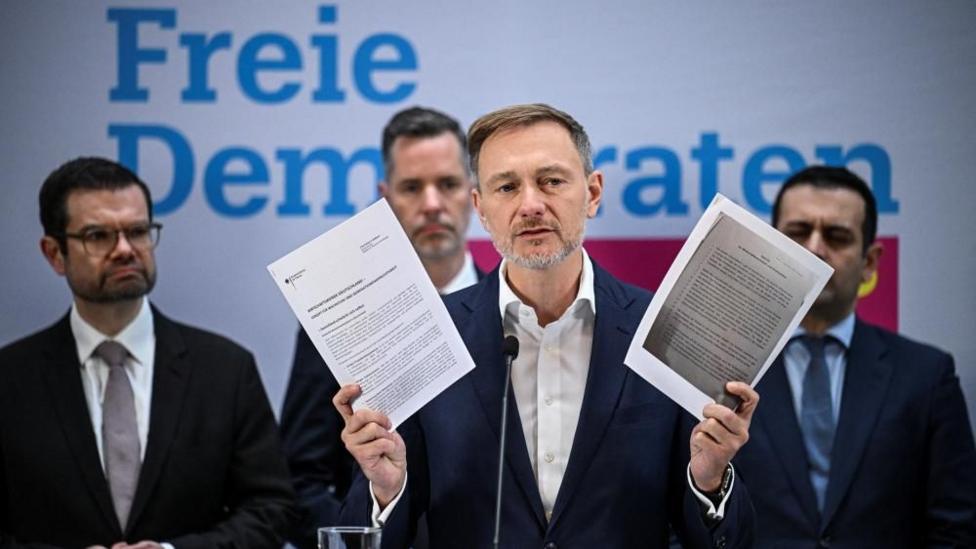
Meanwhile, the FDP struggles with major electoral losses, raising questions about its future political viability. The Greens, on the other hand, are showing signs of renewed strength, potentially solidifying their role as a key political force in the country.
Internal tensions within Germany’s political parties are not new, but they now emerge at a critical juncture as the nation faces substantial economic and social challenges.
Strategic Implications
- ♦ Increased pressure on CDU leadership to reassess its political strategies.
- ♦ Strengthening of the Greens as a major political force in Germany.
- ♦ Weakening of FDP’s position in national politics following electoral losses.
- ♦ Potential reshaping of political alliances within the German Bundestag.
Future Trajectories
Future Trajectories
Germany’s political parties are expected to undergo a phase of internal reassessment. The CDU will likely focus on reinforcing its internal cohesion and rebuilding trust among its members and voter base. Merz’s remarks on the healthcare system might catalyze broader discussions on social and economic reforms.
The FDP may need to craft a new strategy to regain its foothold in the political landscape, while the Greens appear poised to further solidify their role as a major political force, particularly amid growing environmental and social challenges.
On a national level, these developments could lead to a reshaping of political alliances, potentially influencing the future policies of Germany’s government.

Prepared & Analyzed by: Strategic Studies Desk | AboMatrix